
Flowers
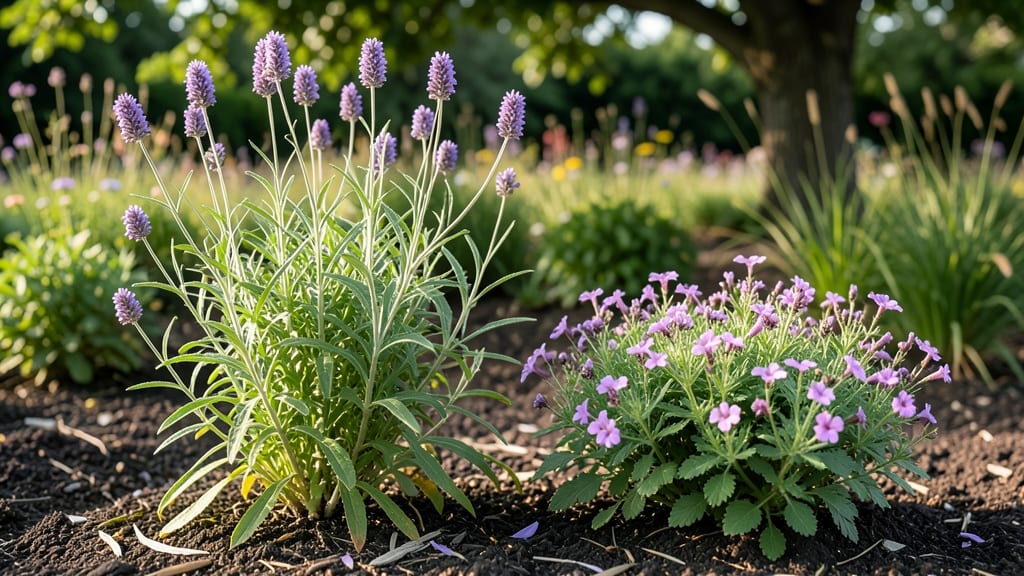
Verbena is a perennial in warm climates but dies back to the ground annually in cold zones, regrowing from roots or self-seeding each spring. Its hardiness depends on winter temperatures and soil protection.
Whether verbena acts as a perennial or annual depends entirely on where you live. In USDA zones 8-11, it thrives year-round, returning stronger each spring from its deep root system. 🌱 But in colder zones (5-7), frost kills the foliage, making it appear annual—though the roots often survive if protected.
I’ve seen gardeners in zone 6 keep verbena alive for years by piling mulch thick enough to insulate the roots through winter.
What’s fascinating is how verbena adapts: some varieties naturally self-seed prolifically, ensuring new plants sprout each spring even if the parent dies back. This survival strategy explains why many gardeners mistakenly treat it as an annual—until they notice the unexpected regrowth the following season.
💡 In This Article
- How Verbena’s Growth Cycle Differs by Climate Zone
- Extending Verbena’s Lifespan in Cold Regions
How verbena’s growth cycle differs by climate zone
Verbena’s behavior as either a perennial or annual comes down to its root system and how it responds to temperature shifts. In frost-free zones (USDA 8-11), verbena develops a robust, deep root system that stores energy year-round, allowing it to push new growth from the same roots each spring.
The roots can survive temperatures down to 20°F, but the above-ground stems die back when exposed to 28°F or colder. This is why you’ll see verbena in warm climates returning reliably each year—it’s not dying, just entering a dormant state while keeping its energy reserves underground.
The key difference appears in colder regions where winter temperatures drop below 15°F for extended periods. Here’s what happens: frost damages the foliage and stems, but the roots may still survive if protected by 4-6 inches of mulch.
Some varieties, like Verbena bonariensis, have roots that can tolerate brief freezes, while others like Verbena tenuisecta (blue verbena) are more sensitive. The confusion arises because gardeners often assume the dead stems mean the plant is gone—until new shoots emerge in spring from surviving roots or self-seeded seedlings.
What triggers this dieback cycle? Verbena’s growth is controlled by photoperiodism and temperature cues. As days shorten and temperatures drop below 50°F, the plant stops producing new growth and begins storing carbohydrates in its roots. This natural dormancy mechanism ensures survival in marginal climates.
In zones 5-7, where winters are harsh, the lack of insulation often means the roots freeze, forcing gardeners to treat it as an annual—even though it’s biologically a perennial with the right protection.
Here’s the science behind the survival: verbena roots contain high levels of soluble sugars and antifreeze proteins that lower the freezing point of water within plant cells.
This adaptation allows roots to survive temperatures as low as 10°F for short periods, but prolonged exposure to -5°F will kill even the hardiest varieties.
The plant’s ability to regenerate from roots explains why you might see verbena returning year after year in the same spot, even if it looks dead in winter.
Consider this comparison: in Florida (zone 9), verbena grows continuously with minimal care, while in Minnesota (zone 4), it’s typically grown as an annual unless planted in containers and brought indoors during winter.
The same species behaves differently based solely on climate—proof that verbena’s classification depends entirely on environmental conditions rather than inherent genetics.
What most gardeners don’t realize is that verbena’s self-seeding habit often compensates for winter losses. A single plant can produce thousands of seeds that lie dormant in the soil until spring, when they germinate at temperatures above 60°F.
This ensures a fresh crop of verbena even if the parent plant didn’t survive the winter. It’s nature’s backup system for plants that can’t always rely on root survival.