
Orchid Care
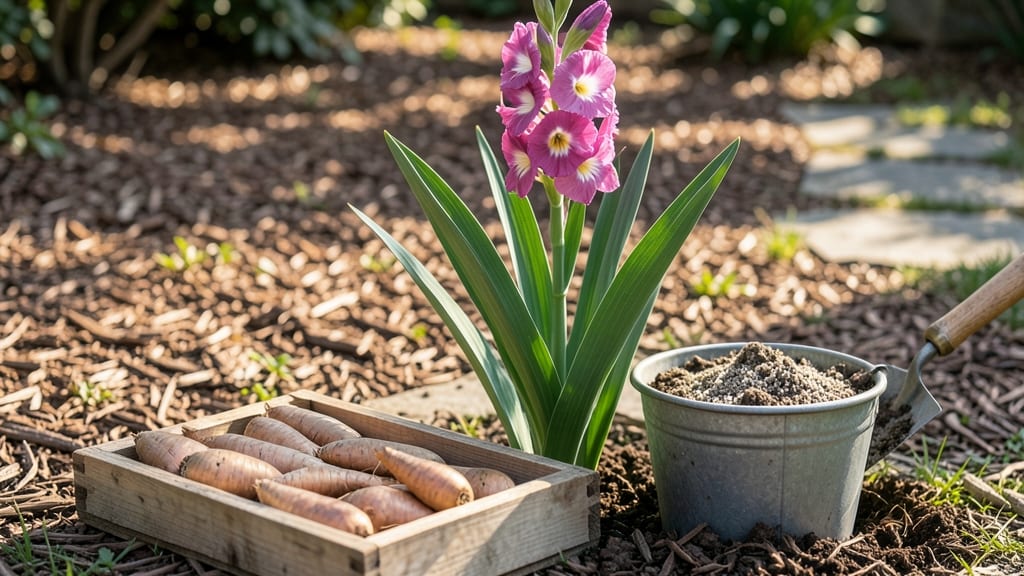
Gladiolus bulbs are perennial plants but function as annuals in most regions because they cannot survive frost. Their corms die back in cold weather, requiring gardeners in cooler climates to replant fresh bulbs each spring for consistent blooms.
This distinction matters because gladiolus corms—those thick, underground storage stems—are surprisingly delicate for a perennial. 🌱 While they can regrow in frost-free zones like USDA Hardiness Zone 8 and warmer, a single hard freeze will kill them back to the ground.
That's why even experienced gardeners in colder areas treat them like annuals, digging up corms after the first frost and storing them in dry peat moss until spring replanting. The good news?
With proper winter storage, you can often coax new growth from last year's corms for 2-3 seasons before their vigor declines.
What sets gladiolus apart from true perennials like daffodils is their growth cycle: they produce all their energy above ground in a single season, leaving little reserve in the corm itself. This makes them particularly vulnerable to winter dieback.
In mild climates, you might see them naturalize over time, but even then, their blooms tend to diminish after 2-3 years without fresh plantings.
💡 In This Article
- Why Gladiolus Bulbs Die Back in Cold Climates
- Year-Round Gladiolus Care for Perennial-Like Growth
Why gladiolus bulbs die back in cold climates
Gladiolus bulbs—technically called corms—enter dormancy when temperatures drop below 40°F, but they lack the protective mechanisms of true perennials like daffodils. Their corms store minimal energy reserves compared to bulbs (like tulips), making them highly sensitive to frost.
When winter temperatures fall below 25°F, the corms' cells rupture from ice crystal formation, killing the plant entirely. This is why gardeners in USDA Zones 7 and colder must treat them as annuals.
The key difference lies in their growth strategy: gladiolus plants focus all their energy on producing a single, dramatic 6-8 foot spike in one season, leaving little stored energy in the corm itself.
True perennials like daffodils, by contrast, develop robust underground storage organs that can survive winters with 10-15% moisture content—gladiolus corms only tolerate 5-7% moisture before rotting. This makes them particularly vulnerable to winter moisture, which is why proper drying after harvest is critical.
Even in mild climates (Zones 8-10), gladiolus corms rarely survive more than 2-3 years in the ground because their natural lifespan is tied to their single-season growth cycle. The corms' outer layers become brittle over time, and fungal diseases like Fusarium wilt accumulate in the soil, further reducing their longevity.
This is why replanting fresh corms annually is standard practice—it ensures vibrant blooms while avoiding the buildup of soil-borne pathogens.
What makes this particularly frustrating is how gladiolus plants look healthy until the first frost. Their foliage remains lush and green right up until temperatures drop, masking the fact that the corms are already weakening underground.
In contrast, true perennials often show visible signs of decline (yellowing leaves, wilted stems) before dormancy sets in, giving gardeners a heads-up to take protective measures.
For gardeners in transitional zones (like Zone 7b), the solution often involves mulching with 4-6 inches of straw after the first frost to insulate the soil. However, even this only buys time—once temperatures drop below 20°F, the corms will still succumb.
This is why many gardeners in these areas opt for container growing, allowing them to move potted gladiolus indoors before winter sets in.
Interestingly, some gladiolus hybrids (like the 'Romance' series) have shown slightly better cold tolerance, able to survive 20-25°F for short periods. However, they still cannot match the hardiness of true perennials.
The trade-off is their stunning 24-36 inch flower spikes and vibrant colors, which make them worth the annual replanting effort for many gardeners.
Understanding this growth cycle helps explain why gladiolus beds often look abandoned after winter—the corms are gone, not just dormant. Unlike daffodils that push through snow or tulips that regrow from the same bulb year after year, gladiolus require fresh planting to restart their dramatic growth cycle each spring. 🌱