
Flowers
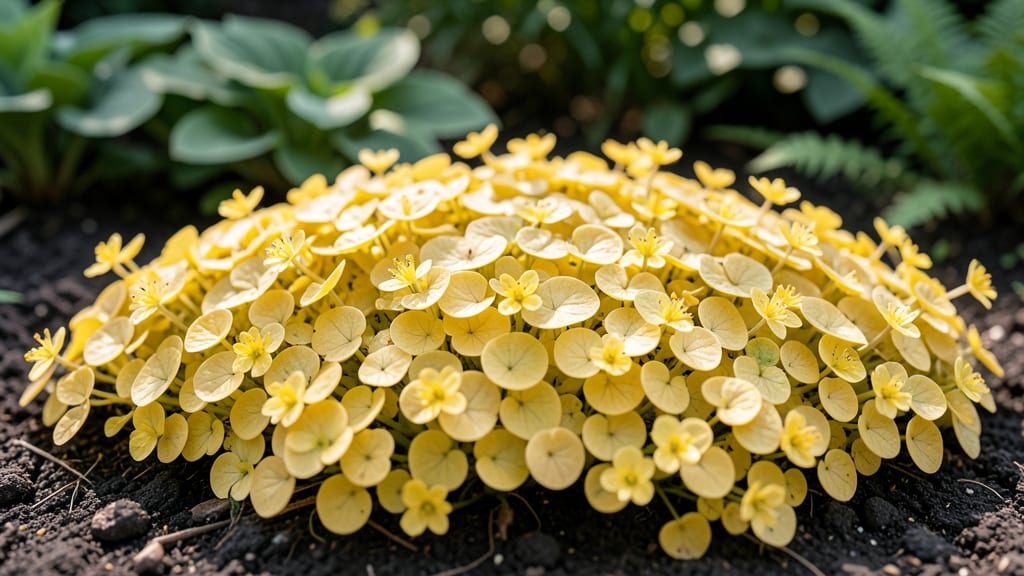
Golden moneywort is a perennial plant that thrives for multiple seasons, unlike annuals that die after one growing cycle. Its hardy nature, rapid spread, and golden foliage make it a standout ground cover for gardens and landscapes.
This perennial plant isn't just any garden workhorse—it's a low-maintenance powerhouse that returns year after year, even in challenging conditions. 🌱 Unlike annuals that need replanting, golden moneywort establishes deep roots that survive winter dormancy and bounce back with vibrant growth each spring.
I've seen it thrive in zones 4-9, making it one of the most adaptable ground covers for both sunny and partially shaded areas.
What really sets it apart is its self-sustaining nature. Once established, it spreads aggressively through rhizomes, creating a dense mat that chokes out weeds naturally. This makes it perfect for erosion control on slopes or as a living mulch between shrubs.
The trade-off? Its vigorous growth means you'll need to contain it in formal gardens—otherwise, it might take over where you don't want it.
💡 In This Article
- Why Golden Moneywort Thrives as a Perennial
- Best Uses for Golden Moneywort in Landscaping
Why golden moneywort thrives as a perennial
Golden moneywort's perennial status comes from its fibrous, deep-rooted system that stores nutrients and moisture, allowing it to survive winter dormancy in zones 4-9. Unlike annuals like sweet alyssum (which dies after one season), its roots can extend 12-18 inches deep, accessing water and nutrients that shallow-rooted plants miss.
This root structure also helps it recover quickly from drought or light frost, making it far more resilient than most ornamental ground covers.
The plant's cold tolerance is another key advantage. While annuals like marigolds (which thrive only in warm seasons) wilt when temperatures drop below 50°F, golden moneywort can handle light freezes down to 20°F once established.
Its rhizomatous growth habit—spreading via underground stems—lets it regenerate from even small root fragments left in the soil after winter. This is why you'll often see it popping up in the same spot year after year, even if you didn't intentionally replant it.
What makes this perennial truly unique is its aggressive but controlled spread. Its rhizomes grow 6-12 inches per year, creating a dense mat that suppresses weeds naturally.
Unlike invasive species, it stays contained in most garden settings—though you'll need to trim edges if you want to prevent it from spreading into lawns. This growth pattern contrasts sharply with annuals, which must be replanted every spring and never develop the same level of ground coverage.
For gardeners comparing it to annuals like creeping thyme or vinca, the difference in lifespan and maintenance becomes clear. Annuals require yearly planting, while golden moneywort establishes itself permanently after just 2-3 years.
The trade-off? Its golden foliage may fade slightly in deep shade or during winter, but it always returns stronger than before—something no annual can match.
Scientifically, its perennial nature stems from meristematic tissue in its roots that remains active even during dormancy. This tissue can "remember" growing conditions, allowing it to resume growth as soon as temperatures rise above 55°F.
Annuals lack this memory, which is why they must complete their entire life cycle in a single growing season. 🌿
Consider this: While an annual like cosmos might give you vibrant blooms for one summer, golden moneywort will reward you with year-round ground coverage, improved soil structure, and that signature golden hue that brightens shady spots where few other plants thrive. That's the power of a true perennial at work.