
Flowers
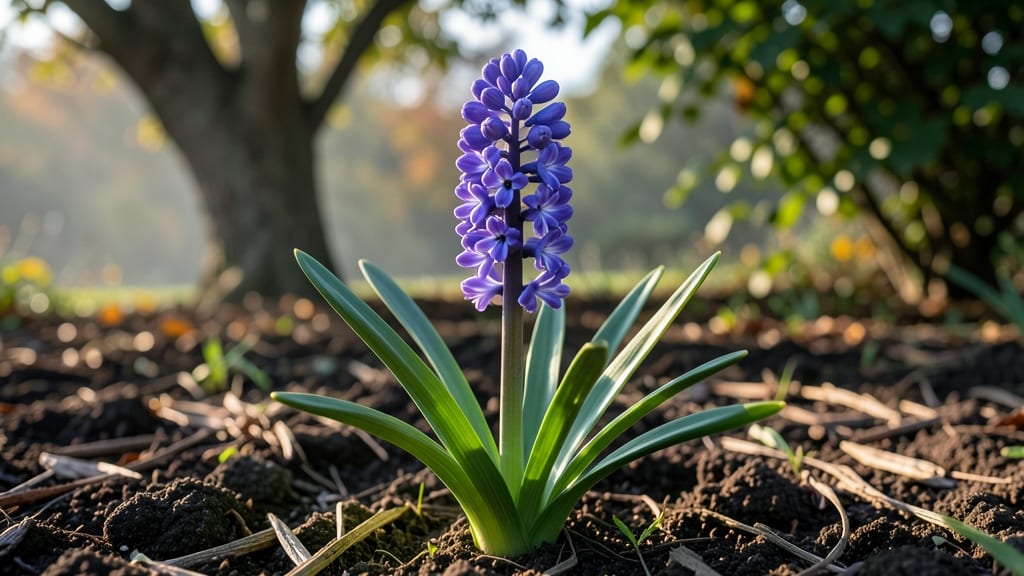
Hyacinths are perennial plants, not annuals, because they regrow each spring from the same underground bulbs after their above-ground foliage dies back. These bulbs store nutrients during dormancy and sprout new growth when conditions are favorable.
This perennial behavior sets hyacinths apart from true annuals, which complete their entire life cycle in one growing season. 🌱 The bulbs' ability to survive winter dormancy—even in colder climates—means they'll return year after year with proper care.
I've seen mine bloom reliably for over a decade, proving that their underground storage system is their secret weapon against seasonal challenges.
What makes this adaptation so impressive is how the bulbs manage their resources. During the growing season, they absorb sunlight and nutrients through their leaves, storing excess energy in layers of protective scales.
When temperatures drop, the bulbs enter a state of suspended animation, conserving energy until warmer weather signals it's time to regrow.
💡 In This Article
- How Hyacinth Bulbs Survive Year-Round Underground
- Caring for Hyacinths After Dieback: Revival Tips
How hyacinth bulbs survive year-round underground
The secret to hyacinths' perennial nature lies in their specialized underground bulbs, which function like nature's own airtight storage containers. These bulbs store carbohydrates, proteins, and water in concentric layers of fleshy scales, each layer acting as a protective barrier against temperature fluctuations and moisture loss.
Unlike true annuals that complete their life cycle in one season, hyacinth bulbs enter a state of dormancy when conditions turn unfavorable, preserving their energy reserves for future growth.
Temperature triggers this dormancy cycle. When nighttime temperatures consistently drop below 50°F (10°C), the bulbs detect the seasonal shift and begin conserving resources. The bulb's outer layers harden slightly, reducing water loss while maintaining just enough metabolic activity to stay alive.
This adaptation allows them to survive winters in USDA zones 3-9, where above-ground growth would freeze. What's fascinating is how they time their regrowth: when soil temperatures reach 55-60°F (13-15°C) in spring, the bulbs "wake up" and send up new shoots.
The moisture balance is equally critical. During dormancy, hyacinth bulbs maintain about 15-20% moisture content—enough to prevent dehydration but not so much that they rot. This moisture level is carefully regulated through the bulb's papery outer tunic, which acts like a semi-permeable membrane.
In contrast, true annuals have no such storage mechanism; their entire life cycle depends on seasonal conditions above ground, which is why they can't return year after year.
What sets hyacinths apart from other bulb plants like tulips is their ability to produce multiple offsets (small daughter bulbs) over time. These offsets form at the bulb's base during the growing season and gradually increase the plant's population.
After 3-5 years, a single original bulb can produce 5-10 offsets, creating a natural colony. This reproductive strategy ensures the plant's long-term survival even if some bulbs fail to regrow in certain years.
The regrowth process begins when the bulb's apical meristem (growth center) resumes activity. This happens in stages: first, the bulb absorbs moisture from surrounding soil, then it initiates root growth before sending up shoots.
The timing of this sequence is precisely controlled by internal clocks called circadian rhythms, which sync with environmental cues like daylight length. This biological precision explains why hyacinths often bloom at nearly the same time each year, even if planted in different locations.
Consider this comparison: while a true annual like marigold completes its entire life cycle in 90-120 days—producing seeds and dying—hyacinths can live for decades because their bulbs continue the cycle underground.
The key difference is energy allocation: annuals invest everything in seed production, while perennials like hyacinths store energy for future growth. 🌱 This fundamental difference in resource management is what makes hyacinths true perennials rather than annuals.