
Flowers
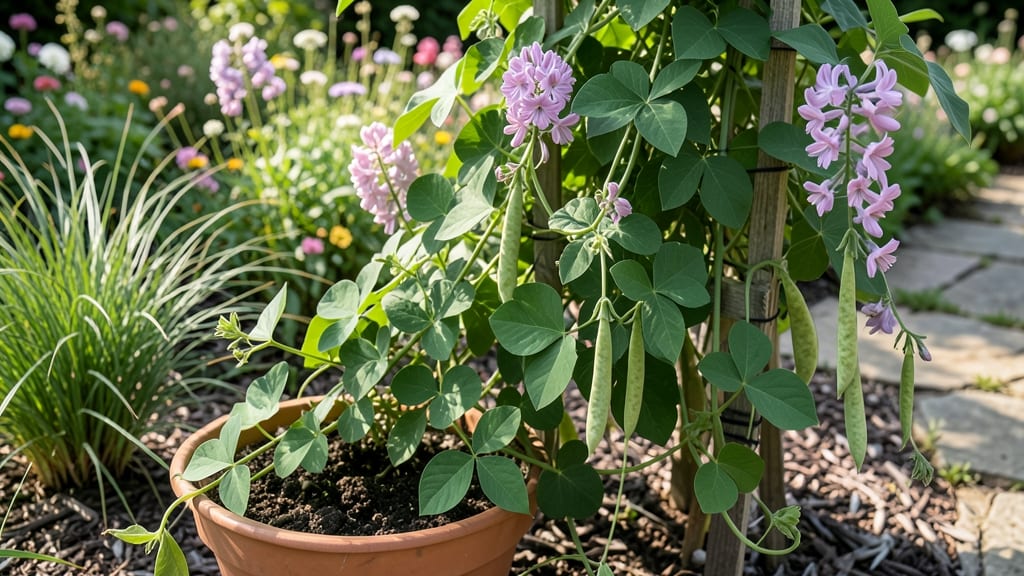
Determining whether hyacinth bean vine is annual or perennial depends on your climate: it acts as an annual in most regions, completing its life cycle after flowering, but can persist as a short-lived perennial in frost-free areas with ideal growing conditions.
This vine's behavior hinges on temperature sensitivity—frost kills it back to the ground in cooler zones, forcing annual renewal from seeds. 🌱 In warmer climates where winters stay above 30°F, the roots may survive, allowing regrowth the following season.
I've seen it thrive as a perennial in USDA zones 9-11 when given consistent moisture and well-draining soil, though its vigor typically declines after 2-3 years without renewal.
The 6-12 month growth cycle reflects its tropical origins—fast initial growth during warm seasons followed by dormancy in cooler periods. This adaptability makes it a favorite for summer gardens but requires strategic planning if you want to extend its lifespan beyond one season.
💡 In This Article
- How Climate and Care Determine Hyacinth Bean Vine Lifespan
- Extending Hyacinth Bean Vine’s Season: Pruning and Overwintering Tips
How climate and care determine hyacinth bean vine lifespan
The hyacinth bean vine's annual or perennial nature comes down to its frost tolerance threshold. This tropical plant originates from South America, where temperatures rarely drop below 40°F.
When exposed to frost (32°F or lower), its above-ground growth dies back completely, forcing it to rely on seeds for renewal—classic annual behavior. The roots themselves are surprisingly hardy, capable of surviving brief cold snaps down to 25°F if protected by mulch, but prolonged freezing kills them too.
In frost-free zones (USDA zones 9-11), the vine often persists as a short-lived perennial because its roots remain viable year-round. I've observed it regrowing from the same root system in Southern California gardens during mild winters, though the second-year growth is typically less vigorous.
The key factor is dormancy: in cooler climates, the vine enters a natural dormancy after flowering, conserving energy until warm weather returns. Proper watering (1-2 inches per week) and well-draining soil prevent root stress that could trigger premature decline.
Soil composition plays a surprising role in its longevity. Hyacinth bean vines thrive in slightly acidic to neutral soils (pH 6.0-7.0) with good drainage—they hate soggy roots. In heavy clay soils, roots suffocate during winter, accelerating annual behavior.
The vine's growth cycle also accelerates in warmer climates: in Florida, it completes its cycle in 6-8 months, while in cooler Pacific Northwest gardens, it may stretch to 10-12 months before flowering.
What most gardeners miss is how temperature fluctuations trigger its behavior. A sudden cold snap can shock the vine into dormancy even in warm climates, while consistent warmth keeps it growing.
This explains why some gardeners in zone 8 report annual behavior while others see perennial persistence—it's not just about the zone, but microclimates and seasonal consistency. The vine's natural defense mechanism is to prioritize seed production over root survival when stressed.
Here's the botanical secret: hyacinth bean vines produce underground tubers in their first year that store nutrients. These tubers can sprout new growth if protected from frost, creating that perennial-like behavior. However, after 2-3 years, these tubers typically exhaust their energy reserves, forcing the plant to rely on seeds.
This is why many gardeners find their vines decline in vigor after the second season unless they're in truly frost-free conditions.
Consider these key factors when planning your vine's lifespan:
- Zone matters: Zones 9-11 = perennial potential; zones 3-8 = annual behavior
- Winter protection: Mulch with 4-6 inches of organic matter to insulate roots
- Soil prep: Amend with compost to improve drainage and fertility
- Watering strategy: Reduce water in fall to harden roots before winter