
Flowers
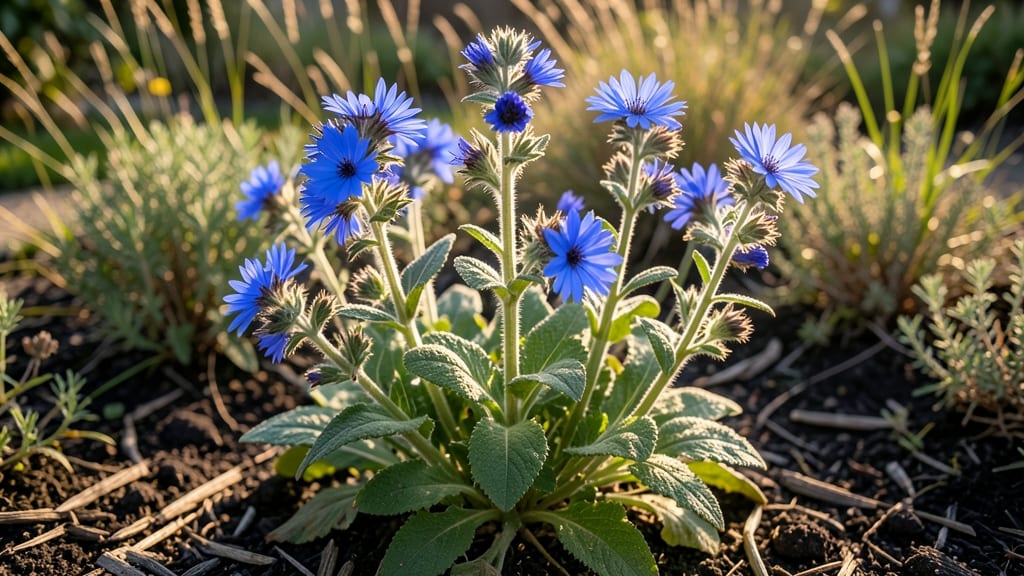
Determining whether borage is annual or perennial depends on its growing conditions—it's a biennial by nature but often treated as an annual because it dies back after flowering. However, in warmer climates, it may self-seed aggressively, mimicking perennial behavior while rarely surviving as a true perennial outside its Mediterranean origins.
Borage's classification as a biennial means it follows a two-year life cycle: the first year focuses on leaf and root growth, while the second year produces flowers and seeds before dying. 🌱 This makes it behave like an annual in many gardens, especially in colder regions where winter kills it off.
The key to extending its lifespan lies in its ability to self-seed—if you allow the flowers to go to seed, new plants will sprout the following season, creating the illusion of perennial growth.
What sets borage apart is its taproot system, which stores energy for regrowth. In mild winters, this allows it to persist longer, but true perennial survival is uncommon outside its native Mediterranean climate.
Gardeners in cooler zones often replant seeds each spring, while those in warmer areas may enjoy accidental perennial-like behavior through prolific self-seeding.
💡 In This Article
- Why Borage Dies Back: The Science of Its Life Cycle
- Growing Borage Like a Perennial: Pro Tips for Year-Round Harvests
Why borage dies back: the science of its life cycle
Borage's biennial nature stems from its evolutionary adaptation to Mediterranean climates, where it evolved to complete its life cycle in two distinct stages.
During the first year, the plant focuses all its energy on developing a robust taproot that can store nutrients and water—this root can grow up to 2 feet deep in ideal conditions.
The deep taproot allows borage to survive dry periods by accessing moisture below the surface, a critical adaptation for its native habitat where summer droughts are common.
The second year marks the reproductive phase, triggered by hormonal changes and environmental cues like increasing daylight hours.
Once flowering begins, the plant shifts resources from root growth to seed production, which accelerates its decline. 🌿 This dieback isn't just a result of aging—it's a programmed response to maximize reproductive success.
True annuals like marigolds follow a similar pattern, but they complete their entire life cycle in one growing season, while borage's two-year approach gives it a competitive edge in environments with seasonal extremes.
Temperature plays a pivotal role in this cycle. Borage seeds require a period of cold stratification (typically 4-8 weeks at 35-45°F) to break dormancy, which explains why it often behaves as an annual in colder climates—frost kills the plant before it can complete its second year.
In warmer regions, however, the lack of freezing temperatures allows some plants to persist longer, sometimes even overwintering if protected by mulch. This creates the illusion of perennial behavior, though the plants are still technically completing their biennial cycle.
The plant's self-seeding ability further complicates its classification. When allowed to flower and set seed, borage can produce up to 10,000 seeds per plant, which scatter prolifically. These seeds germinate readily in the following season, creating dense patches that give the appearance of continuous growth.
While this mimics perennial behavior, each individual plant still follows the biennial pattern—it's the collective population that appears perennial through constant regeneration.
Comparing borage to true perennials like lavender reveals key differences. Perennials like lavender develop woody stems and specialized storage organs (like rhizomes) that allow them to regrow year after year from the same root system.
Borage lacks these adaptations—its taproot doesn't regenerate above-ground growth after dieback, and its stems are herbaceous rather than woody. This fundamental difference explains why borage rarely survives as a true perennial outside its native range.
Understanding this life cycle helps explain why gardeners often treat borage as an annual. In most temperate climates, the plant completes its cycle and dies back by late summer or early fall, requiring new plantings the following spring.
The only way to achieve perennial-like results is through strategic self-seeding management—allowing some plants to flower while harvesting others to prevent complete dieback of the population.