
Flowers
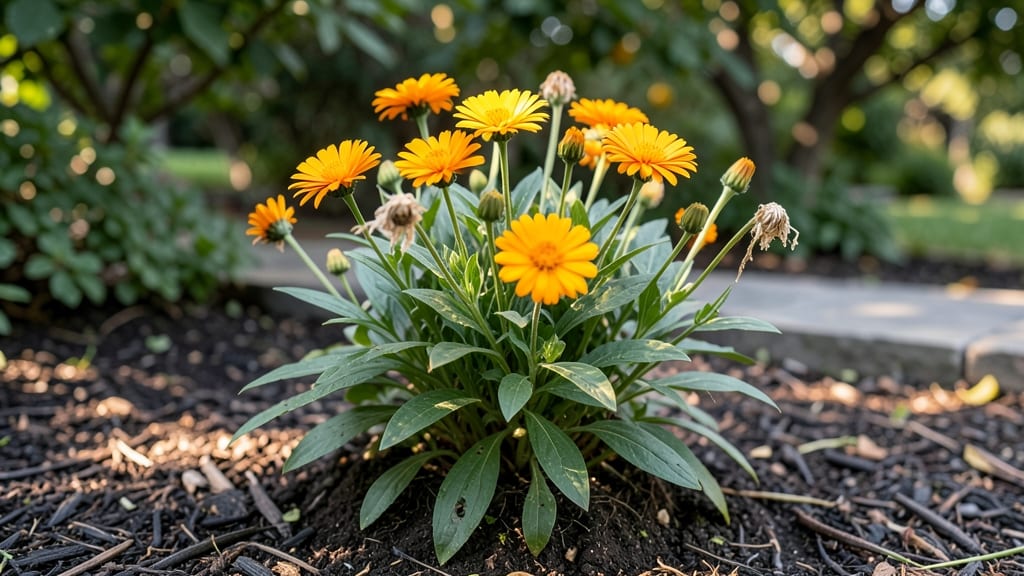
Calendula behaves as a perennial in frost-free zones but is usually grown as an annual in cooler climates, where it dies back to the ground after frost before regrowing from its roots when spring warmth returns.
This behavior comes down to calendula's native Mediterranean origins, where it thrives as a hardy perennial in zones 9-11. 🌱 The key to its survival in colder climates lies in its deep taproot system, which stores energy underground during winter dormancy—allowing it to bounce back once temperatures consistently stay above 50°F.
Many gardeners in zones 7 and below treat it as an annual because frost kills the foliage, but the roots often persist if protected with mulch or moved to containers before winter.
What makes calendula unique is how it handles dieback—unlike true annuals, it doesn't need to be replanted each year. Instead, it simply waits for warmer weather to send up fresh growth from the same root system, often producing even more vibrant blooms in its second season if given proper care.
This makes it a rewarding plant for patient gardeners willing to experiment with overwintering techniques.
💡 In This Article
- Calendula’s Perennial Growth Cycle Explained
- Hardiness Zones and Overwintering Tips for Calendula
Calendula’s perennial growth cycle explained
Calendula thrives as a true perennial in warm climates because its biology is perfectly adapted to Mediterranean conditions. The plant develops a robust taproot system that can reach depths of 12-18 inches, storing carbohydrates and nutrients during dormancy.
This root structure allows calendula to survive dry spells and mild winters, regrowing vigorously once temperatures consistently stay above 50°F for at least 2-3 weeks. In frost-free zones (USDA zones 9-11), calendula plants often live for 3-5 years or more, producing more abundant blooms each season.
The dieback behavior in colder climates occurs because calendula’s foliage is frost-sensitive—temperatures below 28°F will kill above-ground growth. However, the root system remains dormant but alive, continuing to respire slowly even under snow cover.
This is why you’ll often see calendula resprouting in spring from the same spot where it grew the previous year. The regrowth process begins when soil temperatures reach 55°F, triggering the roots to send up new shoots within 2-4 weeks. 🌱
What most gardeners don’t realize is that calendula’s perennial nature makes it more resilient than many true annuals. Unlike plants that must be replanted yearly, calendula’s deep roots allow it to access water and nutrients from lower soil layers, giving it a competitive advantage.
In ideal conditions, established plants can produce 2-3 times more flowers in their second year compared to first-year growth, making the investment in overwintering techniques particularly rewarding.
The key temperature thresholds for calendula’s growth cycle are:
- Regrowth trigger: Soil temps consistently above 50°F for 2+ weeks
- Frost sensitivity: Foliage dies at 28°F but roots survive
- Optimal blooming: Requires 60-75°F daytime temps
- Winter dormancy: Roots remain active at 32-40°F soil temps
This growth pattern explains why calendula behaves differently in various climates. In zone 8, you might see it die back but resprout if protected, while in zone 5 it’s more reliably annual. The plant’s ability to store energy underground is what gives it its perennial characteristics—even when treated as an annual in colder regions. This biological adaptation makes calendula a fascinating study in plant resilience and seasonal adaptation. 💫