
Planting
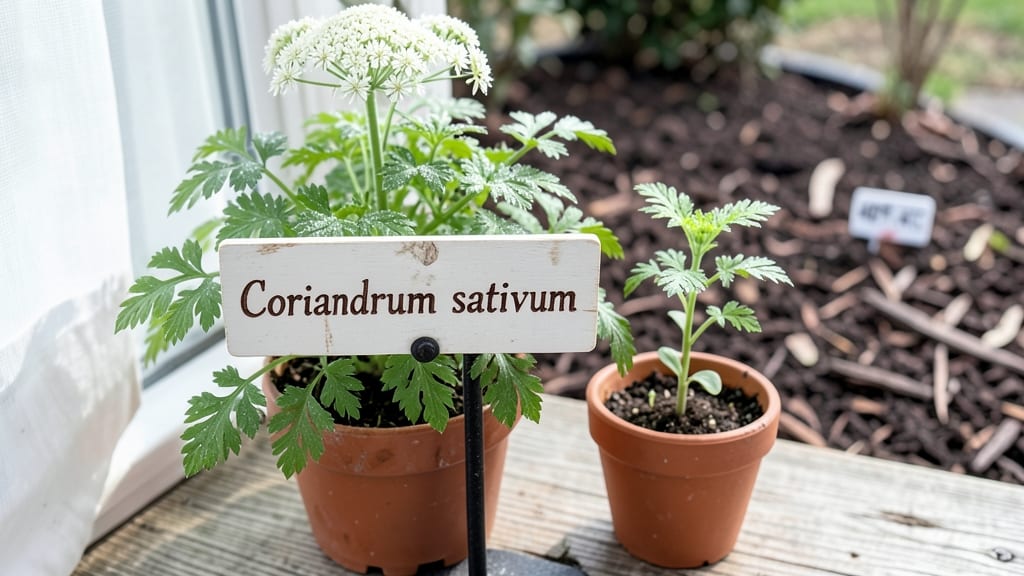
Cilantro is not a true perennial plant in most climates, though it behaves like one in ideal conditions—it dies back in frost but often regrows from the root crown if temperatures remain mild. Its lifespan depends heavily on winter hardiness and regional growing zones.
Cilantro's behavior as a "false perennial" comes down to its delicate root system and native Mediterranean origins. 🌱 While it may survive light frosts in USDA Zones 8-10, most gardeners in colder regions treat it as an annual because its taproot system freezes easily.
The good news? If you're in a mild-winter zone, protecting the base with mulch can encourage regrowth—just don't expect it to thrive through harsh freezes like true perennials such as thyme or oregano.
Many gardeners actually use this trait to their advantage by planting cilantro in early spring and again in fall, knowing it won't overwinter reliably.
What's fascinating is how cilantro's growth cycle mirrors its wild ancestors. In its native habitat, it thrives in warm, dry summers and dies back during cooler periods—only to regrow when conditions improve.
This natural pattern explains why some gardeners in Zone 7 report partial regrowth after mild winters, while those in Zone 5 typically need to replant each season. The key difference between cilantro and true perennials is that cilantro's root system simply isn't built for prolonged cold exposure.
💡 In This Article
- Why Cilantro Dies Back in Cold Climates
- How to Extend Cilantro’s Lifespan in Your Garden
Why cilantro dies back in cold climates
The reason cilantro behaves like a perennial in mild climates but dies back in cold ones comes down to its delicate taproot system. Unlike true perennials with thick, woody roots that store energy for regrowth, cilantro develops a single, slender taproot that's highly sensitive to freezing temperatures.
When exposed to below 20°F, this root system typically succumbs to frost damage, cutting off the plant's ability to regenerate. 🌱
Cilantro's native Mediterranean climate—where winters are mild and summers are hot—explains its limited cold tolerance. In its natural habitat, cilantro grows as a winter annual, completing its life cycle before summer heat arrives.
This adaptation means it evolved to handle brief cold snaps but lacks the hardiness of plants from colder climates. The threshold for dormancy in cilantro sits around 35-40°F, below which growth slows dramatically and regrowth becomes unlikely.
What makes this even more interesting is how cilantro's leaves react to cold. When temperatures drop below 50°F, the plant begins producing more bitter compounds as a survival mechanism—similar to how some plants develop protective chemicals in stressful conditions.
This bitterness is often why gardeners notice their cilantro tasting "off" before it even dies back. The plant essentially "resets" its biochemical pathways in preparation for potential death, making it a fascinating example of plant stress responses.
In colder regions like USDA Zones 3-6, cilantro's taproot rarely survives winter exposure, even with protection. The root crown (where leaves emerge) might remain intact, but without a healthy root system to draw moisture and nutrients, the plant can't regrow effectively.
This is why most gardeners in these zones treat cilantro as an annual, despite its potential to behave semi-perennially in warmer microclimates or protected environments.
There's also a genetic component to consider. Most commercial cilantro varieties are bred for flavor and growth speed rather than cold hardiness. Wild cilantro (Coriandrum sativum var. microcarpum) shows slightly better cold tolerance, but even these strains struggle below 25°F.
The good news? Some heirloom varieties like 'Santo' or 'Calypso' demonstrate marginally better regrowth potential in borderline zones, though they're still not true perennials by any stretch.
What most people don't realize is how quickly cilantro's root system degrades after freezing. Even if the above-ground foliage looks healthy in late fall, the roots may already be compromised.
This is why gardeners in transitional zones often see cilantro "bolt" (send up flowers) in response to temperature fluctuations—another survival strategy that ultimately leads to the plant's demise when true winter arrives.
The entire process highlights how cilantro's life cycle is finely tuned to specific temperature ranges, making it a fascinating case study in plant adaptation.