
Flowers
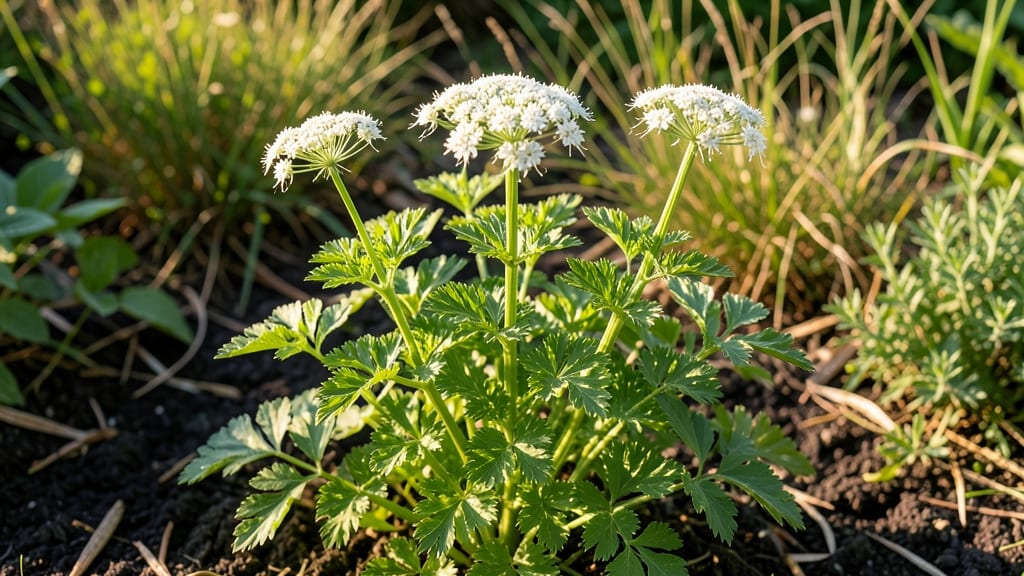
Cilantro is an annual or perennial herb depending on climate, completing its growth cycle in 60-90 days before dying back. However, in ideal conditions with mild temperatures, it can act like a short-lived perennial, regrowing from its root system before bolting or flowering.
Whether cilantro is an annual or perennial depends heavily on your climate.
In its native Mediterranean region, it's a biennial, meaning it completes its lifecycle over two years—but in temperate zones, it usually acts as an annual. 🌱 The key difference lies in temperature sensitivity: when exposed to prolonged heat or cold stress, cilantro bolts (sends up a flower stalk) and dies back.
This is why gardeners in cooler areas often treat it as an annual, while those in mild-winter zones can sometimes coax regrowth from the root crown.
What makes this tricky is cilantro's natural behavior—it's genetically programmed to bolt when days get longer or temperatures rise. This survival mechanism ensures seed production before dying back, which is why even "perennial" regrowth is often short-lived.
For gardeners, this means planning for quick harvests or using shade cloth to delay bolting in hot climates.
💡 In This Article
- Cilantro’s Lifecycle: Annual vs. Perennial Behavior Explained
- How to Extend Cilantro’s Harvest Season
Cilantro’s lifecycle: annual vs. perennial behavior explained
Botanically, cilantro (Coriandrum sativum) is classified as a biennial in its native Mediterranean climate, meaning it completes its lifecycle over two years. In year one, it grows leaves and stores energy in its taproot system, while year two focuses on flowering, seed production, and eventual dieback.
However, in most temperate climates outside this region, cilantro behaves as an annual because the cooler temperatures accelerate its growth cycle into a single season.
The transition between annual and perennial-like behavior hinges on temperature sensitivity. When exposed to consistent temperatures below 75°F and above 40°F, cilantro thrives as a leafy herb.
But when nights dip below 50°F or days exceed 80°F, it triggers a survival mechanism called bolting—where the plant rapidly sends up a flower stalk to produce seeds before dying.
This process is driven by a hormone called florigen, which is activated by environmental stress signals like temperature shifts or day length changes.
The root system plays a crucial role in this lifecycle. Unlike true perennials that develop woody stems and persistent roots, cilantro's fibrous taproot stores minimal energy for regrowth.
In mild climates, you might see regrowth from the root crown after cutting, but this is often short-lived because the plant prioritizes seed production over leafy growth. This is why cilantro grown in USDA zones 8-10 can sometimes persist through winter, while it bolts and dies in colder zones.
What most gardeners don't realize is that cilantro's bolting isn't just about temperature—it's also tied to its genetic programming. The plant evolved in Mediterranean regions where unpredictable rainfall and temperature swings meant quick seed production was essential for survival.
This explains why even in ideal conditions, cilantro will eventually bolt and die back, regardless of whether it's treated as an annual or perennial in your garden.
Consider this comparison: In Southern California's mild winters, cilantro might regrow from the root after a light frost, behaving like a short-lived perennial. But in New England's colder climate, it completes its entire lifecycle in 60-75 days before bolting and dying.
The key difference is the plant's ability to store enough energy in its roots to survive mild stress, rather than true perennial hardiness.
For those curious about the science, cilantro's bolting is regulated by a complex interplay of vernalization (cold treatment) and thermoperiodism (temperature cycles). When nights stay above 60°F consistently, it delays bolting, while cooler nights accelerate the process.
This is why gardeners in hot climates often use shade cloth (30-50% coverage) to keep leaf temperatures down and extend the harvest window.
Understanding these mechanisms helps explain why cilantro is so finicky—it's not just about whether it's annual or perennial, but about how your local climate interacts with its native survival strategies. 🌿