
Flowers
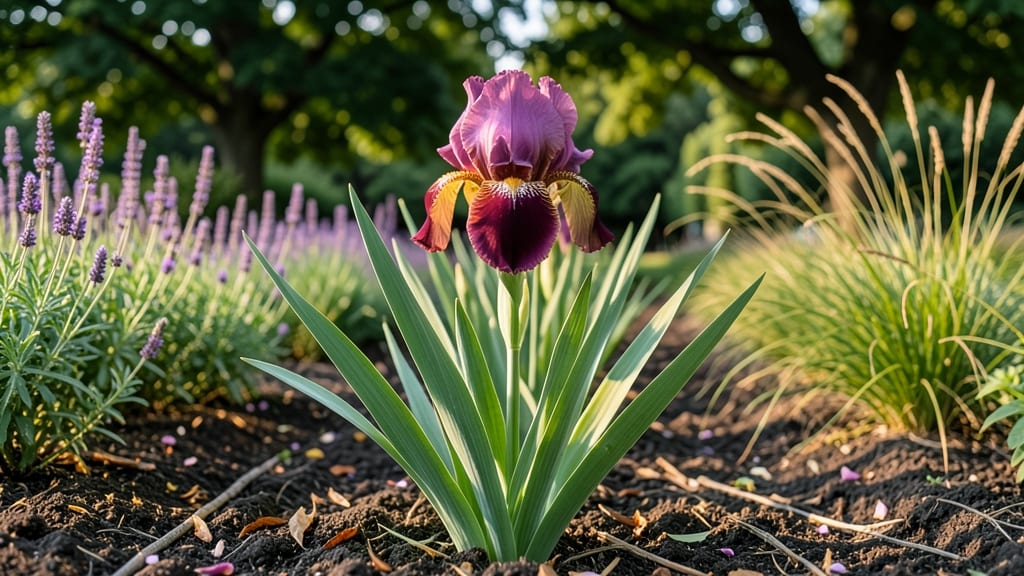
Iris flowers are perennial plants that die back annually, regrowing from the same root system each season. Their foliage withers in late summer or fall but returns in spring, making them long-lived garden staples with proper care.
Iris flowers aren't just annuals—they're perennials with a clever survival strategy. 🌱 The dramatic dieback you see each year isn't death, but a natural dormancy period triggered by shorter daylight and cooler temperatures. This process actually strengthens their root systems, allowing them to bounce back stronger in spring.
Think of it like a hibernation cycle: the plant conserves energy underground while the roots remain alive and ready to fuel new growth when conditions improve.
What sets iris flowers apart from true annuals is their ability to regenerate from the same rootstock year after year. This means with proper care—like cutting back dead foliage in late fall and fertilizing in early spring—your irises can thrive for decades.
Many gardeners are surprised to learn that some iris varieties live for 50+ years when given the right conditions!
💡 In This Article
- Why Iris Flowers Die Back Each Year
- Caring for Perennial Iris Flowers After Dieback
Why iris flowers die back each year
The annual dieback of iris flowers isn't a sign of weakness—it's a sophisticated survival mechanism tied to their perennial growth cycle. Unlike annuals that complete their life span in one season, irises enter a period of dormancy when days shorten and temperatures drop below 60°F.
This triggers a biochemical process where the plant redirects energy from foliage to its rhizomes (thick underground stems), which act as living batteries storing nutrients for spring rebirth.
The rhizome system is the key to iris longevity. These horizontal roots contain specialized cells that store starches and sugars, similar to how potatoes store energy. When temperatures dip and daylight fades, the plant's growth hormones shift from producing leaves to preserving these rhizomes.
This underground network can remain viable for years, even if above-ground growth completely withers. 💫 What's fascinating is how this system contrasts with annuals, which die entirely after seeding—iris roots simply "wait out" the unfavorable season.
Light exposure plays a crucial role in this cycle. Irises are photoperiod-sensitive, meaning their dormancy is triggered by decreasing daylight hours (typically below 12 hours/day). This natural clock ensures they don't waste resources growing when winter conditions would kill tender new shoots.
The rhizomes even develop protective layers that prevent rot during wet winters—a trait that explains why irises thrive in regions with cold winters and hot summers.
Soil conditions dramatically influence how well irises perform this cycle. Well-draining soil prevents rhizome rot during dormancy, while nutrient-rich earth provides the energy reserves needed for spring regrowth. The ideal pH range of 6.0-7.0 supports both root health and nutrient absorption.
In contrast, heavy clay soils can suffocate rhizomes, while sandy soils may not retain enough moisture for winter survival—both scenarios can break the plant's natural dormancy cycle.
This biological strategy gives irises an edge over annuals. While most garden plants must be replanted yearly, established iris clumps can live for decades with minimal intervention. The dieback you see isn't failure—it's preparation for a stronger return.
Many gardeners discover their iris patches expand yearly as rhizomes produce offsets, creating dense colonies that bloom more prolifically each spring. 🌱
The science behind this involves a complex interplay of hormones. As temperatures drop, the plant increases production of abscisic acid (the dormancy hormone) while reducing growth-promoting hormones like gibberellins. This hormonal shift causes leaves to yellow and wither while protecting the rhizomes.
When spring arrives, rising temperatures and increasing daylight trigger a surge in gibberellins, "waking up" the dormant rhizomes to produce new shoots.