
Planting
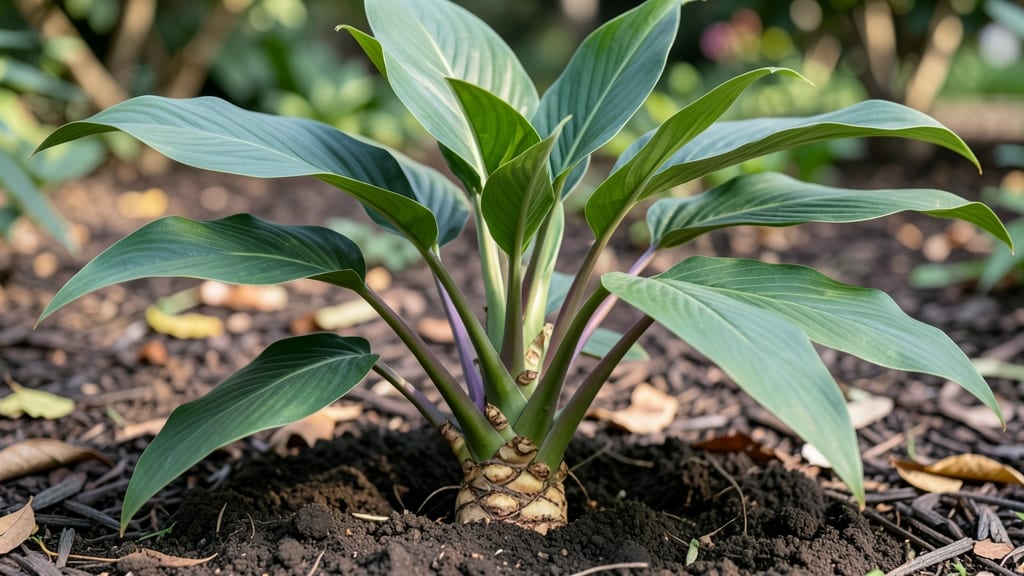
Whether the curcuma plant (turmeric) is an annual or perennial depends entirely on your climate: it thrives as a perennial in warm, tropical regions where it naturally regrows each year from its rhizomes. In colder areas, however, it acts like an annual unless you take steps to protect or store its roots through winter.
The curcuma plant's lifespan hinges on its rhizomes—those thick, knobby underground stems that store energy and nutrients. 🌱 In tropical climates, these rhizomes stay active year-round, allowing the plant to regenerate from the same roots season after season.
But when temperatures drop below 50°F, the rhizomes enter dormancy, and without protection, the plant dies back completely by winter. That's why gardeners in cooler zones often treat it as an annual unless they dig up and store the rhizomes indoors until spring planting.
This adaptability makes turmeric a fascinating study in plant resilience. The rhizome's ability to survive harsh conditions by going dormant is what lets it persist across different climates—whether as a true perennial or a protected annual.
Understanding this helps you decide whether to let your plants overwinter in the ground or harvest and store them for next year's garden.
💡 In This Article
- How Curcuma Rhizomes Determine Plant Lifespan
- Growing Curcuma Long-Term: Climate-Specific Care Tips
How curcuma rhizomes determine plant lifespan
The curcuma plant's lifespan is entirely controlled by its rhizomes—thick, corm-like underground stems that function as both storage organs and growth engines. These rhizomes contain specialized cells that store starches and nutrients, allowing the plant to survive dry periods or cold snaps.
In tropical climates where temperatures stay above 60°F year-round, the rhizomes remain metabolically active, producing new shoots each growing season without interruption. This continuous growth cycle is what classifies curcuma as a true perennial in warm regions.
The key trigger for dormancy occurs when temperatures drop below 50°F for extended periods. At this point, the rhizomes undergo physiological changes: their cell membranes become more rigid, and growth hormones like auxin decrease dramatically. This dormancy isn't just about survival—it's an energy-conservation strategy.
The plant redirects its resources to maintain the rhizome's viability until conditions improve. In temperate zones, this natural cycle explains why curcuma behaves like an annual unless gardeners intervene with protection or storage.
What makes curcuma's rhizomes particularly fascinating is their ability to regenerate from even small fragments. Each segment contains meristematic tissue (growth points) that can produce new shoots when conditions are favorable.
This is why you can propagate turmeric from store-bought rhizomes—even a 1-inch piece with an "eye" (bud) can grow into a new plant. The rhizome's horizontal growth pattern also allows it to spread underground, creating a network that can regenerate the entire plant from multiple points.
The plant's light requirements play a secondary but crucial role in this lifecycle. Curcuma thrives in partial shade to full sun, but in colder climates, insufficient winter light can weaken the rhizomes before they've stored enough energy.
This is why gardeners in Zone 7 and below often need to provide additional protection—whether through mulching or container growing—to ensure the rhizomes receive adequate light while conserving energy during dormancy.
Comparing tropical and temperate curcuma growth reveals an interesting adaptation: tropical varieties often produce larger, more robust rhizomes that can sustain longer growth periods without dormancy. In contrast, temperate-adapted varieties develop thicker insulating layers on their rhizomes to protect against frost.
This structural difference explains why some curcuma cultivars perform better in specific climates—choosing the right variety can mean the difference between a perennial and an annual growing experience.
Understanding these mechanisms helps explain why curcuma can be both perennial and annual in different contexts. The plant's survival strategy revolves around its rhizome's ability to store energy and remain dormant until conditions are favorable.
This adaptability is what makes turmeric such a resilient crop—whether it's thriving as a garden perennial in Hawaii or requiring careful overwintering in New England, the same biological processes are at work, just triggered by different environmental cues.