
Flowers
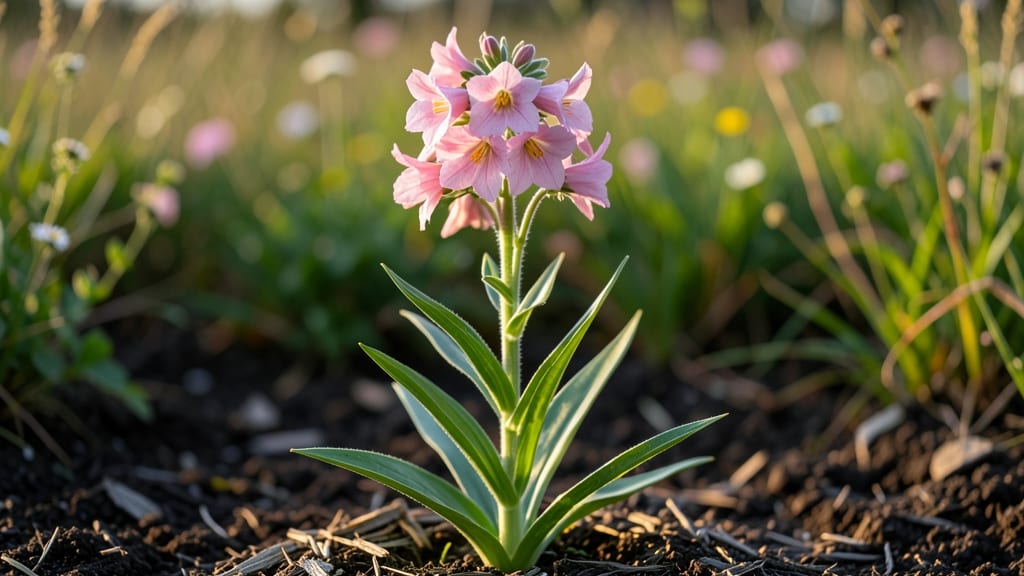
Eustoma is not a true perennial in cold climates, as it dies back to the ground with frost and must be replanted each season. In warmer regions, it behaves as a tender perennial or self-seeds annually for repeat blooms.
Eustoma's perennial status depends entirely on your climate zone. 🌱 In frost-free areas, it thrives as a long-lived plant, often returning year after year through self-seeding or tuber survival.
However, when temperatures drop below 30°F, the entire plant—roots and all—succumbs to cold damage, making it behave more like an annual in colder regions. This frost sensitivity explains why gardeners in zones 8 and below typically treat it as a seasonal plant rather than a permanent landscape feature.
What makes this especially tricky is Eustoma's tuberous root system—unlike hardy perennials that store energy underground, these roots don't survive freezing. This means even if you leave the plant in the ground, it won't regrow in spring.
The good news? With proper overwintering techniques or container growing, you can extend its lifecycle beyond a single season in colder climates.
💡 In This Article
- Eustoma’s Growth Cycle in Freezing Temperatures
- Year-Round Eustoma Care for Cold Regions
Eustoma’s growth cycle in freezing temperatures
The key reason Eustoma (Lisianthus) behaves differently than true perennials lies in its tropical origins. Native to Texas and Mexico, this plant evolved in regions where temperatures rarely drop below 30°F. When exposed to frost, its delicate cell membranes rupture due to ice crystal formation—a process called cryoinjury.
Unlike hardy perennials like lavender or coneflowers, Eustoma lacks protective mechanisms like deep root systems or antifreeze proteins that prevent cellular damage.
What happens underground is equally critical: Eustoma develops a shallow, fibrous root system with small tuberous storage roots that store minimal energy reserves. When frost penetrates just 2 inches deep (common in most climates), these roots freeze solid.
In contrast, hardy perennials like peonies have thick, woody root crowns that can survive -20°F temperatures. The result? Eustoma's entire plant structure—stems, leaves, and roots—dies back completely, leaving no living tissue to regenerate in spring. 🌡️
This frost sensitivity explains why Eustoma's growth cycle resembles that of tender perennials like dahlias or cannas. In warmer climates (zones 9-11), it naturally self-seeds prolifically, creating dense colonies over time. But in colder zones, even if you leave the plant in the ground, it won't survive winter.
The tuberous roots simply lack the cold-hardiness of true perennials, which is why gardeners in zone 7 and below must treat it as an annual or implement special overwintering strategies.
There's a fascinating botanical twist: Eustoma's flowers actually close at night in response to temperature drops—a survival adaptation from its native environment. However, this nighttime behavior doesn't protect it from sustained freezing.
The plant's entire metabolic system shuts down when temperatures fall below 40°F for extended periods, making it particularly vulnerable compared to cold-acclimated perennials that maintain some activity during winter.
For comparison, consider coneflowers (Echinacea), which can survive -30°F winters. Their deep taproots penetrate 3-4 feet into the soil, accessing moisture and storing energy far below the frost line.
Eustoma's roots, by contrast, rarely exceed 12 inches in depth—making them prime targets for winter freeze-thaw cycles that heave plants out of the ground or cause root rot from saturated soil.
The most critical takeaway is understanding this plant's biological limitations. Eustoma's growth habit is fundamentally different from cold-hardy perennials because it evolved without needing to survive freezing temperatures. This explains why it thrives in containers (where you can move it indoors) but struggles in garden beds in colder regions.
The lack of natural cold resistance means gardeners must work with—not against—its tropical origins to extend its growing season. 🌿