
Planting
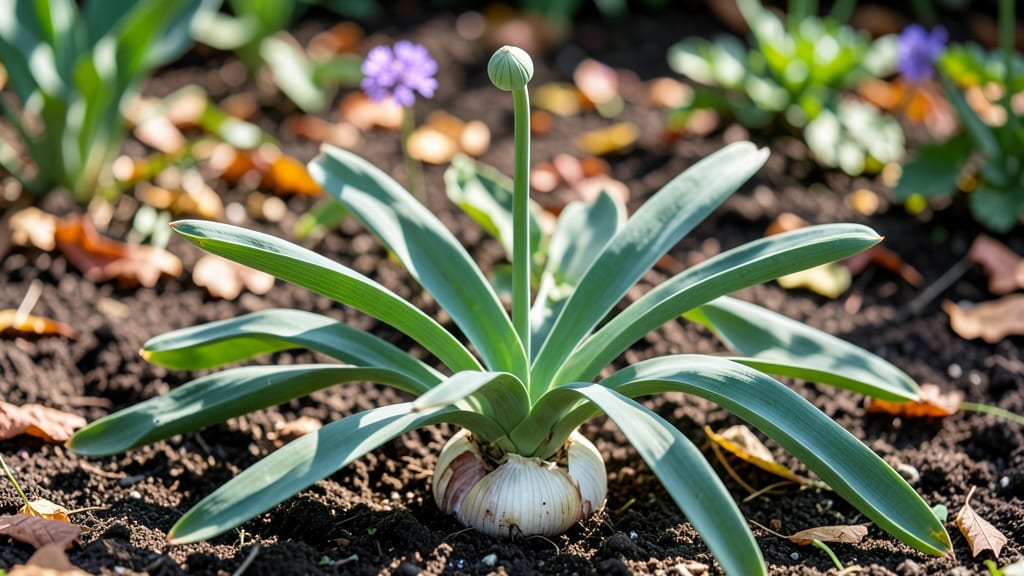
Garlic is not a true perennial plant because it dies back annually, though it multiplies underground via bulbs. Unlike hardy perennials, it requires replanting every 1-2 years for optimal harvests and regrowth.
Garlic's life cycle is more complex than many gardeners realize. 🌱 While it produces new shoots each spring from stored energy in its bulbs, these aren't true perennial roots but rather modified stems that eventually exhaust their reserves.
The plant's above-ground growth dies completely each year, requiring new planting to maintain productivity. This annual dieback is why gardeners often treat it as a biennial crop—planting in fall and harvesting the following year, then repeating the cycle.
What makes this interesting is how garlic adapts to seasonal changes. The cold winter months trigger dormancy, while warmer temperatures stimulate regrowth from the bulb's base. This behavior explains why many gardeners successfully grow garlic year after year without replanting—though with diminishing returns.
The key difference from true perennials like asparagus lies in garlic's complete above-ground dieback each season, which forces gardeners to actively manage its life cycle through strategic planting and harvesting.
💡 In This Article
- Why Garlic’s Life Cycle Differs From Classic Perennials
- How to Grow Garlic Like a Perennial (With Workarounds)
Why garlic’s life cycle differs from classic perennials
Garlic’s bulb is actually a modified underground stem called a corm, not a true root system. This structure stores energy and nutrients for regrowth, but unlike perennial roots (like those in asparagus or rhubarb), garlic bulbs don’t continuously produce new shoots from a persistent underground network.
Instead, each bulb contains 10-20 cloves, each capable of sprouting independently—this is why you see multiple stalks emerging from a single bulb in spring.
The cold winter months are critical: temperatures below 40°F trigger dormancy, halting growth until warmth returns. True perennials like lavender or peonies have deep root systems that survive winter intact, but garlic’s bulb system relies on stored energy.
After 1-2 years, the bulb’s reserves deplete, causing the plant to produce smaller, less viable cloves—a clear sign it’s time to replant. This exhaustion explains why gardeners often see garlic yields decline after the second year without renewal.
Here’s the botanical twist: garlic’s shoots emerge from the bulb’s base, not from roots. These shoots draw directly from the bulb’s stored starches and sugars, which get converted into energy for regrowth.
Unlike perennial plants that regenerate from specialized root structures, garlic’s entire above-ground system dies back annually, leaving only the bulb in the soil. This complete dieback is why it’s classified as a biennial rather than a true perennial.
Think of it like a battery: each garlic bulb has a finite charge. Planting new cloves each fall recharges the system, while true perennials have an infinite power source thanks to their root networks.
The cold also plays a dual role—it forces dormancy but also vernalizes (prepares) the cloves for next year’s growth, a process that doesn’t occur in tropical perennials like ginger.
What’s fascinating is how garlic adapts to this limitation. When you plant a bulb, its cloves can produce 10-15 new bulbs in a single season, creating a natural multiplication effect.
However, without replanting, these offspring bulbs will gradually weaken over successive years, as they’re not connected to a persistent root system. This is why gardeners often divide and replant garlic every 2-3 years to maintain vigor.
The key takeaway? Garlic’s life cycle is a clever survival strategy for short-lived plants in temperate climates. Its bulb acts as a portable energy reserve, allowing it to thrive in regions where true perennials might struggle.
But this adaptability comes with trade-offs: the need for regular replanting and the annual dieback that sets it apart from classic perennials. 🌱