
Vegetables
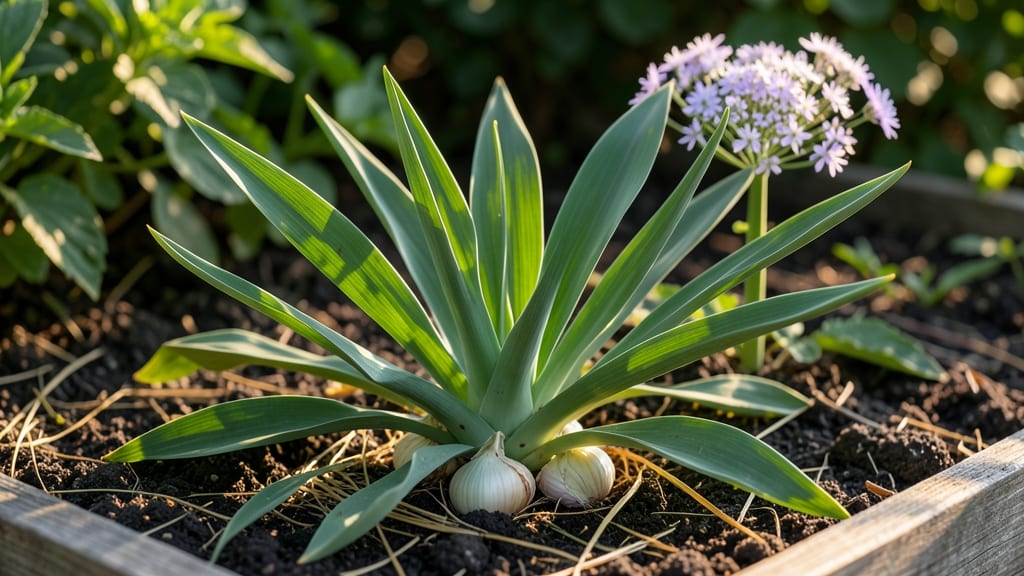
Garlic grows as a perennial only in frost-free climates (USDA Zones 8-10), but gardeners in colder regions treat it as a biennial or annual since freezing temperatures kill the tops and disrupt bulb formation.
This distinction comes down to garlic's biological response to temperature.
In warmer zones, garlic plants can survive year-round, sending up new shoots from the same bulbs. 🌱 However, when temperatures drop below 20°F, the plant's foliage dies back, and the bulb enters a dormant state—meaning it won't regrow without replanting.
Many gardeners in colder areas actually prefer this annual cycle because it produces larger, more flavorful bulbs when grown from scratch each season.
What's fascinating is how garlic adapts: in mild winters (Zones 5-7), you can sometimes get partial regrowth, but true perennial behavior only happens where winter highs rarely dip below 30°F.
This is why commercial garlic farms in California (Zone 9) can harvest the same plants year after year, while Midwestern growers must replant annually.
💡 In This Article
- Garlic’s Perennial Nature: How Climate Affects Growth Cycles
- Overwintering Garlic in Cold Climates: Step-by-Step Survival Guide
Garlic’s perennial nature: how climate affects growth cycles
Garlic's botanical classification as a perennial only manifests in frost-free climates like USDA Zones 8-10, where winter temperatures rarely drop below 30°F. In these conditions, garlic plants can survive multiple growing seasons from the same root system, producing new shoots annually.
The key mechanism is the plant's ability to maintain viable meristem tissue (growth points) through mild winters, allowing continuous bulb production without replanting.
The magic happens in the bulb's basal plate—a dense cluster of cells that acts like a biological hard drive, storing energy and growth instructions. When temperatures stay above 20°F, these cells remain active, enabling regrowth.
In colder zones, however, freezing temperatures trigger a survival response: the foliage dies back completely, and the bulb enters deep dormancy. This cold sensitivity explains why gardeners in Zones 5-7 must replant each fall—without new planting, the dormant bulbs won't regenerate because their meristem tissue gets damaged by frost.
Here's where temperature becomes the critical switch: below 25°F, garlic's natural flowering response is triggered, but the plant lacks the energy to complete bulb formation. This is why you'll see garlic bolt (send up flower stalks) in early spring—it's trying to reproduce sexually rather than bulbify.
In warmer climates, the plant focuses its energy on bulb development instead. 🌱 The result? In Zone 9, you might harvest the same garlic patch for years, while in Zone 6, you're essentially growing a new plant each season.
This climate-driven behavior has practical implications for flavor and yield. Perennial garlic in warm zones tends to develop smaller, but more pungent bulbs over time, while annually replanted garlic in colder areas produces larger, milder bulbs.
The trade-off? Annual planting gives gardeners more control over variety selection and soil conditions, which can actually improve quality in colder regions where winter kill is a risk.
Consider this comparison: In California's Zone 9 climate, garlic can be harvested continuously with minimal effort, while in Minnesota's Zone 4, gardeners must carefully time fall planting and use heavy mulching just to protect the bulbs through winter.
The same species behaves completely differently because of temperature's impact on its biological clock.
What most gardeners don't realize is that even in colder climates, garlic's perennial tendencies can sometimes peek through.
If you leave bulbs in the ground over winter in Zone 6 with adequate mulch, you might get partial regrowth in spring—though the bulbs will be smaller and less flavorful than fresh plantings.
This "semi-perennial" behavior shows how close garlic is to being a true perennial, if only winter temperatures would cooperate.