
Flowers
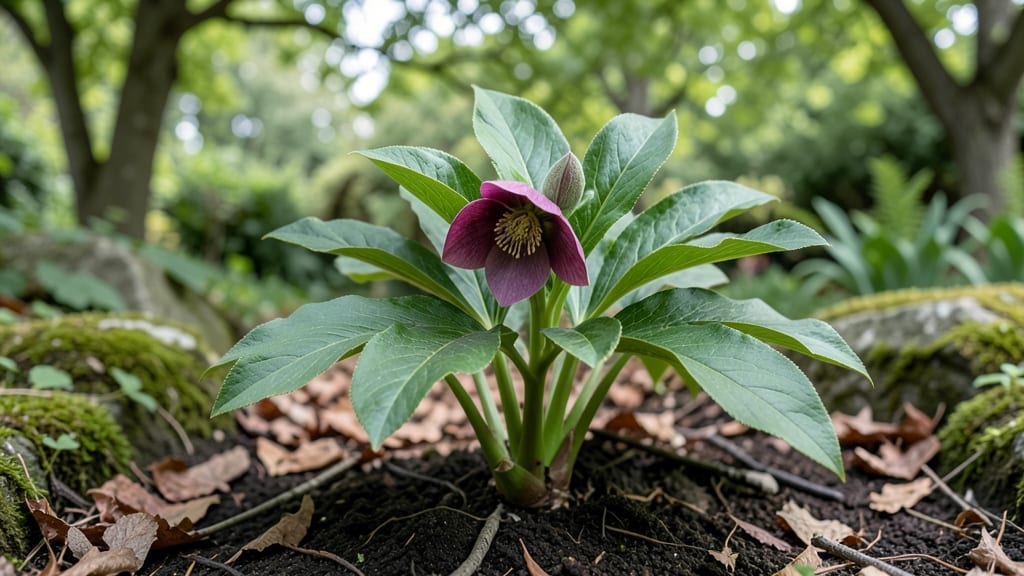
Yes, hellebore is a perennial plant that returns year after year, showcasing its glossy evergreen leaves and delicate flowers in late winter or early spring, with cold tolerance that depends on the specific variety and regional climate.
Hellebore earns its reputation as a hardy perennial thanks to its deep root systems and ability to thrive in cooler temperatures. 🌱 Many varieties, like the classic Christmas rose (Helleborus niger), can survive winter dormancy with minimal protection, while others may need mulch in colder zones.
The key to their longevity lies in their slow growth habit and adaptability to partial shade, making them perfect for gardeners who want low-maintenance beauty year-round.
What sets hellebore apart is how it blooms before most perennials—often in late winter when few other flowers are visible. This early show means you'll get vibrant color even in the coldest months.
Just remember that while they're tough, some species prefer well-draining soil to avoid rot, and overwatering can shorten their lifespan.
💡 In This Article
- Hellebore Perennial Growth Patterns Explained
- Best Practices for Cultivating Hellebore as a Perennial
Hellebore perennial growth patterns explained
Hellebore thrives as a perennial because of its unique rhizomatous root system, which stores nutrients and moisture year-round. Unlike annuals that complete their lifecycle in one season, hellebore develops a deep, fibrous root network that allows it to survive winter dormancy.
This system can extend 12-18 inches below the soil surface, giving it access to water and nutrients even in dry spells. The roots also contain antifreeze proteins similar to those in winter wheat, which protect cellular structures from freezing damage.
The plant's evergreen foliage plays a crucial role in its perennial nature. While some leaves may yellow and die back in harsh winters, new growth emerges from the roots in early spring.
Species like Helleborus niger (Christmas rose) can maintain their leaves through mild winters, while Helleborus orientalis varieties often lose theirs but regrow quickly. This dual strategy ensures the plant can photosynthesize early in the season when other perennials are still dormant.
Hellebore's blooming cycle is another key to its perennial success. Flowers appear on leafless stems in late winter or early spring, often before the foliage fully develops. This early flowering is possible because hellebore stores energy in its roots during summer and fall.
The blooms can last 6-8 weeks, providing color when few other plants are in season. After flowering, the plant enters a summer dormancy period where it focuses on root and foliage growth rather than flowering.
Species-specific differences determine how each hellebore handles winter. Helleborus niger is the most cold-hardy, surviving temperatures down to -20°F with proper mulching, while Helleborus orientalis varieties typically need protection below 10°F.
The Lenten rose (Helleborus × sternii) falls somewhere in between, with moderate cold tolerance. These variations mean gardeners in colder climates should choose species carefully or provide winter protection.
The plant's slow growth rate (typically 3-6 inches per year) contributes to its longevity. This gradual development means hellebore can live for decades with proper care, unlike fast-growing annuals. The deep roots also make them resistant to being dug up by animals or disturbed by foot traffic.
This combination of factors explains why hellebore has been a garden staple for centuries, particularly in European landscapes.
What makes hellebore's perennial nature particularly fascinating is its ability to flower while still young. Unlike many perennials that take several years to establish, hellebore can produce blooms within 1-2 years of planting from seed or division.
This rapid flowering, combined with its long lifespan, makes it one of the most reliable perennials for early-season color. The trade-off is that hellebore prefers consistent conditions—too much disturbance or improper soil can shorten its lifespan significantly.
Understanding these growth patterns helps explain why hellebore has earned its reputation as a "workhorse" perennial.
Its deep roots, winter survival strategies, and early flowering all work together to create a plant that delivers beauty with minimal maintenance. 🌿 For gardeners, this means hellebore can thrive in shady corners where other plants might struggle, providing color when the garden needs it most.