
Planting
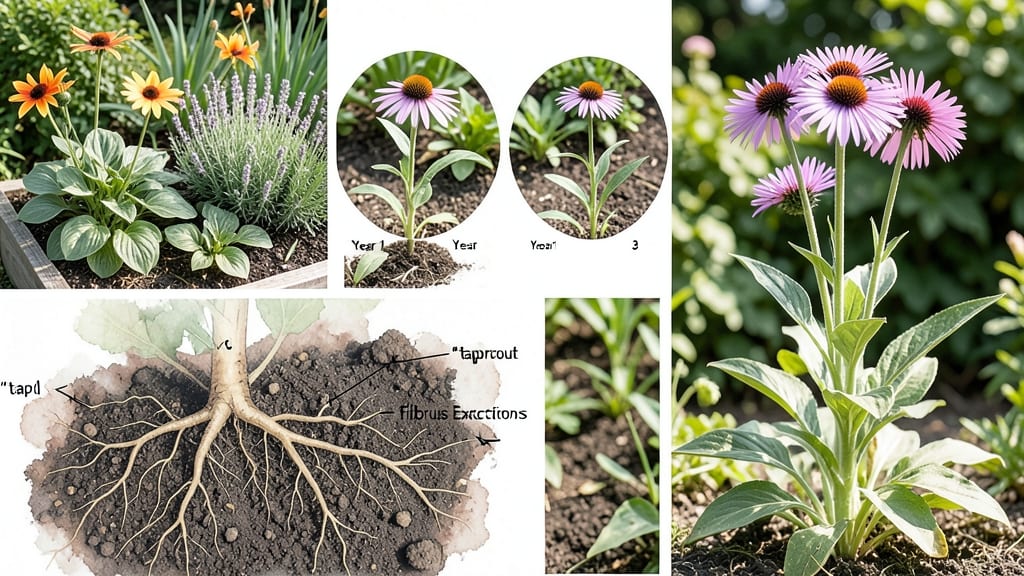
A perennial plant means it lives for more than two years, regrowing from the same root system annually, often returning with flowers or foliage each season after dormancy. Unlike annuals, they establish deep roots and persist through harsh conditions, offering long-term gardening benefits.
A perennial plant thrives because its roots remain alive underground even when the foliage dies back, allowing it to bounce back each spring. 🌱 This hardiness makes them ideal for gardeners who want low-maintenance plants that reward patience with years of blooms or foliage.
For example, peonies can live for decades, while hostas spread gradually but reliably. The key difference from annuals lies in their ability to weather droughts and cold snaps by storing energy in their roots, which annuals simply can't do.
This resilience also means perennials often improve with age, developing stronger root systems and more robust growth patterns. Many gardeners favor them because they reduce the need for replanting, creating a sustainable garden ecosystem.
However, their long-term growth habits require thoughtful planning—especially when choosing between clumping varieties (like daylilies) and aggressive spreaders (like mint) that need containment.
💡 In This Article
- How Perennial Plants Survive Year After Year
- Choosing Perennials for Your Garden: Lifespan and Care Tips
How perennial plants survive year after year
Perennial plants owe their longevity to specialized root systems that act like underground energy banks. Unlike annuals, which complete their entire life cycle in one season, perennials develop rhizomes (horizontal roots), tubers (thickened underground stems), or deep taproots that store carbohydrates and nutrients.
For example, peonies store energy in thick, fleshy roots that can survive -20°F temperatures, while daylilies use rhizomes that regenerate quickly after winter dormancy. These storage organs allow the plant to "sleep" through harsh conditions while maintaining metabolic activity just enough to stay alive.
The dormancy process is where perennials truly shine. During winter, many perennials enter a state called endodormancy, where growth hormones are suppressed, and protective compounds like sugars and antifreeze proteins build up in their tissues. This isn't true hibernation—it's more like a strategic power-down.
Take hostas: their leaves die back in fall, but the crown (where leaves meet roots) remains alive, ready to sprout as soon as soil temperatures hit 50°F in spring.
Some perennials, like bleeding hearts, even produce secondary buds along their stems that can regrow if the main stem is damaged, adding another layer of resilience.
What sets perennials apart from annuals isn't just their lifespan but their ability to reallocate resources each year. Annuals invest everything into one reproductive cycle, while perennials divert energy to root growth and storage.
This is why established perennials often outperform young plants—after three years, a well-rooted coneflower can produce 50% more flowers than its first-year self. The trade-off?
It takes time to establish that root system, which is why many gardeners recommend giving perennials their first 2-3 years of undisturbed growth before expecting peak performance.
There's also the fascinating case of monocarpic perennials, which live for years but flower and die only once. Agave plants, for example, take 10-20 years to mature before producing a single massive flower stalk, then die. This contrasts sharply with true perennials like lavender, which flower annually for decades.
The distinction highlights how "perennial" describes a growth habit rather than a fixed lifespan—some simply choose to reproduce and exit the game after one epic performance, while others play the long game.
Climate adaptation plays a crucial role too. Perennials in arid regions, like desert marigolds, develop deep taproots reaching 6+ feet underground to access water, while those in temperate zones focus on cold hardiness through antifreeze proteins.
Even within the same species, regional varieties adapt—Northern-grown peonies have thicker roots than Southern varieties, which prioritize early spring growth.
This geographic specialization means selecting the right perennial for your zone (like USDA Zone 5-9 for most herbaceous perennials) can mean the difference between a thriving plant and one that struggles to survive winter.
Consider the root crown—the transition zone between roots and stems—as the plant's command center. This is where meristem cells (growth points) remain protected year-round.
When you see a perennial like catmint sending up new shoots from the same spot for 15+ years, it's because those meristems have been carefully preserved through every seasonal challenge.
The plant's ability to sense environmental cues (like day length changes) triggers precisely timed dormancy and regrowth cycles, creating a self-sustaining loop that annuals simply can't match.