
Companion Plants
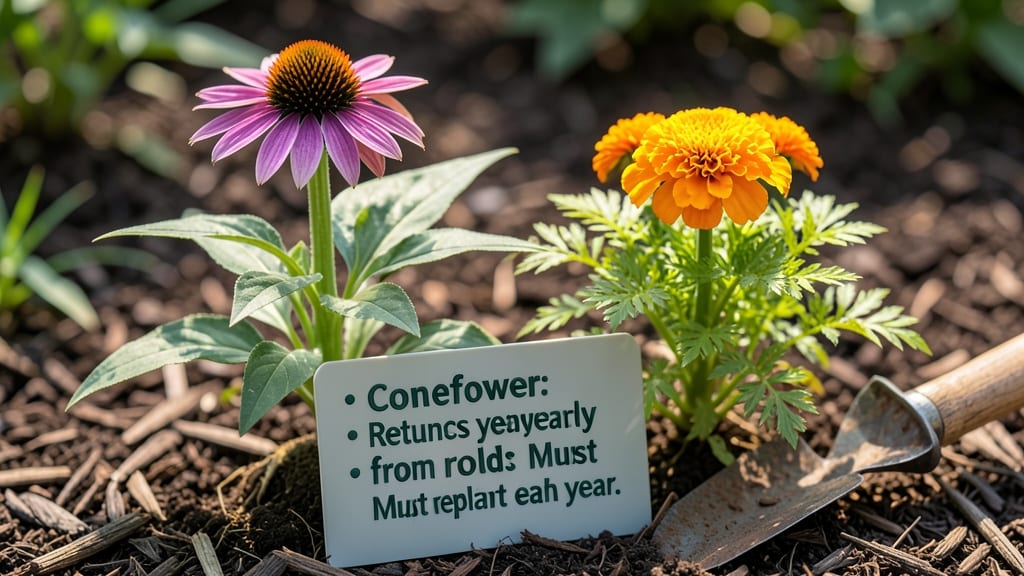
Which plants come back every year—annuals or perennials? The answer is perennials, which regrow from deep root systems or underground storage structures, while annuals live only one season and must be replanted each spring. This fundamental difference shapes garden design and maintenance strategies.
This distinction isn't just about longevity—it's about how plants store energy and survive seasonal changes.
Perennials like coneflowers and hostas develop robust root systems that remain dormant in winter but spring back to life when temperatures rise. 🌱 Annuals, on the other hand, focus all their energy on producing flowers and seeds within a single growing season, which is why they fade away after blooming.
Understanding this helps gardeners choose plants that align with their long-term goals, whether it's creating a low-maintenance landscape or planning seasonal color rotations.
For example, if you want a garden that thrives with minimal replanting, perennials like black-eyed Susans or lavender are excellent choices. They'll return year after year with less effort, while annuals like marigolds or petunias require annual replanting for continuous color.
The trade-off? Perennials often establish slowly but reward patience with decades of growth, while annuals deliver instant impact.
💡 In This Article
- How Perennial Roots Survive Winter Dormancy
- Best Perennial Plants for Year-Round Garden Returns
How perennial roots survive winter dormancy
Perennials survive winter through specialized underground structures that store energy and protect vital growth points. These include rhizomes (horizontal stems like in ginger), bulbs (onion-like layers), tubers (potato-like storage roots), and crowns (compressed stems).
Each structure contains dormant buds that remain viable even when above-ground foliage dies back in cold months. For example, a daylily rhizome can store enough starches to fuel regrowth for years, while a tulip bulb contains concentrated nutrients protected by tough outer scales.
The survival mechanism involves three key processes: energy storage, insulation, and dormancy triggers. During summer, perennials like peony (with its thick, fleshy roots) convert sunlight into stored carbohydrates, which can sustain the plant through 6 months of dormancy in cold climates.
The roots also produce antifreeze proteins similar to those in cold-hardy animals, preventing ice crystal formation that could rupture cells. When temperatures drop below 40°F, hormonal signals (like abscisic acid) induce dormancy, halting growth until warm spring conditions trigger regrowth.
What makes this system remarkable is how different structures adapt to specific climates. Deep-rooted perennials like Russian sage (with roots extending 6 feet deep) access groundwater, while shallow-rooted creeping thyme survives by staying close to the soil surface where temperatures are more stable. The trade-off?
Shallow-rooted perennials often need winter mulch (like 3-4 inches of straw) to protect against freeze-thaw cycles that can heave roots out of the ground. This is why hostas thrive in Zone 5 but may struggle in Zone 3 without winter protection.
Annuals lack these adaptations because their entire life cycle occurs in one growing season. Instead of storing energy, they allocate resources to rapid flowering and seed production.
For instance, a sunflower annual might grow 10 feet tall in just 3 months, but its roots are shallow and non-woody—unable to survive freezing. The contrast becomes clear when comparing perennial salvia (which returns with woody stems) to annual cosmos (which must be replanted yearly).
Here's what happens biologically during dormancy: The plant's meristematic cells (growth centers) enter a state of suspended animation, with metabolic rates dropping by 90%. This slows water loss and prevents cellular damage from freezing.
When spring arrives, rising temperatures trigger the production of gibberellins, hormones that "wake up" the buds. Within 2-4 weeks of consistent warmth above 50°F, new shoots emerge from these protected growth points.
Consider the crown of a bearded iris—this compact structure sits just below the soil surface, containing all the genetic material needed for regrowth. Even if the above-ground foliage browns completely in winter, the crown remains alive, ready to push out new leaves when conditions improve.
This is why perennials can often survive -20°F temperatures in their hardiest forms, while annuals would perish instantly in such cold.