
Flowers
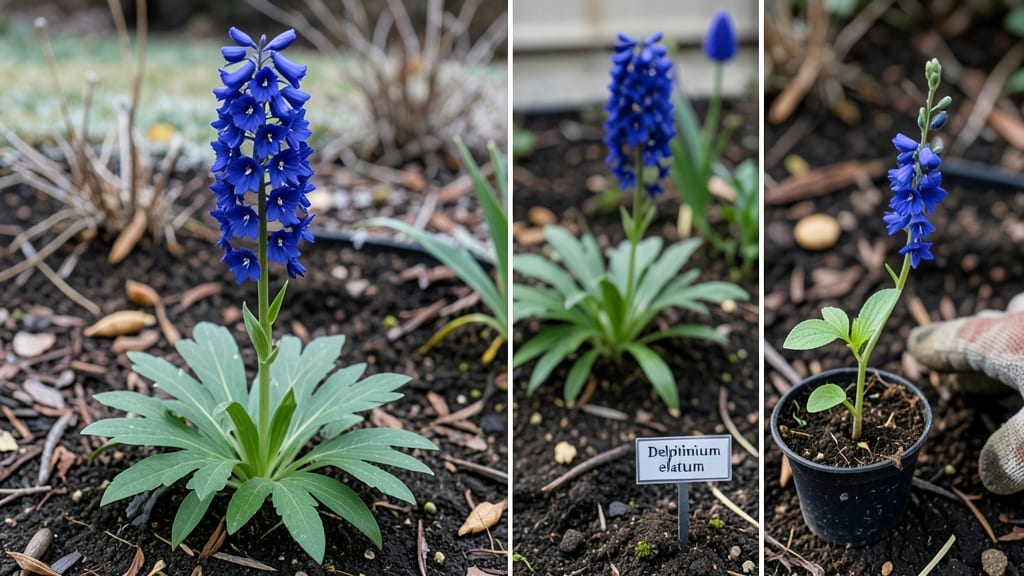
Larkspur is not a true perennial in most climates, as it typically dies back after flowering but self-seeds prolifically, often returning the following year naturally. In colder regions, it behaves as an annual or biennial unless grown as a tender perennial with winter protection.
Larkspur's growth cycle depends heavily on your climate zone.
In warmer regions (USDA zones 7-10), it often acts as a short-lived perennial, producing stunning spikes of flowers before fading away—only to regrow from self-sown seeds the next season. 🌱 The key to keeping it around is understanding its natural tendencies: these plants store energy in their roots during the growing season, which allows them to bounce back if given proper care.
In colder zones (3-6), most varieties won't survive winter without protection, making them behave more like annuals or biennials.
What makes larkspur unique is its ability to self-seed aggressively. Even if the parent plant dies back, you'll often see fresh sprouts emerging the following spring—though these may not always match the original plant's characteristics.
This trait makes it a favorite for cottage gardens, where its unpredictable but reliable returns create natural beauty year after year.
💡 In This Article
- Larkspur’s Lifespan: Annual, Biennial, or Perennial?
- How to Extend Larkspur’s Life as a Garden Perennial
Larkspur’s lifespan: annual, biennial, OR perennial?
The botanical classification of larkspur (Delphinium spp.) hinges on its growth habit and response to environmental stressors. In most temperate climates, it behaves as a short-lived perennial—meaning it completes its life cycle in 2-3 years but doesn't always survive multiple winters.
The key difference lies in its root system: larkspur stores energy in fibrous roots during the growing season, allowing it to regrow from the base if conditions are favorable. However, these roots lack the hardiness of true perennials like peonies or hostas, which can endure decades of freeze-thaw cycles.
Climate zones dramatically alter larkspur's behavior. In USDA zones 7-10, where winters rarely drop below 10°F, larkspur often acts as a biennial: it produces foliage in its first year, flowers in the second, and may self-seed before dying back.
In colder zones (3-6), most varieties behave as annuals—completing their entire life cycle in one season unless protected. The critical threshold is -20°F: below this, even well-established plants will succumb to frost damage, as their roots lack the insulating properties of true perennials.
What sets larkspur apart is its self-seeding strategy. Even if the parent plant dies, it releases 100-500 seeds per spike, which germinate readily in spring. These seedlings often emerge with 50-70% viability in ideal conditions, creating the illusion of perennial behavior.
The trade-off? Genetic variability means subsequent generations may differ in height, color, or hardiness—sometimes producing weaker plants that struggle in colder climates.
For gardeners in marginal zones (USDA 6-7), the distinction matters most. Here, larkspur can act as a "semi-perennial": it may survive one winter with 3-4 inches of mulch but often requires annual replanting.
The Delphinium elatum group (tall garden larkspur) is particularly sensitive, while Delphinium ajacis (annual larkspur) thrives in warmer areas by completing its cycle in 60-90 days.
Understanding these patterns helps explain why larkspur thrives in cottage gardens but disappoints in formal perennial beds. Its ephemeral nature creates seasonal drama—bold spikes in summer followed by dieback—while its aggressive self-seeding ensures it never truly disappears.
This duality is what makes larkspur both a charming wildflower and a frustrating perennial wannabe.
Consider this analogy: larkspur is like a firework—dazzling but fleeting, unless you're willing to provide the right conditions for its seeds to spark new displays. 🌟