
Flowers
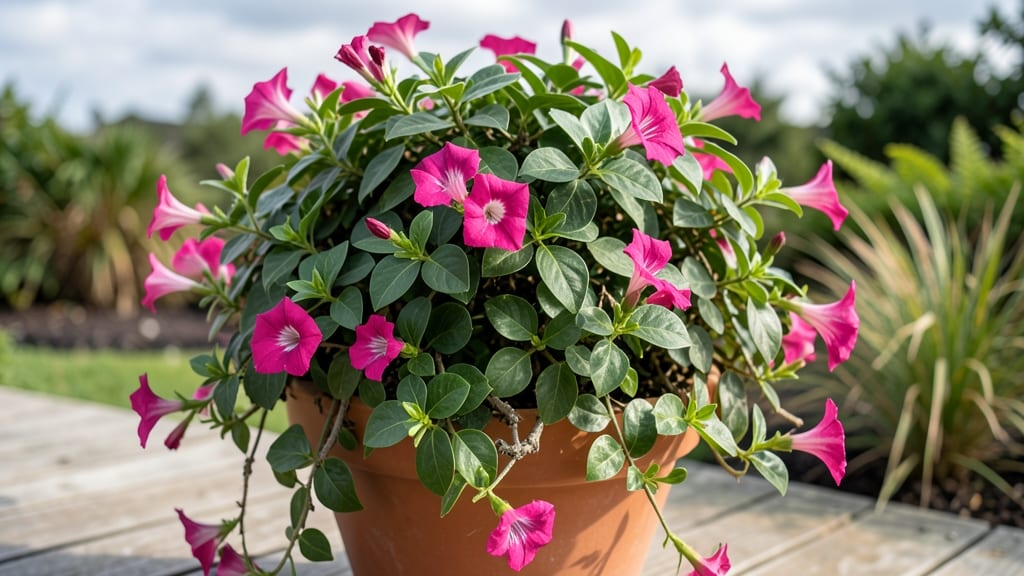
Determining whether vining mandevilla is annual or perennial depends on your climate: it thrives as a hardy perennial in USDA zones 9-11 but typically dies back in frost-prone areas, requiring annual replanting. However, with proper winter protection—like moving potted plants indoors or heavy mulching—you can coax it through multiple growing seasons even in cooler regions.
This tropical beauty's lifespan hinges on temperature tolerance—mandevilla can't handle frost, which kills its woody stems and leaves. 🌿 In warmer zones, it naturally returns each spring, but colder climates force gardeners to treat it as an annual unless they take proactive steps like container growing or indoor overwintering.
I've seen mandevilla survive three winters in zone 8 by bringing it inside before the first frost, proving that with the right care, its "annual" status is more about climate than biology.
What sets mandevilla apart is its adaptability when given the right conditions. Unlike true annuals that complete their lifecycle in one season, mandevilla's dormant roots can regrow if protected. This makes it a semi-perennial in marginal zones—neither fully annual nor perennial, but capable of both with strategic care.
The key is understanding your local frost dates and acting before temperatures drop below 30°F.
💡 In This Article
- Why Vining Mandevilla Dies in Cold Weather
- How to Overwinter Mandevilla for Year-Round Growth
Why vining mandevilla dies in cold weather
The vining mandevilla's struggle with cold stems from its tropical origins in South America, where temperatures rarely dip below 50°F. This plant evolved in environments with consistent warmth and high humidity, making its woody stems and leaves extremely sensitive to frost.
When temperatures drop below 32°F, ice crystals form within the plant's cells, rupturing their membranes—a process called freeze-thaw damage. The damage isn't just cosmetic; it disrupts the plant's vascular system, preventing water and nutrient transport.
In USDA zones 9-11, where winter lows typically stay above 20°F, mandevilla naturally enters dormancy but survives because the roots remain protected by the soil's insulating properties.
The critical threshold is 28°F: below this, even the hardiest varieties begin suffering irreversible damage. 🌡️ What's fascinating is how quickly this happens—just 1-2 hours of exposure to 25°F can kill the above-ground growth, though the roots may linger for weeks in milder soils.
This explains why gardeners in zone 8 often see their plants "come back" after a mild winter—only to be wiped out by the first hard freeze.
The plant's leaves contain high levels of moisture, which expands when frozen, causing cellular rupture. The stems, though woody, lack the protective bark found in temperate plants like oak trees. Without this natural insulation, the stems become brittle and snap under their own weight when frozen.
This is why you'll often see mandevilla's dramatic collapse after a cold snap—it's not just wilting, but actual structural failure at the cellular level.
What makes this particularly challenging for gardeners is the plant's growth cycle. Mandevilla grows most vigorously when days are long and warm (above 70°F), meaning it's actively photosynthesizing right up until the first frost.
This rapid growth makes it more vulnerable to cold damage because younger stems contain more water. In contrast, established plants in zone 10 may develop slightly more cold tolerance through gradual acclimation, but this is minimal compared to true cold-hardy plants.
Interestingly, the plant's roots can survive temperatures down to 15°F if protected by organic mulch, which is why many gardeners focus their overwintering efforts on root protection rather than the above-ground growth.
The roots contain stored carbohydrates that could potentially regrow new shoots in spring—if given the chance. This biological resilience is what makes mandevilla's classification as "annual or perennial" so climate-dependent.
Consider this comparison: In Miami (zone 10b), mandevilla grows as a robust perennial, while in Seattle (zone 8a), it behaves like an annual unless carefully overwintered. The difference isn't in the plant itself, but in how its biology interacts with local temperature patterns.
Understanding this fundamental temperature sensitivity is key to determining whether your mandevilla will make it through winter or become next year's compost.