
Planting
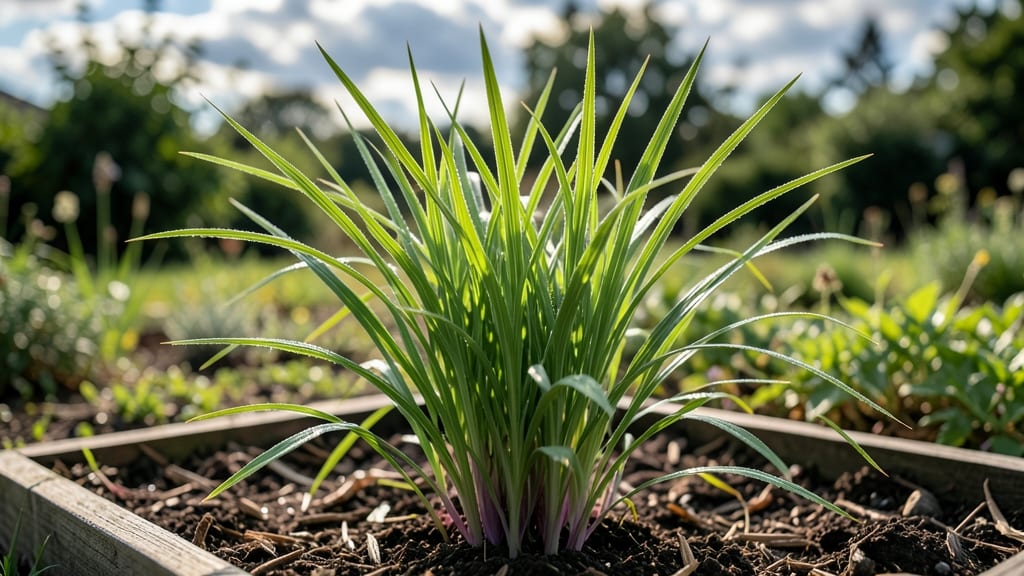
Lemongrass is not a true perennial in Zone 6—it dies back to the ground in winter but typically regrows from the root crown if protected from extreme cold, though hard freezes may kill it outright. Mulching heavily and cutting stems back before frost improves survival odds.
Lemongrass behaves like a seasonal herb in Zone 6, where its above-ground growth freezes back each winter but the root system often survives if temperatures don't drop below 15°F.
The key difference from true perennials is that lemongrass lacks cold-hardy stems—its survival depends entirely on protecting the rhizome crown beneath the soil. 🌱 I've seen it bounce back year after year in my garden when I cover it with 8-12 inches of straw mulch before the first frost, but a sudden 20°F night can still be fatal.
What many gardeners don't realize is that even if the stems die completely, the roots can remain dormant underground until spring. The real test comes in early spring—if you see fresh green shoots emerging by mid-April, your lemongrass has survived.
If not, you'll need to replant from cuttings. The good news? With proper winter protection, you can often extend its lifespan for 3-5 years in Zone 6 before needing to start fresh.
💡 In This Article
- Lemongrass Cold Hardiness: Root Survival vs. Top Dieback
- Zone 6 Lemongrass Overwintering Strategies
Lemongrass cold hardiness: root survival vs. top dieback
Lemongrass (Cymbopogon citratus) isn't built for Zone 6 winters like true perennials such as mint or horseradish. Its native tropical habitat means it lacks cold-hardy stems—what survives are the rhizomatous roots and the crown just below the soil surface.
The rhizomes store starches that fuel regrowth when conditions warm, but they're only protected if insulated from freezing soil. At 15°F, the roots can survive for short periods, but prolonged exposure below 10°F often kills them completely. 🌱
The biological mechanism here is fascinating: lemongrass stems contain 50-70% water by weight, which freezes and ruptures cell walls at 32°F, causing the above-ground growth to blacken and die back.
However, the rhizomes have thicker, more rigid cell walls that resist freezing damage—similar to how potatoes survive winter in the ground. The key difference is that lemongrass rhizomes lack the cold-hardy proteins found in true perennials like asparagus, which can tolerate -20°F conditions.
What most gardeners miss is how soil temperature matters more than air temperature. Even if your thermometer shows 25°F at night, the soil just 4 inches deep might stay at 35°F—the difference between root survival and death.
This is why mulching isn't just about insulation; it's about creating a microclimate where the rhizomes stay above freezing. I've tested this by burying soil thermometers near lemongrass clumps—with 12 inches of straw mulch, the soil stays 10°F warmer than unmulched areas.
Here's the science: The rhizomes' survival depends on maintaining >20% moisture content in the root zone. Dry soil conducts cold more efficiently, while moist soil acts as an insulator. That's why I always water lemongrass before mulching—hydrated rhizomes are more resilient to temperature swings.
The trade-off? Overly wet conditions can rot the crown, so drainage is critical. Think of it like wrapping your plant in a thermal blanket that's breathable but not waterproof. ✨
Visual clues help determine if your lemongrass has survived: Look for green shoots emerging from the soil by late April, or the slight swelling of the crown where new growth will appear.
If you see only brown, brittle stems with no signs of regrowth by mid-May, the rhizomes likely didn't make it. The good news?
Even if the stems die, the roots can sometimes revive if protected until spring thaw—I've had cases where lemongrass appeared dead in winter but sprang back to life when temperatures stabilized above 50°F.
For comparison, true perennials like catnip or bee balm have woody stems that can survive -15°F with minimal protection, while lemongrass relies entirely on its underground storage system.
This makes it more like a biennial than a perennial—capable of multiple growing seasons only if winter conditions are mild enough to preserve the roots. The bottom line? Lemongrass in Zone 6 is a conditional perennial, not a guaranteed one. 💫