
Flowers
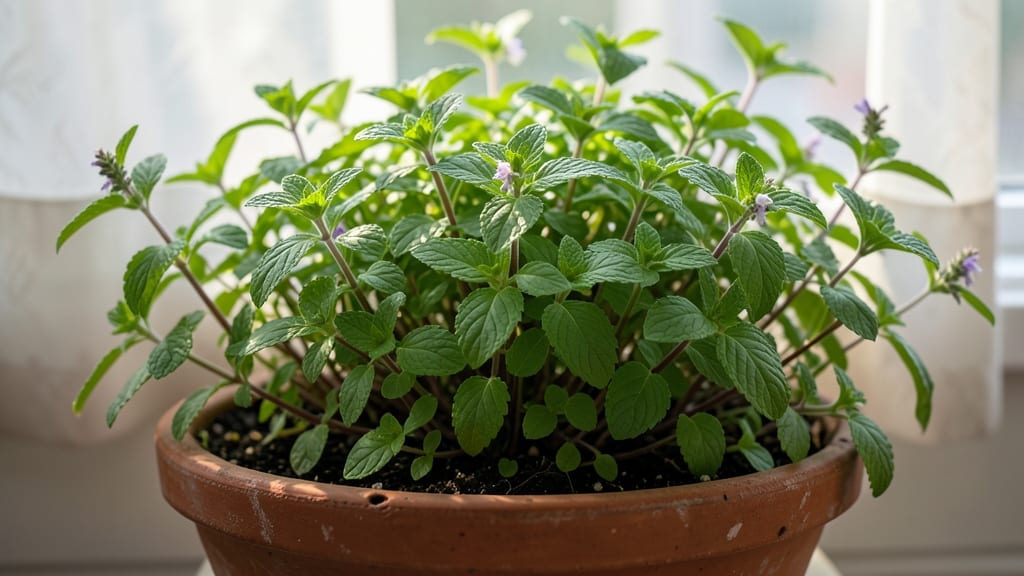
Mint behaves as the perennial or annual plant in USDA hardiness zones 5-9, where it dies back to the ground during winter but regrows vigorously each spring from its root system. In colder regions, it often acts like an annual unless given winter protection.
Mint's perennial nature comes down to its robust root system, which stores energy underground during cold months. 🌱 In zones 5-9, these roots survive winter dormancy and sprout fresh shoots when temperatures rise, making mint a reliable garden staple.
The challenge comes in colder climates where frost can kill back the plant entirely—though with proper protection like mulch or containers, you can still coax it back year after year.
What's fascinating is how mint adapts: even in harsh winters, the roots often remain viable, ready to burst back to life when conditions improve. This resilience explains why gardeners in marginal zones swear by overwintering techniques—whether it's burying pots deeper or using thick mulch layers.
The key is understanding your local microclimate and giving mint the right conditions to bounce back.
💡 In This Article
- How Mint’s Perennial Growth Cycle Works in Different Climates
- Best Practices for Growing Mint as a Perennial in Any Zone
How mint’s perennial growth cycle works in different climates
Mint’s perennial nature stems from its fibrous root system, which can extend 3-5 feet deep and spread horizontally, creating an extensive network that stores carbohydrates during dormancy.
These roots contain specialized cells called parenchyma, which act like natural storage units, holding energy reserves that fuel regrowth when temperatures rise above 40°F in spring.
This system allows mint to survive winter dieback—where above-ground stems blacken and collapse—while keeping the root crown alive and ready to sprout new shoots.
The transition between dormancy and regrowth is triggered by temperature shifts, not just daylight hours. In zones 5-9, mint enters dormancy when nighttime temperatures consistently drop below 32°F for extended periods, causing cellular dehydration in the stems.
However, the roots remain hydrated thanks to their depth, which insulates them from extreme cold. When spring arrives and soil temperatures reach 50°F, the roots activate growth hormones like auxin, prompting new shoots to emerge within 2-3 weeks.
This cycle explains why mint often appears "dead" in winter but returns with vigor each spring.
Climate plays a critical role in how aggressively mint regrows. In zone 9, where winters are mild, mint may continue growing year-round with minimal dieback, while in zone 5, the roots endure 6-8 weeks of dormancy before sprouting.
The key difference lies in frost depth: in colder zones, deeper frost can damage shallow roots, forcing mint to behave more like an annual unless protected. This is why gardeners in zones 3-4 often treat mint as a seasonal plant unless they use containers or mulch to insulate the roots.
Mint’s ability to regenerate also depends on soil moisture during dormancy. Even in cold climates, roots need 20-30% soil moisture to stay viable. If the ground freezes solid or becomes bone-dry, the roots can desiccate or starve, preventing regrowth.
This is why mulching with 4-6 inches of straw or leaves in fall is a game-changer—it locks in moisture and insulates roots from temperature swings, giving mint the best chance to survive winter and rebound in spring.
What most gardeners overlook is how mint’s growth cycle mirrors its wild relatives, which thrive in disturbed, moist soils along streams and forest edges. In nature, mint spreads via underground runners, allowing it to exploit resources efficiently.
This same strategy makes it a resilient garden plant—so long as the roots aren’t starved of water or smothered by compacted soil. The trade-off? Its aggressive spread can turn mint into an invasive nuisance if not contained, which is why many growers opt for containers or root barriers.
For a real-world example, consider two mint plants grown side by side: one in zone 7 (mild winters) and one in zone 5 (harsh winters).
The zone 7 plant might show 10-20% dieback in winter but regrow fully by April, while the zone 5 plant could lose 80-90% of its foliage and require 6-8 weeks to recover—unless it’s mulched or grown in a pot that can be moved to a sheltered spot.
This stark contrast highlights how climate dictates whether mint acts as a true perennial or a short-lived annual.