
Flowers
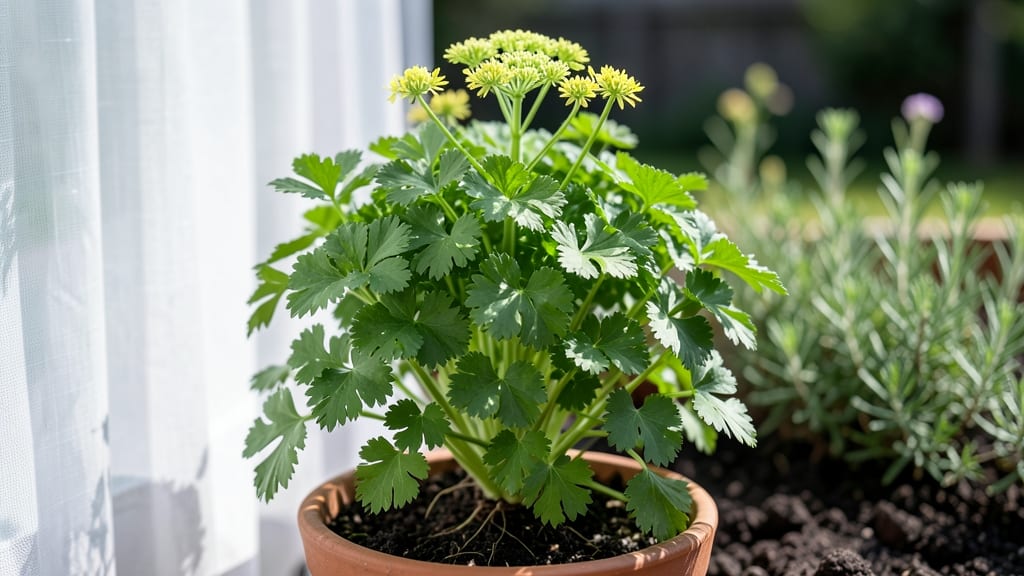
Parsley is a perennial herb that dies back in cold climates but regrows from its root system in spring, confusing many gardeners into thinking it’s an annual. Its hardiness varies by variety and growing conditions.
Parsley's perennial nature is easy to overlook because its above-ground foliage freezes and turns brown in winter, making it seem like the plant has died completely. 🌱 However, the root system remains alive underground, ready to push new growth once temperatures rise in spring.
This behavior is particularly common in colder USDA zones (3-6), where parsley often needs extra protection to survive the winter months.
What sets parsley apart from true annuals is its ability to regenerate from the same root system year after year, provided it receives proper care during dormancy.
Many gardeners mistakenly pull up dead-looking parsley in autumn, only to realize later that they've accidentally removed a plant that could have returned the following season.
💡 In This Article
- Why Parsley Appears to Die in Winter
- How to Grow Parsley as a Perennial
Why parsley appears to die in winter
Parsley's winter dieback happens because its above-ground growth is highly sensitive to freezing temperatures. When nighttime lows drop below 20°F, the leaves and stems begin to yellow and crisp, creating the illusion of total death.
This cold sensitivity is why many gardeners mistake parsley for an annual—it looks completely lifeless by late fall. The key difference from true annuals is that parsley's root system remains viable underground, storing energy in its thick, fleshy taproot.
The plant's survival strategy involves entering dormancy, a state where metabolic processes slow dramatically to conserve energy. During this period, the root system continues to respire (breathe) at a minimal rate, maintaining just enough cellular activity to stay alive.
In milder climates (USDA zones 7-10), parsley often regrows naturally with minimal intervention, while in colder zones (3-6), it requires protective measures like thick mulching or container insulation to prevent root damage from freezing soil.
What makes this particularly confusing is how parsley's regrowth timing varies by location. In zone 5, you might see new shoots emerge as early as late March, while in zone 8, growth could begin in January.
The plant's ability to regenerate depends on soil temperatures reaching 40°F consistently for at least 7-10 days. This delayed response is why gardeners often assume the plant has died permanently when it's actually preparing for its annual renewal cycle.
The botanical term for this behavior is "cold hardiness with dormancy," where the plant conserves energy through winter rather than dying completely. This adaptation allows parsley to survive temperatures as low as -15°F when properly protected, though its foliage will still show winter damage.
The root system's resilience comes from its high starch content, which serves as an energy reserve during dormancy—similar to how trees store nutrients in their roots over winter.
Interestingly, parsley's cold sensitivity varies between its two main varieties. Curly parsley tends to be slightly more tender and may require more winter protection, while flat-leaf (Italian) parsley often handles cold better due to its denser foliage structure.
This variety difference explains why some gardeners succeed with parsley as a perennial while others struggle—location and variety both play crucial roles in determining whether the plant will return each season.
One common misconception is that parsley's winter dieback indicates poor health. In reality, this is a natural survival mechanism that occurs even with healthy plants. The brown, crispy foliage you see in winter is simply the plant's way of conserving energy until conditions improve.
This process is particularly noticeable in established plants with strong root systems—young parsley plants often lack the reserves needed to survive winter and may indeed die if not protected.