
Flowers
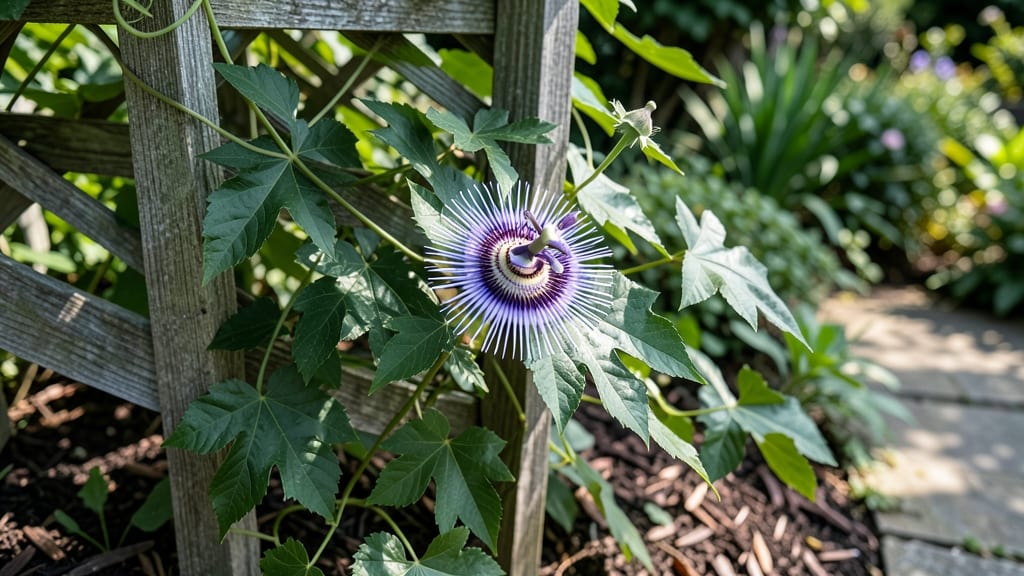
Yes, passionflower is a perennial vine that returns every year from its hardy roots, even though it loses its above-ground growth in winter.
This dieback-and-regrowth cycle is what defines passionflower as a perennial. Unlike annuals that complete their entire life cycle in one season, passionflower stores energy in its thick, woody roots during winter dormancy. 🌱 When spring arrives, new shoots emerge from these roots, proving its perennial nature.
The key difference from annuals is this root system's ability to survive freezing temperatures—when properly protected—allowing the plant to bounce back year after year.
What makes this especially interesting is how passionflower adapts to its environment. In warmer climates (zones 9-11), it may only experience light dormancy, while in cooler zones (7-8), you'll need to provide extra mulch or frost blankets to shield the roots.
This resilience is why gardeners in these zones still consider it a reliable perennial with the right winter care.
The plant's deciduous habit—losing all leaves in winter—can be confusing for new growers, but it's completely normal behavior for many perennials, including peonies and hostas. The real test of passionflower's perennial status comes in spring when those vibrant new leaves and flowers reappear, proving the plant's tenacity.
💡 In This Article
- Passionflower’s Dieback Cycle Explained
- Growing Passionflower as a Perennial: Pruning and Winter Care Tips
Passionflower’s dieback cycle explained
Passionflower's perennial nature hinges on its rhizomatous root system, which stores carbohydrates and nutrients during winter dormancy. Unlike annuals that die completely after seeding, passionflower roots remain alive underground, protected by a thick, woody structure that can withstand freezing temperatures down to 10°F when properly insulated.
This underground network acts like a biological battery, converting stored starches into energy for spring regrowth.
The plant's dramatic winter dieback—losing all foliage and vines—is actually a survival strategy.
As temperatures drop below 40°F, passionflower triggers hormonal changes that cause leaves to senesce (yellow and fall off), conserving moisture and energy. 🌱 What appears dead is merely dormant; the roots remain metabolically active, maintaining cellular integrity through antifreeze proteins that prevent ice crystal formation.
This contrasts sharply with annuals like marigolds, which complete their entire lifecycle in one growing season without any persistent root structure.
What's fascinating is how this cycle mirrors other hardy perennials like black-eyed Susans or bee balm. All three plants exhibit similar dormancy patterns, but passionflower's vine structure adds complexity—its woody stems die back completely, while the roots remain.
This dual-system approach explains why gardeners often see passionflower "come back from the dead" each spring with fresh, vigorous growth from the base.
The timing of this cycle is precise: dormancy begins in late fall when day lengths shorten, peaking in winter when roots enter a state of cold hardiness. As temperatures rise above 50°F in spring, the roots detect warmth and begin producing auxin hormones that stimulate bud break.
This biological clock ensures passionflower emerges at optimal times for growth, typically between late March and May depending on your climate zone.
Here's where things get practical: the plant's ability to regrow depends entirely on root health. If roots freeze solid (below -5°F without protection), they can't recover.
This is why zone 7 gardeners need to take special precautions—mulching with 4-6 inches of straw or leaves creates an insulating blanket that maintains root temperatures above freezing. The contrast with annuals couldn't be more stark: passionflower's survival depends on this root system, while annuals have no such persistence mechanism.
Consider this visual comparison: an annual's life cycle is like a firework—bright and spectacular but completely gone after its display. Passionflower is more like a phoenix, with its roots serving as the hidden foundation that allows it to rise from the ashes each spring.
This root-driven persistence is what truly defines it as a perennial vine rather than an annual or biennial plant.