
Flowers
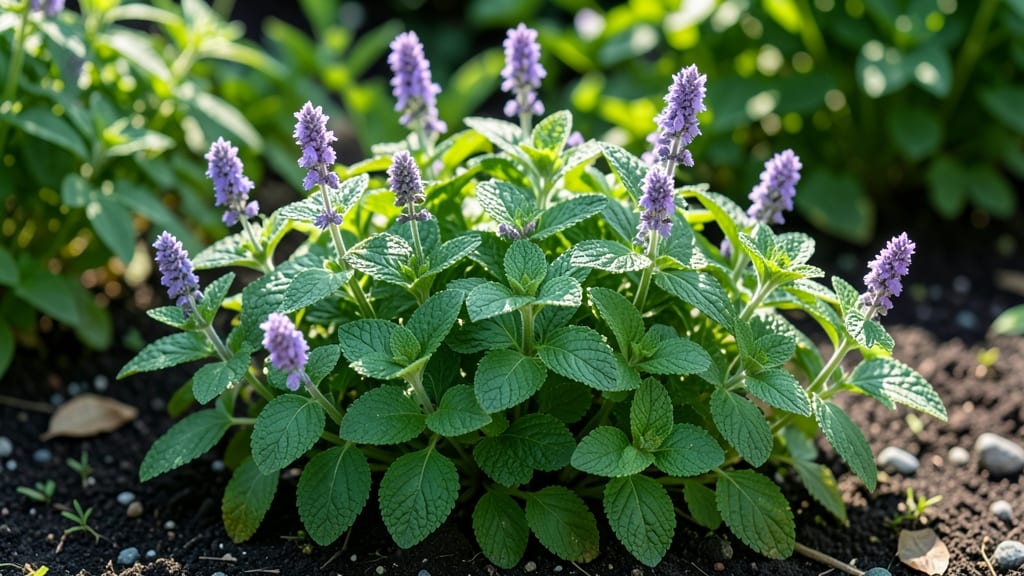
Yes, peppermint is a perennial herb that returns each year from its tough underground rhizomes, thriving in USDA zones 5-9 with proper care, though colder regions may need winter protection like mulch or container growing.
Peppermint's perennial nature comes from its robust root system, which stores energy underground to regrow each spring. 🌱 Unlike annual herbs that die back completely, peppermint's rhizomes act like natural survival kits, allowing it to bounce back year after year.
The key to its longevity lies in these underground stems—when temperatures drop below 20°F, they enter dormancy but remain alive, ready to sprout when conditions improve.
This hardiness makes peppermint ideal for gardeners in moderate climates, though northern growers often face challenges. The plant's natural cold tolerance extends down to -10°F in protected conditions, but extreme winters may still require extra care.
I've found that adding 3-4 inches of straw mulch in late fall creates an insulating blanket that preserves root health through harsh freezes.
The perennial growth habit also means peppermint spreads aggressively—its rhizomes can expand 1-2 feet per year if unchecked. This makes it perfect for borders or dedicated patches, though it's best contained in pots if you want to control its spread.
The trade-off? Once established, it requires minimal maintenance and rewards you with fresh leaves for years.
💡 In This Article
- Peppermint’s Perennial Growth Cycle Explained
- Cold-Climate Peppermint Care: Mulching and Container Hacks
Peppermint’s perennial growth cycle explained
The secret to peppermint's perennial nature lies in its specialized rhizome system—a horizontal, underground stem that acts like a biological battery. These thick, fleshy roots store carbohydrates and nutrients during dormancy, allowing the plant to regenerate above ground each spring.
Unlike annual herbs like basil or cilantro, which complete their entire life cycle in one season, peppermint's rhizomes can persist for decades under ideal conditions, with some gardeners reporting healthy plants over 20 years.
Rhizomes also enable peppermint to spread aggressively through a process called vegetative reproduction. Each node along the rhizome can sprout new shoots when conditions are favorable, creating dense patches that can expand 1-2 feet annually if unchecked.
This growth habit explains why peppermint often escapes garden boundaries—its roots seek out moisture and nutrients underground while the above-ground stems produce the familiar minty leaves we harvest. 🌱 The trade-off? This vigor makes containment essential for most gardeners.
Temperature plays a critical role in peppermint's survival. The plant enters dormancy when nighttime temperatures drop below 40°F, with roots remaining active down to -10°F in protected conditions. However, prolonged exposure to below 0°F can damage unprotected rhizomes, which is why USDA zones 5-9 represent its optimal range.
In colder zones, the plant's ability to photosynthesize slows dramatically, forcing it into a deeper dormancy that requires careful winter protection.
What sets peppermint apart from other perennials is its cold hardiness combined with its rapid regrowth. While many perennials like lavender require 2-3 years to establish, peppermint can produce harvestable leaves within 6-8 weeks of spring emergence.
This dual advantage—hardiness plus speed—makes it one of the most resilient garden herbs for temperate climates. The key mechanism is its ability to balance energy storage with quick regrowth when temperatures rise.
For those in marginal zones (like zone 4), the difference between annual and perennial growth often comes down to winter protection. A well-mulched peppermint plant can survive winters that would kill unprotected annuals, demonstrating how its rhizome system functions like an energy reserve system.
This biological adaptation explains why peppermint thrives where many other herbs would perish—it's not just about surviving winter, but about storing enough energy to bounce back stronger each spring. ✨
Understanding this growth cycle helps explain why peppermint often outlives gardeners. The plant's ability to regenerate from even small rhizome fragments means it can recover from accidental damage or poor winter conditions.
This resilience is why peppermint spreads so successfully in the wild—it's evolved to prioritize survival over rapid above-ground growth, making it a true perennial powerhouse in the herb garden. 💫