
Planting
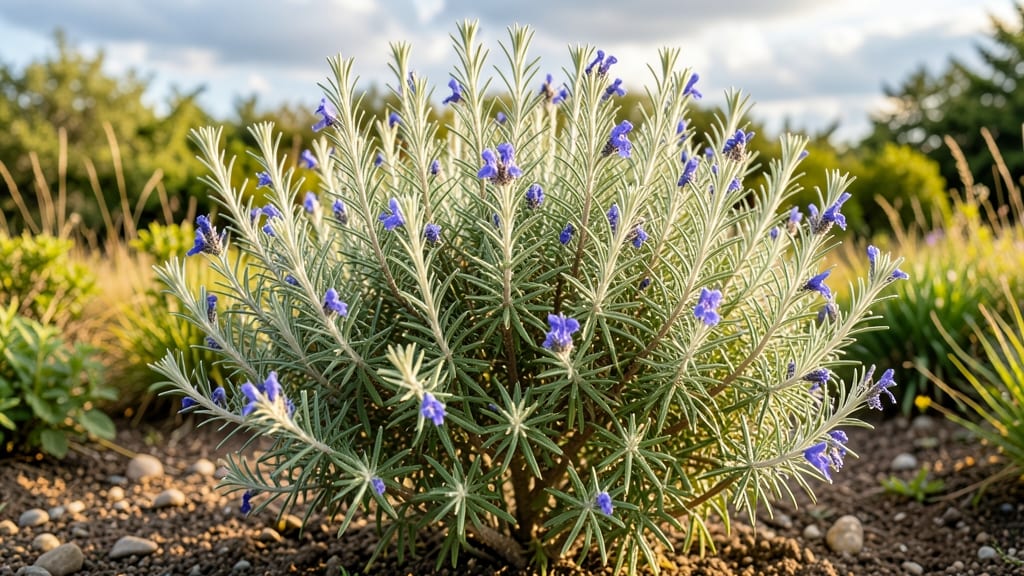
Rosemary isn't reliably perennial in Zone 7 without protection, since it naturally thrives in USDA Zones 8-10. However, with smart winter care—like heavy mulching, container growing, or cold frames—it can persist through mild winters and regrow each spring.
Rosemary's Mediterranean roots mean it's adapted to warmer climates, where temperatures rarely drop below 20°F.
In Zone 7, where winters can reach -10°F, the plant often succumbs to frost damage unless you take proactive steps. 🌿 The key is understanding that while rosemary can tolerate brief cold snaps, prolonged freezing will kill the plant back to the ground.
Many gardeners successfully grow rosemary in Zone 7 by treating it as a semi-perennial—protecting it through winter and pruning back in spring to encourage new growth.
What sets rosemary apart from other hardy herbs like thyme or oregano is its sensitivity to both cold air and frozen soil. The roots need protection from freezing temperatures, which is why container growing or deep mulching becomes essential.
I've found that even a 6-inch layer of straw mulch can make a significant difference in survival rates during mild winters.
💡 In This Article
- Rosemary’s Cold Hardiness Limits in Zone 7
- Zone 7 Rosemary Winter Survival Strategies
Rosemary’s cold hardiness limits in Zone 7
Rosemary's native Mediterranean climate means it evolved to handle warm, dry conditions with minimal frost exposure. Its hardiness zone range of USDA Zones 8-10 reflects this adaptation, where winter temperatures rarely drop below 20°F.
In Zone 7, where winter lows can reach -10°F, rosemary's woody stems and leaves become vulnerable to frost damage. The plant's cellular structure contains high levels of essential oils that can crystallize when exposed to freezing temperatures, disrupting the plant's ability to transport water and nutrients.
The real challenge in Zone 7 isn't just air temperature but soil temperature, which can drop even lower than ambient air. Rosemary roots struggle when soil temperatures fall below 25°F, causing root rot or complete die-off.
This is why even established rosemary plants may appear fine above ground during mild winters only to fail when a hard freeze hits. 🌡️ Compared to other Mediterranean herbs, rosemary is more cold-sensitive than thyme (Zone 5-9) but similar to oregano (Zone 5-9), though oregano has slightly better cold tolerance due to its more robust root system.
What makes rosemary particularly vulnerable is its shallow root system, which typically extends only 12-18 inches deep. This limits its ability to access deeper, warmer soil layers during cold snaps. In contrast, herbs like sage (Zone 5-9) develop deeper roots that provide better insulation.
The needle-like leaves of rosemary also make it prone to frost burn—those characteristic aromatic needles can turn brown and crispy when exposed to temperatures below 28°F for more than a few hours.
The science behind rosemary's cold sensitivity involves its photosynthesis process. When temperatures drop below freezing, the chlorophyll in rosemary leaves begins to degrade, turning the foliage brown. This damage isn't always immediately fatal, but it weakens the plant's ability to photosynthesize efficiently when temperatures warm up again.
The essential oils that give rosemary its signature aroma also act as antifreeze in nature, but only to a limited extent—typically protecting the plant from brief dips to 25°F but failing during prolonged cold periods.
Consider this comparison: while rosemary can tolerate brief exposures to 20°F, sustained temperatures below 15°F will kill most varieties back to the ground. This is why gardeners in Zone 7 often treat rosemary as a semi-perennial rather than a true perennial.
The good news is that rosemary's root system can often survive even when the above-ground growth dies back, allowing for regrowth in spring when conditions warm up again.
One key factor that affects rosemary's cold hardiness is its maturity level. Younger plants with less established root systems are particularly vulnerable, while older, more established rosemary bushes have slightly better cold tolerance. However, even mature plants need protection from prolonged freezing to survive Zone 7 winters.
The plant's ability to regenerate from its root crown makes it more resilient than many might expect, but this process requires careful winter management.