
Flowers
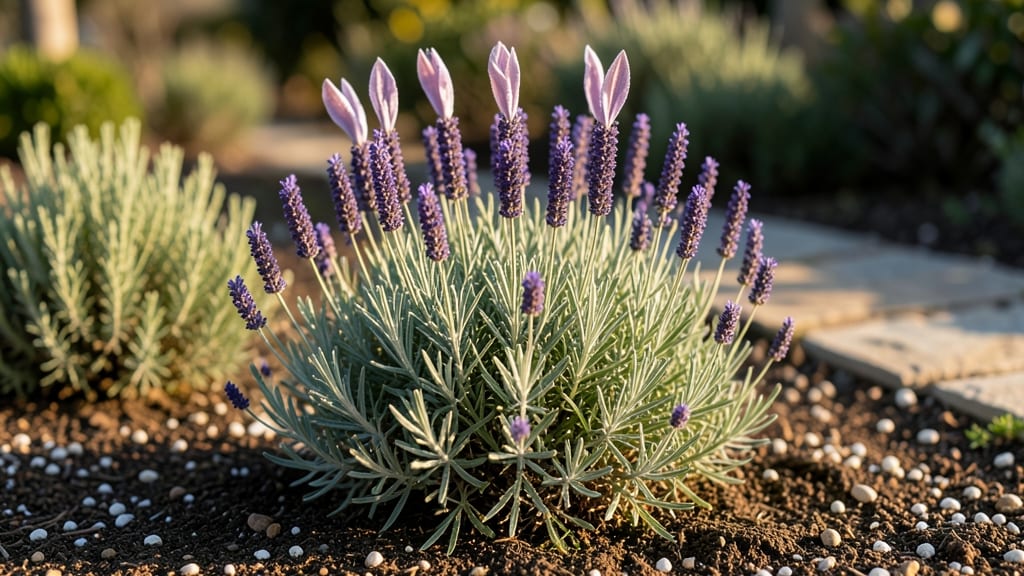
Spanish lavender is a perennial in mild climates but often dies back in colder zones, regrowing from its root crown each spring when temperatures rise above freezing. Its hardiness varies by cultivar and winter conditions.
Spanish lavender thrives as a perennial in warmer regions but behaves differently in colder climates. 🌱 Unlike its hardy English lavender cousins, Spanish lavender often loses its foliage in freezing temperatures, only to bounce back from its resilient root system once spring arrives.
This dieback is completely normal—it's not dead, just dormant. The key to its survival lies in the root crown, which remains protected underground even when the stems appear brown and crispy.
What sets Spanish lavender apart is its adaptability. Some cultivars handle USDA zones 5-6 with proper winter care, while others struggle below zone 7. The secret to success? Mulching heavily around the base before frost and avoiding overwatering, which can weaken the roots.
I've seen gardeners in zone 5 keep their Spanish lavender thriving for years by treating it like a semi-dormant plant—giving it space to recover each spring.
💡 In This Article
- Spanish Lavender’s Cold-Hardiness Zones and Growth Habits
- How to Protect Spanish Lavender in Freezing Weather
Spanish lavender’s cold-hardiness zones and growth habits
Spanish lavender's perennial nature depends entirely on its ability to survive winter dormancy. Unlike annuals that complete their life cycle in one season, Spanish lavender stores energy in its thick, woody root crown—the swollen base where stems emerge.
This underground system can endure temperatures down to 10°F (-12°C) for short periods, though prolonged exposure below 20°F (-7°C) often causes visible dieback above ground.
The science here is fascinating: as temperatures drop, the plant triggers a biochemical response that shuts down active growth and redirects resources to protect vital organs.
USDA hardiness zones provide a useful framework for predicting performance. Most Spanish lavender cultivars thrive in zones 7-9, where winters rarely drop below 10°F (-12°C) for extended periods.
In zone 6, you'll often see partial dieback unless you implement winter protection, while zone 5 gardeners typically treat it as a tender perennial that may need annual replanting.
The 'Grosso' cultivar, for example, handles zone 5 winters better than 'Sawyers' due to its thicker stems and deeper root system—up to 12 inches deep in mature plants.
What makes Spanish lavender's survival so remarkable is its ability to regenerate from just a few protected buds. Even when the stems appear completely brown and crispy, the root crown remains alive beneath the soil.
This process begins when soil temperatures rise above 40°F (4°C) in spring, signaling the plant to break dormancy. I've observed that new growth emerges from the base within 2-3 weeks after the last hard frost, often accompanied by a fresh, slightly citrusy aroma that's unmistakably Spanish lavender.
The key factor distinguishing Spanish lavender from its English lavender relatives is its growth habit. While English lavender forms dense, woody shrubs, Spanish lavender grows more loosely with 3-4 foot tall stems that can flop in heavy rain.
This open structure allows better air circulation, which helps prevent fungal issues during winter dormancy. However, this same trait makes it more vulnerable to frost damage on the stems—hence the common misconception that it's not truly perennial in colder climates.
Consider these cultivar-specific hardiness examples:
- 'Sawyers' (Lavandula stoechas 'Sawyers'): Handles zone 6 with protection, zone 7+ without
- 'Grosso' (Lavandula stoechas 'Grosso'): More cold-tolerant, survives zone 5 winters
- 'Anouk' (Lavandula stoechas 'Anouk'): Compact growth, better for zone 7+ containers
The root system's depth and density play crucial roles in winter survival. Mature plants develop roots that extend 18-24 inches deep, anchoring them against temperature fluctuations. This deep rooting also helps them access moisture during dry spells, which is particularly important in early spring when they're preparing to regrow. 🌱