
Aphids
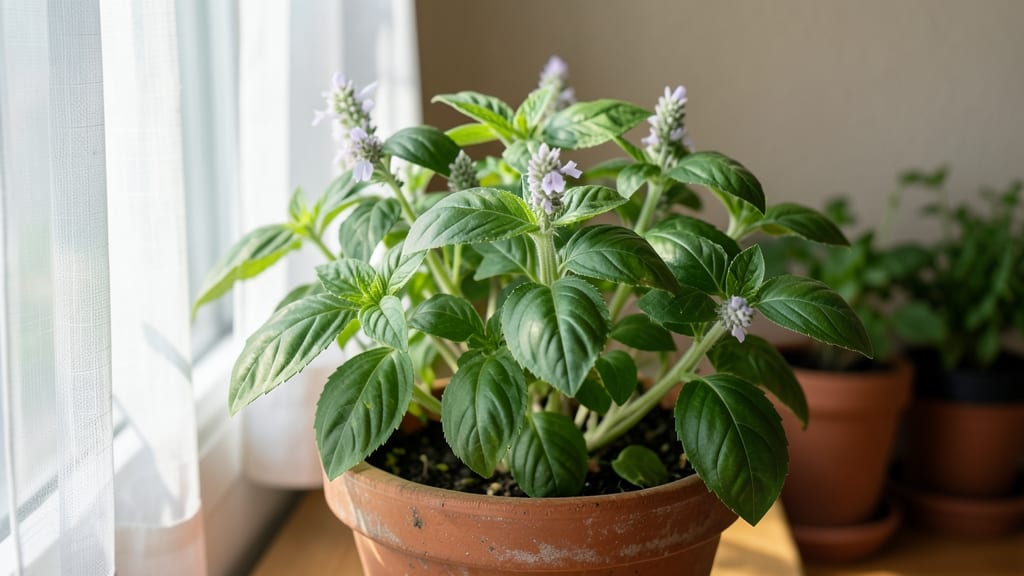
Sweet basil is not a true perennial in most climates, as it dies back with frost and typically requires replanting each spring. However, in warm, frost-free zones (USDA 10-11), it may survive winter with proper care and mulching.
Sweet basil's lifespan depends heavily on your climate zone.
In colder regions, frost kills the plant's tender stems, forcing gardeners to treat it as an annual. 🌱 The key difference lies in temperature tolerance—basil thrives in warm zones where winter temps rarely drop below 30°F, allowing it to regrow from its root system.
Even then, mulching with straw or leaves and protecting it from wind can help extend its life in marginal zones.
For those in cooler areas, overwintering indoors or harvesting seeds before frost offers a way to preserve your basil's genetics for next year. I've found that starting seeds early in containers gives me a head start on the growing season, while also protecting against late frosts.
💡 In This Article
- Sweet Basil’s Perennial Potential in Different Climates
- Extending Sweet Basil’s Lifespan: Overwintering Tips
Sweet basil’s perennial potential in different climates
Sweet basil's perennial status hinges on temperature thresholds—specifically, its inability to tolerate prolonged exposure below 30°F.
The plant's tender stems and leaves freeze at these temperatures, causing irreversible damage to the aboveground growth. 🌱 What makes this tricky is that basil's root system can survive slightly colder temps (25°F for short periods), but the plant won't regrow until warm conditions return.
This explains why gardeners in USDA zones 5-9 typically treat it as an annual, even though the roots might persist through winter.
The real difference emerges in frost-free zones (USDA 10-11), where winter temperatures rarely dip below 35°F. In these areas, basil behaves like a true perennial because the root crown remains protected and can sprout new growth when temperatures rise.
Studies show that basil plants in these zones can live 2-3 years with proper care, producing new shoots each spring from the same root system. The key mechanism here is the plant's ability to enter a dormant state during cooler periods while maintaining viable roots.
Microclimate factors play a surprising role in extending basil's lifespan even in marginal zones. For example, basil growing near south-facing walls or under tree canopies may experience 5-10°F warmer microclimates than open garden beds. 🌿 This localized warmth can be enough to prevent frost damage during light freezes.
I've observed that container-grown basil in sheltered spots often survives winters in zone 8 with just a thick mulch layer, demonstrating how small environmental adjustments can make a big difference in perennial potential.
Another critical factor is the plant's growth cycle. Basil is a fast-growing annual that completes its life cycle in 60-90 days under optimal conditions. When grown as a perennial, it focuses energy on root development rather than seed production, which changes its growth pattern.
In warm zones, you'll notice basil plants develop thicker, woody stems over time—a clear sign of perennial adaptation. This structural change allows the plant to better withstand environmental stresses and recover from pruning.
For those curious about regional variations, consider this comparison: In Florida (zone 10), basil often grows as a perennial with minimal intervention, while in New York (zone 6), even container-grown plants rarely survive winter without protection.
The 15°F difference between these zones explains why basil's perennial potential varies so dramatically across the country. Understanding these temperature thresholds helps gardeners make informed decisions about whether to treat basil as an annual or attempt overwintering.
The science behind basil's frost sensitivity lies in its tropical origins. Native to Central Africa and Asia, sweet basil evolved in warm climates where temperatures rarely drop below 50°F. This genetic adaptation explains why it struggles in colder regions—its cellular structure simply isn't equipped to handle freezing temperatures.
However, this same tropical heritage gives it remarkable resilience in warm climates, where it can thrive for multiple seasons with proper care.