
Aphids
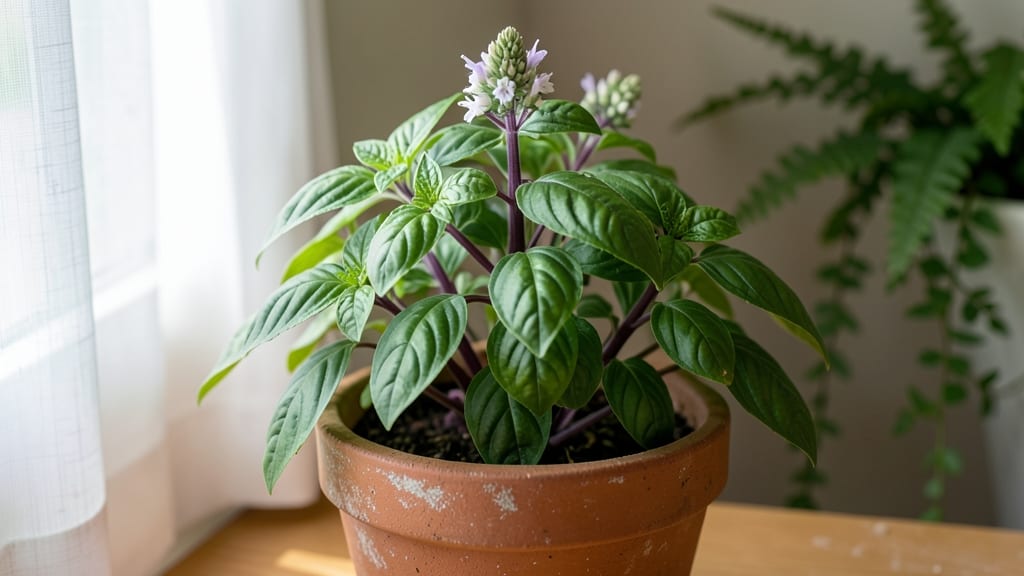
Thai basil acts as a perennial only in frost-free zones (USDA 9-11), where it can regrow from its base after winter. In colder climates, it behaves like an annual, dying back when temperatures drop below 25°F.
Thai basil's growth habits depend entirely on your local climate. 🌱 In warmer regions like Southern California or Florida, the plant can establish deep roots that survive winter dormancy, allowing it to regrow from the same base in spring.
However, in most of the U.S., where temperatures dip below 25°F, Thai basil simply won't make it through winter—its tender stems and leaves blacken and die back completely. This is why gardeners in colder zones treat it as an annual, replanting fresh seeds each spring.
The key difference lies in its root system. While Thai basil can develop a modest root network, it lacks the cold-hardy constitution of true perennials like mint or oregano. Even with protective measures like mulching or container cultivation, the plant's delicate structure makes it vulnerable to frost damage.
That said, if you're in a mild-winter zone, giving it a little winter protection can sometimes coax it back to life come spring.
💡 In This Article
- Thai Basil’s True Growth Cycle: Annual vs Perennial Behavior
- Extending Thai Basil’s Life: Overwintering Strategies for Cold Climates
Thai basil’s true growth cycle: annual vs perennial behavior
Thai basil's growth behavior stems from its tropical origins in Southeast Asia, where it thrives in warm climates year-round. This tropical heritage means its biological systems aren't equipped to handle prolonged exposure to freezing temperatures.
When nighttime temps drop below 32°F, the plant's cellular structure begins to break down, causing irreversible damage to its leaves and stems. The critical threshold for survival sits around 25°F—below this point, the plant's water content freezes and expands, rupturing cell walls like ice cracking a glass.
The key distinction between annual and perennial growth lies in its root system. True perennials like rosemary develop thick, woody roots that store nutrients and protect against cold.
Thai basil, however, produces a fibrous root system that's more delicate—while it can establish a network about 12-18 inches deep in ideal conditions, these roots lack the insulating properties needed to survive winter dormancy in cold climates.
In frost-free zones (USDA 9-11), these roots can remain viable through mild winters, allowing regrowth from the crown when temperatures warm again.
What makes Thai basil behave differently in warmer climates is its ability to enter a semi-dormant state. In zones where winter temps rarely drop below 30°F, the plant can slow its metabolic processes, conserving energy in its roots while the above-ground growth dies back.
This is why you'll sometimes see Thai basil regrow from the same spot in spring—it's not a true perennial, but it can act like one under specific conditions.
The plant's leaves contain volatile oils that make it particularly sensitive to cold, which is why even light frosts can cause irreversible damage.
Comparing Thai basil to its cousin, sweet basil (Ocimum basilicum), highlights these differences. Sweet basil is even less cold-hardy, rarely surviving winter anywhere outside its native tropical regions. Thai basil's slightly better cold tolerance comes from its thicker stems and larger leaves, which provide some insulation.
However, this advantage is minimal—most gardeners in colder zones still treat it as an annual, replanting from seed each spring rather than risking winter survival.
Understanding these growth patterns helps explain why Thai basil flourishes in summer containers but struggles in northern gardens. The plant's entire life cycle is adapted to warm seasons, with rapid growth during 75-85°F days and minimal tolerance for temperatures below 50°F.
This tropical nature is what makes it such a prized ingredient in summer dishes—but also why it requires careful handling in colder regions. 🌿