
Companion Plants
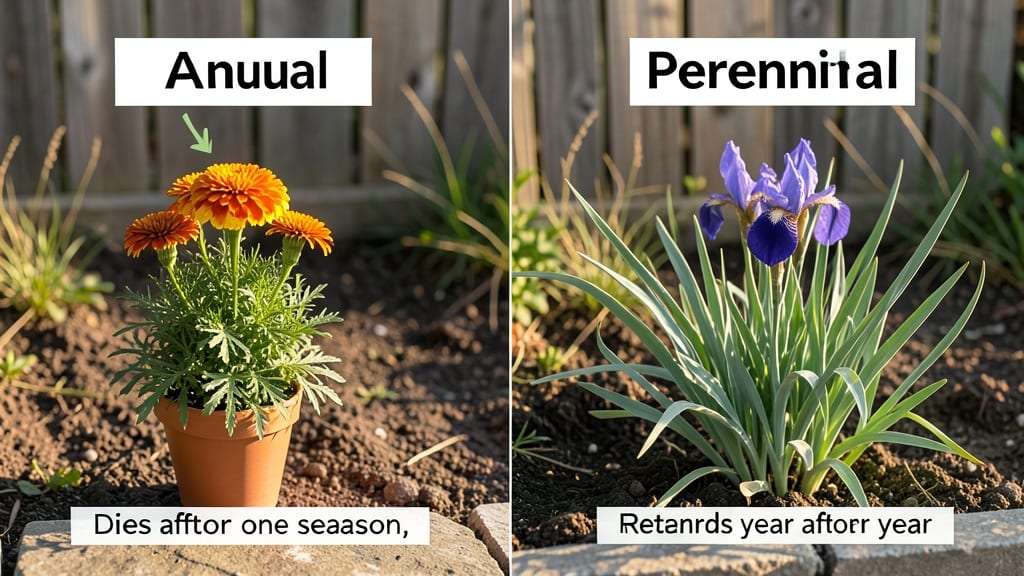
What does annual and perennial plants mean? They differ fundamentally in their lifespans: annuals grow, bloom, and die within a single season, while perennials return year after year from the same root system, often growing stronger with time. Biennials take two years to complete their life cycle.
Understanding these differences helps gardeners plan better.
Annuals like marigolds or zinnias deliver vibrant color quickly but require replanting each year, while perennials such as lavender or coneflowers establish deep roots and reward you with consistent blooms for years. 🌱 The choice often comes down to your gardening goals—whether you want seasonal variety or long-term beauty with minimal replanting.
Here's why this matters: annuals thrive in short-term projects or rented spaces where long-term planting isn't practical, while perennials build soil health and reduce annual labor. Many gardeners combine both for seasonal interest while minimizing yearly upkeep.
💡 In This Article
- How Annual vs Perennial Plant Lifecycles Differ
- Choosing Annuals vs Perennials for Your Garden
How annual vs perennial plant lifecycles differ
The fundamental difference between annual and perennial plants lies in their root systems and reproductive strategies. Annuals like sunflowers or cosmos devote all their energy to rapid growth, flowering, and seed production within a single season—typically 60 to 120 days—before dying.
Their shallow roots (often 6-12 inches deep) prioritize quick nutrient absorption to maximize seed output before frost. This "live fast, die young" approach ensures their genes survive through seed dispersal rather than plant longevity.
Perennials, however, invest in deep, robust root systems that can extend 3-6 feet underground, like peonies or hostas. These roots store nutrients and energy over winter, allowing the plant to regrow each spring from the same biological structure. The trade-off?
Perennials delay flowering for 1-3 years while establishing their root network, but this pays off with decades of growth. For example, a well-established black-eyed Susan can live 20+ years with minimal care, while an annual like basil would need replanting every year.
The science behind this involves photoperiodism—the plant's response to daylight length. Annuals trigger flowering when day lengths reach a critical threshold (often 14 hours of daylight), ensuring seeds mature before winter.
Perennials, however, use a different strategy: they delay flowering until their roots are sufficiently developed, often using vernalization (cold treatment) to break dormancy in spring. This explains why perennials like bearded iris bloom later in the season than annuals like petunias, which flower within 8-10 weeks of planting.
Environmental pressures shape these lifecycles too. Annuals thrive in unpredictable climates where survival through seeds is safer than relying on a single plant's longevity. Perennials dominate stable ecosystems where they can outcompete annuals over time.
For instance, wildflowers in prairies are often perennials because they can withstand droughts and fires by regrowing from roots, while weeds like lambsquarter (an annual) spread rapidly through seeds after disturbances.
Consider the energy budget: annuals allocate 80-90% of their resources to reproduction, while perennials split their energy between growth, storage, and flowering.
This explains why a sunflower can produce 1,000+ seeds in one season but dies afterward, whereas a daylily might produce only 50-100 seeds per year but lives for decades. The choice between these strategies depends on the plant's evolutionary priorities: speed vs. endurance.
One fascinating exception is biennials, which combine both strategies. Plants like carrots or foxgloves spend their first year building deep roots and leaves, then flower and seed in their second year.
This two-year cycle gives them time to establish before reproducing, offering a middle ground between annuals and perennials. 🌱