
Planting
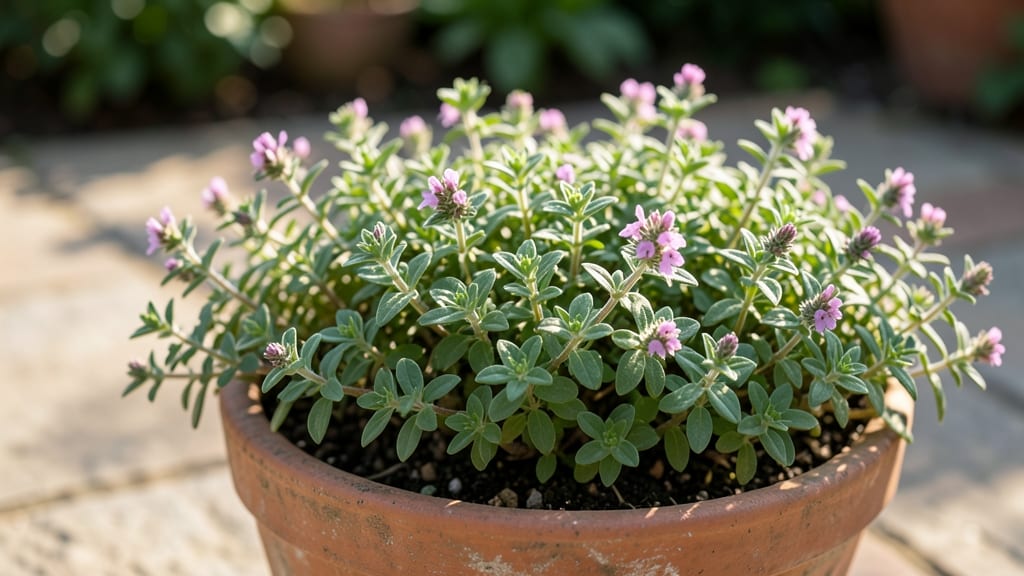
Yes, thyme is a perennial plant that thrives in hardiness zones 5-9, returning each year with proper care, though some varieties may die back in winter before regrowing in spring. Its woody stems and evergreen foliage help it survive cold snaps.
Thyme earns its perennial status because it grows from a robust root system that persists underground through cold seasons. 🌱 Unlike annual herbs that complete their life cycle in one year, thyme's hardy nature lets it bounce back stronger each spring once temperatures rise.
The key to its survival lies in those woody stems—when winter arrives, the above-ground growth may brown and appear dead, but the roots remain alive, ready to push out fresh shoots when conditions improve.
This regrowth pattern makes thyme particularly low-maintenance for gardeners in suitable climates. Once established, it requires minimal intervention beyond occasional pruning to maintain shape and encourage bushier growth.
The evergreen varieties add another layer of resilience, as their leaves retain some color even in winter, providing year-round interest in the garden.
💡 In This Article
- Thyme’s Perennial Growth Cycle Explained
- How to Care for Thyme as a Perennial Herb
Thyme’s perennial growth cycle explained
The perennial nature of thyme stems from its deep, fibrous root system that extends 6-12 inches underground, creating a network capable of storing nutrients and moisture.
This root structure allows thyme to survive through harsh winters by entering a state of dormancy, where growth slows dramatically while essential life functions continue at a minimal level.
The woody stems you see above ground act like nature’s insulation, protecting the delicate growing points near the base from freezing temperatures down to -20°F in hardy varieties like Thymus vulgaris.
Seasonal dieback is where thyme’s resilience shines—what appears to be dead foliage in winter is actually a survival strategy. The plant conserves energy by shedding leaves, which reduces water loss and prevents frost damage.
Once temperatures rise above 40°F in spring, these woody stems rapidly produce new shoots from dormant buds located at the base.
This regrowth can be surprisingly fast, with some varieties showing fresh green leaves within 2-3 weeks of consistent warmth. 🌿 The evergreen varieties take this a step further by retaining some foliage year-round, though it may appear grayish-brown during winter months.
Hardiness zones play a critical role in determining thyme’s perennial behavior. In zones 5-7, most thyme varieties will die back completely but regrow vigorously each spring. However, in zone 8 and above, thyme often maintains its foliage year-round with minimal winter browning.
The key difference lies in temperature extremes—while zone 5 thyme might experience -10°F winters, zone 9 plants rarely see temperatures below 20°F, allowing continuous growth patterns. This is why gardeners in milder climates often treat thyme as a semi-perennial ground cover.
What distinguishes thyme from true annual herbs is its ability to mature its root system before winter. Most annuals complete their life cycle in one season, but thyme’s roots continue developing each year, becoming thicker and more extensive.
This underground growth creates a self-sustaining system that can produce new shoots for 5-10 years or more with proper care. The plant’s ability to reproduce both through seed and vegetative growth (from root sprouts) further cements its perennial classification.
Interestingly, thyme’s growth cycle follows a predictable pattern that gardeners can work with. After spring regrowth, the plant enters a rapid vegetative phase during late spring to summer, when it focuses on leaf and stem production.
Flowering occurs in late summer to early fall, after which the plant begins preparing for winter dormancy. This seasonal rhythm explains why pruning after flowering (rather than in spring) encourages more robust regrowth—you’re essentially allowing the plant to complete its natural cycle before stimulating new growth.
The science behind thyme’s perennial survival lies in its cellular structure. The plant’s meristematic cells (growth centers) remain protected within the woody stems and root crown, shielded from freezing temperatures.
These cells contain high concentrations of sugars and proteins that act as natural antifreeze, preventing ice crystal formation that would damage cell walls. This biological adaptation is what allows thyme to remain viable through winters that would kill most tender herbs. 🌡️