
Flowers
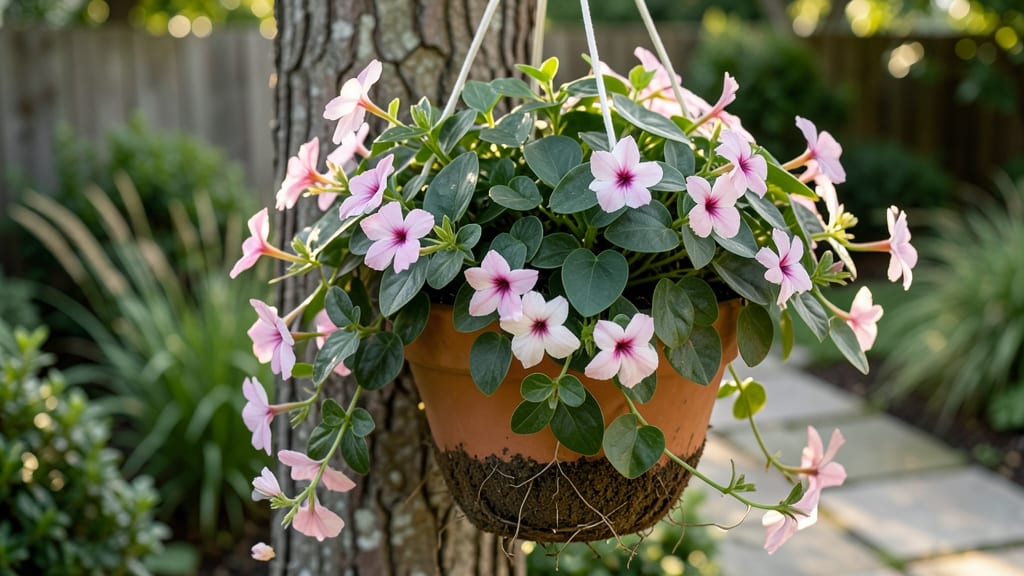
Vinca vine is a perennial plant that thrives across USDA zones 7-11, maintaining evergreen foliage through winter dormancy before rebounding each spring—though frost-sensitive types may suffer dieback in colder regions.
This hardy ground cover earns its perennial status through deep root systems that store nutrients, allowing it to push through mild winters. 🌿 Unlike annuals that complete their life cycle in one season, vinca vine's evergreen leaves persist through frost-free periods, though heavy freezes can damage tender varieties.
In zones 6 and below, gardeners often treat it as an annual or use protective measures to coax regrowth.
What sets vinca apart is its adaptability—it thrives in both sun and partial shade, making it a low-maintenance choice for borders or hanging baskets.
The key to its longevity lies in its ability to go dormant during cold snaps while keeping roots alive, ready to sprout fresh growth when temperatures rise again.
💡 In This Article
- How Vinca Vine Survives Winter in Different Climates
- Caring for Vinca Vine Through Winter in Cold Regions
How vinca vine survives winter in different climates
Vinca vine's perennial nature hinges on its deep, fibrous root system that extends 12-18 inches below ground, allowing it to access moisture and stored nutrients during winter dormancy.
Unlike annuals that die after one season, vinca's roots remain alive even when above-ground growth slows, thanks to specialized cells that convert starches into sugars for energy.
This survival mechanism is similar to how hostas or heucheras persist through cold winters, but vinca's evergreen leaves add an extra layer of resilience by photosynthesizing even in cooler temperatures.
The plant's waxy leaf coating acts as a natural insulator, reducing water loss and protecting cells from freezing damage. In zones 7-11, where winter temperatures rarely drop below 10°F, vinca maintains its vibrant green foliage year-round.
However, in zones 6 and colder, the leaves often brown and die back when temperatures fall below 0°F for extended periods. This dieback isn't fatal—the roots remain dormant until spring warmth triggers regrowth, a process that can begin as early as 45-55°F soil temperatures.
What makes vinca unique is its ability to balance dormancy with minimal growth. While some perennials go completely dormant, vinca often retains a few leaves or stems, allowing it to resume growth quickly when conditions improve.
This partial dormancy explains why vinca can bounce back faster than other ground covers like creeping thyme, which may take weeks to recover from frost damage. The trade-off is that this partial activity makes vinca more sensitive to prolonged cold snaps than fully dormant plants.
Light exposure plays a surprising role in winter survival. Vinca grown in full sun often handles cold better than shade-grown plants because the extra sunlight helps the plant build up more stored energy during the growing season.
In partial shade, where growth is slower, vinca may need additional protection if winter temperatures approach freezing. This is why gardeners in marginal zones (like northern zone 7) often see better results when vinca is planted in sunnier locations.
Comparing vinca to true annuals like pansies highlights its perennial advantage: while pansies complete their entire life cycle in one season, vinca's roots remain viable for years. This means a single planting can provide 3-5 years of coverage with minimal care, making it far more economical than replanting annuals.
The key difference lies in how vinca's roots store energy—like a battery—while annuals have no such mechanism.
One fascinating adaptation is vinca's ability to adjust its growth rate based on temperature cues. When nights stay below 40°F for 3-4 weeks, the plant naturally slows its metabolic processes, conserving energy until spring.
This temperature-sensitive dormancy is what allows vinca to thrive in warmer climates while still recovering in cooler regions—though the recovery may take slightly longer in areas with late spring frosts.
Understanding these mechanics helps explain why vinca often outperforms other ground covers in challenging climates. Its combination of deep roots, partial dormancy, and energy storage makes it one of the most resilient perennials for gardeners who want year-round color with minimal effort. 🌱