
Planting
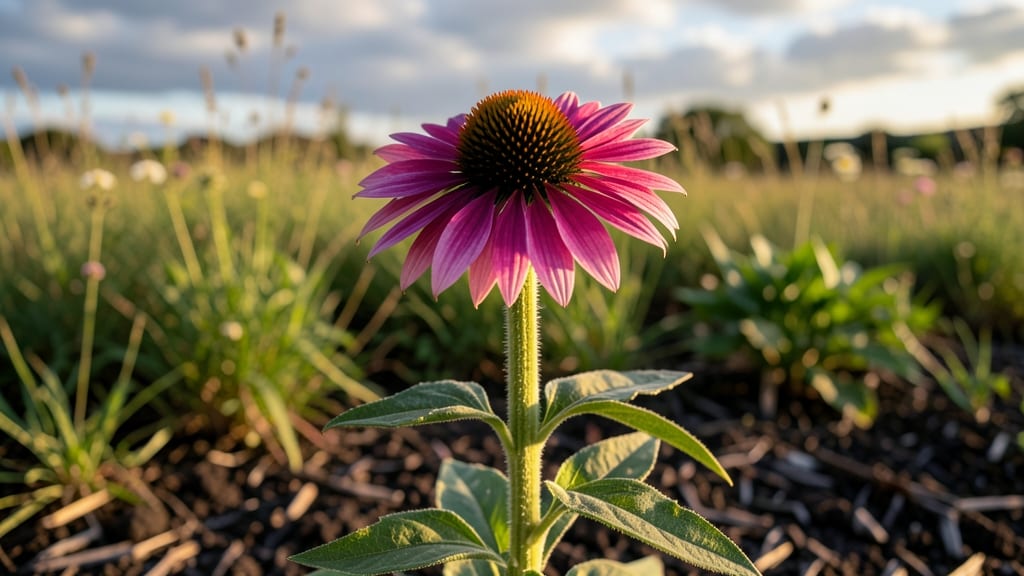
A perennial plant definition highlights its ability to regrow annually from the same root system, living for three or more years without needing replanting, unlike annuals that complete their lifecycle in one season.
A perennial plant's defining trait is its persistent root system, which stores energy underground during dormant seasons.
This allows them to push through soil each spring without starting from scratch. 🌱 Unlike annuals that die after flowering, perennials develop specialized storage organs like rhizomes or bulbs, which act as natural batteries.
For example, peonies and hostas return year after year with the same vigor, while marigolds (annuals) must be replanted annually. This resilience makes perennials ideal for low-maintenance gardens, though they often take 2-3 years to reach full maturity.
What sets perennials apart isn't just longevity but their adaptive strategies. Many enter dormancy during harsh weather, conserving energy until conditions improve. Some even develop deeper root systems over time, making them more drought-resistant.
This biological advantage explains why gardeners favor perennials for borders and foundation plantings—they create lasting structure while requiring less frequent replacements.
💡 In This Article
- How Perennial Plants Survive Across Seasons
- Identifying Perennials vs Annuals in Your Garden
How perennial plants survive across seasons
The secret to a perennial's endurance lies in its underground storage organs, which act like nature's rechargeable batteries. These structures—such as rhizomes (horizontal stems like in ginger), tubers (potato-like roots), or bulbs (onion-shaped bases)—store carbohydrates, proteins, and water during dormancy.
For instance, a peony's thick, fleshy roots can survive winters in USDA Zone 3 (down to -40°F) by converting stored starches into sugars that prevent freezing damage. This biological adaptation ensures the plant can regenerate above ground when temperatures rise.
Dormancy is another key mechanism, where perennials slow their metabolic processes during harsh conditions. Some, like hostas, enter a semi-dormant state in winter, reducing water loss while maintaining just enough cellular activity to survive.
Others, such as daylilies, develop woody crowns that insulate the growing point from extreme cold. The contrast with annuals is stark: annuals like marigolds complete their entire lifecycle in one season, producing seeds before dying, while perennials like lavender can live for decades with minimal care.
Root depth also plays a critical role. Many perennials, such as coneflowers, develop taproots that extend 3-5 feet deep, accessing moisture and nutrients beyond the reach of annuals. This deep-rooted advantage makes them far more drought-tolerant.
For example, black-eyed Susans can thrive with as little as 1 inch of water per week once established, whereas annuals like petunias require consistent moisture to prevent wilting. The trade-off? Perennials often take 2-3 years to reach full maturity, but their long-term reliability makes them worth the wait.
Light and temperature triggers also regulate regrowth. Most perennials rely on day length (photoperiodism) and soil temperature to break dormancy. A hosta, for instance, won’t sprout until soil temperatures reach 50°F, ensuring it avoids late frosts.
This precision timing is why perennials often bloom at the same time each year—a trait gardeners rely on for seasonal predictability. Annuals, lacking these adaptations, must be replanted annually to maintain their presence in the garden.
Consider the asparagus plant, which can live for 15-20 years if undisturbed. Its crown (a cluster of fleshy buds) stores energy year-round, allowing it to produce spears for decades. This contrasts sharply with radishes, which bolt and seed within 30-60 days.
The perennial’s ability to reallocate resources between growth, storage, and reproduction is what gives it the edge in longevity. Even in challenging climates, perennials like Russian sage thrive by combining deep roots with drought-resistant foliage, proving their adaptability is hardwired into their biology.
What most gardeners don’t realize is how soil microbes also contribute to perennials' survival. Over time, these plants form symbiotic relationships with fungi (mycorrhizae), which enhance nutrient uptake. Annuals, with their short lifespans, don’t benefit from this long-term partnership.
This microbial network is why established perennials often outcompete annuals in the same soil, creating a self-sustaining ecosystem. 🌱