
Flowers
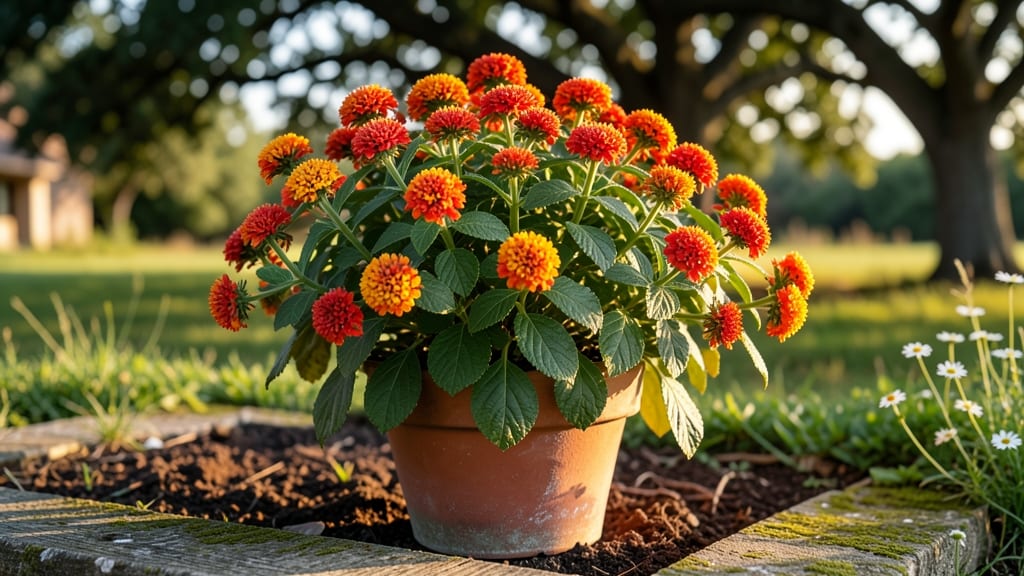
Whether lantana is annual or perennial depends on your climate: it thrives as a hardy perennial in USDA zones 9-11 but dies back to the ground in frost and regrows from roots each spring in colder regions. Different species show varying cold tolerance.
This distinction comes down to how lantana handles temperature shifts.
In warmer zones, its deep root system lets it survive winter dormancy, while in colder areas, frost kills the above-ground growth—but the roots often remain viable. 🌱 I’ve seen lantana camara (the most common variety) bounce back vigorously after winter, even in zone 8 with proper protection.
The key is understanding your specific cultivar’s limits, as some tropical varieties are far less frost-tolerant.
For gardeners in marginal zones, overwintering strategies like container growing or mulching can make all the difference. The plant’s ability to regenerate from roots means even "annual" behavior in cold climates doesn’t mean you can’t enjoy it year after year with the right care.
💡 In This Article
- How Lantana Survives Cold Weather in Different Climates
- Best Ways to Overwinter Lantana in Cold Regions
How lantana survives cold weather in different climates
The secret to lantana's survival lies in its deep, fibrous root system that can extend 3-5 feet underground. This root network acts like a biological battery, storing carbohydrates and nutrients during dormancy—similar to how peonies or daylilies survive winter.
When temperatures drop below 28°F, the above-ground growth dies back, but the roots remain viable, ready to sprout new shoots when soil temperatures rise above 55°F in spring.
Different lantana species show dramatic variations in cold tolerance. Lantana camara, the most common variety, typically handles 15-20°F with proper mulching, while tropical cultivars like lantana montevidensis struggle below 25°F.
The key difference is in their evolutionary origins—tropical varieties developed in consistently warm climates with minimal temperature fluctuations, while lantana camara originated in South America where seasonal temperature swings occur naturally. 🌡️
Lantana's survival strategy involves a two-phase process: first, the plant enters dormancy when nighttime temperatures consistently fall below 50°F, shutting down leaf production and redirecting energy to root storage.
Then, when spring warmth returns, the roots rapidly regenerate new growth through a process called "sprouting from crown buds"—a mechanism shared with many perennial shrubs like butterfly bush. This explains why you often see lantana rebounding so vigorously after winter.
What most gardeners don't realize is that lantana's cold tolerance improves with age. Younger plants (1-2 years old) are more vulnerable to frost damage because their root systems aren't fully developed.
Mature plants with established roots can handle 5-10°F colder temperatures, which is why many gardeners report their 3-5 year old lantana bushes surviving winters in zone 8 with minimal protection.
The plant's waxy leaf coating also plays a protective role. This cuticular layer helps reduce water loss during dormancy and can provide some insulation against rapid temperature drops. However, this protection is secondary to the root system's storage capacity—the real workhorse of lantana's cold survival strategy. 🌱
Interestingly, lantana's ability to regenerate from roots makes it behave like a "semi-perennial" in marginal climates. While it may die back completely in winter, the persistent roots mean it can return year after year—unlike true annuals that must be replanted each season.
This explains why many gardeners in zones 7-8 consider lantana their "secret weapon" for seasonal color.
For those curious about the science, lantana's cold adaptation involves a complex interplay of hormonal regulation. During dormancy, the plant increases its production of abscisic acid (ABA), a hormone that triggers storage carbohydrate accumulation in roots while inhibiting shoot growth.
When spring warmth returns, cytokinins (growth hormones) are produced in the roots, signaling the resumption of above-ground growth. This hormonal dance is what allows lantana to "reset" each season with such reliability.