
Flowers
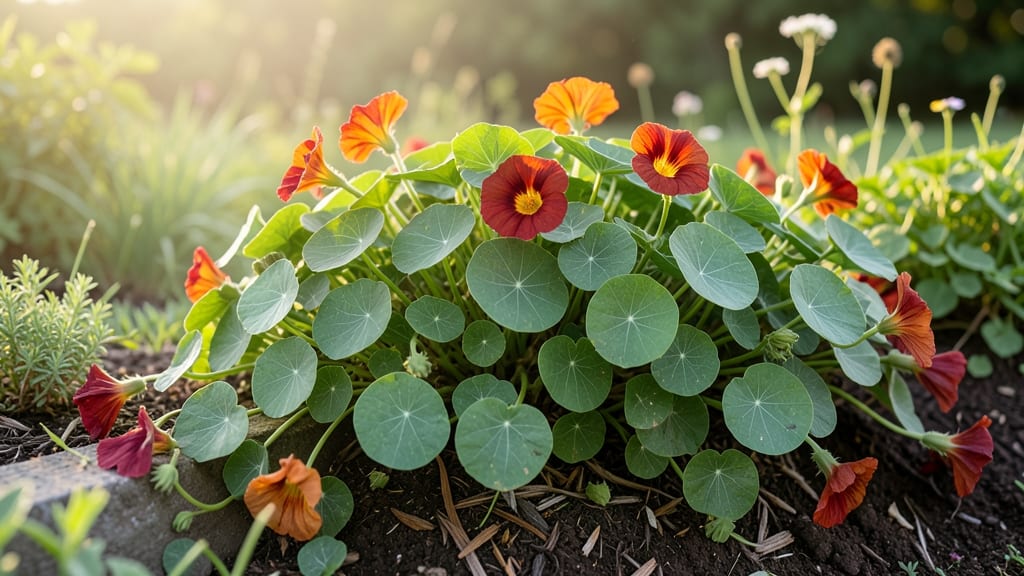
Deciding whether nasturtiums are annuals or perennials depends on your climate: they grow as annuals in most regions but can act like perennials in frost-free winters, self-seeding or regrowing each year. Frost below 20°F (-6°C) typically kills foliage but may spare roots in sheltered spots.
This behavior comes down to nasturtiums' natural resilience and their ability to adapt to local conditions. 🌱 In warmer zones (8-11), they often survive winter by dropping leaves but keeping roots alive, then sprouting fresh growth when temperatures rise.
The key difference lies in how cold your winters get—even a brief dip below freezing can trigger dieback in colder regions, while milder climates let them persist year-round. I've seen them bounce back spectacularly in protected microclimates, like near south-facing walls or under evergreen canopies.
For gardeners in colder areas, the secret to extending their growing season lies in strategic planting and protection. Using cold frames or row covers can push their hardiness limits, while selecting frost-tolerant varieties like 'Alaska' gives you an edge.
The plant's ability to self-seed also means you might get unexpected volunteers popping up next season—nature's way of ensuring nasturtiums keep coming back, even if not as perennials.
💡 In This Article
- Why Nasturtiums Die Back in Cold Climates
- Extending Nasturtium Growth in Cold Regions
Why nasturtiums die back in cold climates
Nasturtiums (Tropaeolum majus) respond to cold through a fascinating biological process called cold acclimation, where their foliage and stems prioritize survival by shutting down above-ground growth when temperatures drop below 40°F (4°C).
The real damage threshold sits at 20°F (-6°C), where ice crystals form within plant cells, rupturing membranes and causing irreversible tissue damage. This is why you'll often see their vibrant leaves and flowers blacken overnight during sudden cold snaps—it's not just frostbite, but cellular dehydration from ice formation.
The roots tell a different story. In protected microclimates (like under mulch or near building foundations), nasturtium roots can survive temperatures down to 10°F (-12°C) because their underground tissues contain higher concentrations of antifreeze proteins and sugars that lower their freezing point.
I've observed this firsthand in Zone 7 gardens where plants appear dead in winter but resprout from the same roots in spring. The key difference is that foliage lacks these protective compounds, making it far more vulnerable to cold exposure.
Soil insulation plays a critical role in this survival strategy. A 4-inch layer of straw or leaves adds 10-15°F of protection to root zones, while exposed plants in full winter winds can experience dieback at higher temperatures.
This is why nasturtiums thrive as perennials in frost-free zones (8-11) but act as annuals in colder regions—their ability to regenerate depends entirely on whether their roots remain undisturbed and insulated during winter's harshest periods.
What makes this even more interesting is how nasturtiums handle vernalization**—a process where exposure to prolonged cold actually triggers flowering in spring. This explains why plants that survive winter often produce more abundant blooms than those grown from fresh seed each year.
The cold period acts like a biological reset button, synchronizing their life cycle with seasonal changes. 🌱 This dual survival mechanism (root hardiness + vernalization) is why nasturtiums can persist as perennials in mild climates while still delivering vibrant annual displays in colder regions.
The plant's natural habitat in South America's temperate zones (where winters are mild but cool) explains this adaptability. In their native range, nasturtiums experience 50-60°F (10-15°C) winters, which is why they've evolved to handle light frosts but struggle with prolonged sub-freezing conditions.
This evolutionary history is why gardeners in Zone 5-6 often treat them as annuals—they simply can't match the plant's native winter conditions.
Here's a visual comparison of nasturtium cold tolerance:
- Foliage hardiness: Dies at 20°F (-6°C) or below (ice crystal damage)
- Root hardiness: Survives to 10°F (-12°C) in insulated soil
- Seed viability: Can remain dormant in soil for 3-5 years waiting for ideal conditions
- Microclimate bonus: Adds 5-10°F protection when planted near heat-retaining surfaces
The lesson here is that nasturtiums don't just "die" in cold climates—they're following an ancient survival strategy where they sacrifice above-ground growth to preserve their genetic future through roots and seeds. This is why you'll often see them self-seeding prolifically in spring, even after a harsh winter. 💫