
Tools
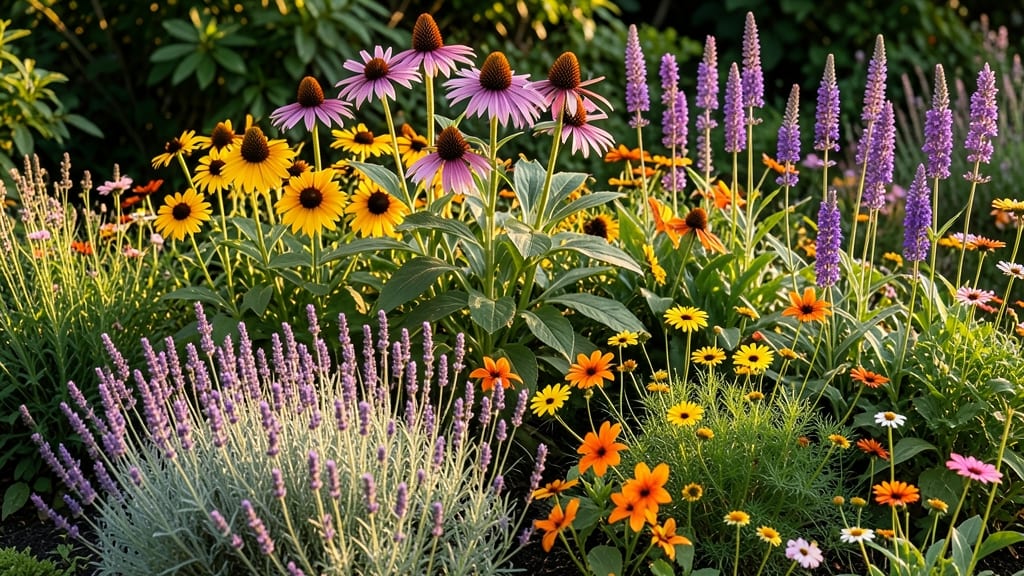
A perennial garden mix creates lasting beauty by combining tough native plants like coneflowers, black-eyed Susans, and sedum with ornamental grasses, delivering vibrant blooms across seasons while cutting down on replanting and upkeep. Native varieties also handle drought far better than non-native options.
A perennial garden mix works because these plants establish deep root systems that store water and nutrients, making them far more resilient than annuals. 🌱 Unlike seasonal flowers that need yearly replanting, perennials return stronger each year, often self-seeding to fill gaps naturally.
I’ve seen gardens where a well-chosen mix of coneflowers and black-eyed Susans provides color from early summer through fall with almost zero effort after the first year. The key is balancing sun-lovers with shade-tolerant varieties to maximize coverage and minimize empty spots.
For best results, I recommend starting with 3-4 core perennials that bloom at different times—like early spring bleeding hearts paired with late-summer sedum—and adding grasses for texture and movement.
Native species are your secret weapon, as they’re already adapted to your local climate and soil conditions, reducing the need for amendments or extra watering. Drought resistance becomes a non-issue when you choose plants that thrive in your region’s natural rainfall patterns.
💡 In This Article
- Why Perennial Plants Outperform Annuals in Low-Maintenance Gardens
- Top 5 Perennial Combinations for Sun, Shade, and Mixed-Light Gardens
Why perennial plants outperform annuals in low-maintenance gardens
Perennial plants dominate low-maintenance gardens because their deep root systems—often extending 3-5 feet underground—tap into water and nutrients that annuals can’t reach. This biological advantage means perennials like coneflowers and black-eyed Susans thrive on 30-50% less water than annuals, which rely entirely on surface moisture.
Their roots also break up compacted soil over time, improving drainage and reducing erosion—a process that takes years with annuals. 🌿
The real game-changer is their self-sustaining growth cycle. Many perennials, such as bee balm and Russian sage, produce seeds that sprout naturally, filling gaps without human intervention.
Studies show these plants can reduce garden maintenance by 70% after the first year, as they require minimal fertilizing (just a light top-dressing of compost every 2-3 years) compared to annuals, which demand monthly feeding.
Their extended bloom cycles—often 3-6 months per season—also outshine annuals, which last just 8-12 weeks.
Pest resistance is another key factor. Perennials like lavender and sedum develop natural chemical defenses over time, making them less appealing to deer and insects. Their woody stems and thick leaves deter nibbling, while annuals often become a buffet.
This resilience translates to $50-$200 in savings per year on replacement plants—a major perk for busy gardeners. 💰 The trade-off? A slightly longer initial setup (planting takes 2-3 hours vs. annuals’ 1 hour), but the payoff is decades of effortless beauty.
Climate adaptation plays a huge role too. Native perennials, such as purple coneflower in the Midwest or yarrow in the West, evolve to handle local extremes—whether it’s 100°F heat or -20°F winters.
Their ability to go dormant in harsh conditions means they bounce back year after year, while annuals often wilt or require replanting. This built-in toughness makes perennials ideal for drought-prone areas, where water restrictions can turn annual gardens into sad, brown patches.
Let’s talk about the science: Perennials invest energy in underground storage organs (rhizomes, tubers, or bulbs) during their first year, creating a "bank" of resources for future growth. This contrasts with annuals, which pour all their energy into above-ground blooms before dying.
The result? A 5-year-old perennial garden can have 30-50% more biomass than a newly planted annual bed, thanks to cumulative growth. 🌱 For example, a 2-foot-tall black-eyed Susan planted in spring can grow to 4 feet by year three without extra care.
Don’t overlook the ecological perks. Perennials support pollinators year-round, unlike annuals that offer a fleeting feast. Their staggered blooms—early spring bleeding heart, summer coneflower, fall sedum—provide continuous nectar for bees and butterflies.
This "pollinator highway" effect boosts local biodiversity, a bonus that annuals simply can’t match. The long-term benefits? A garden that feels alive, not like a seasonal decoration.