
Shrubs
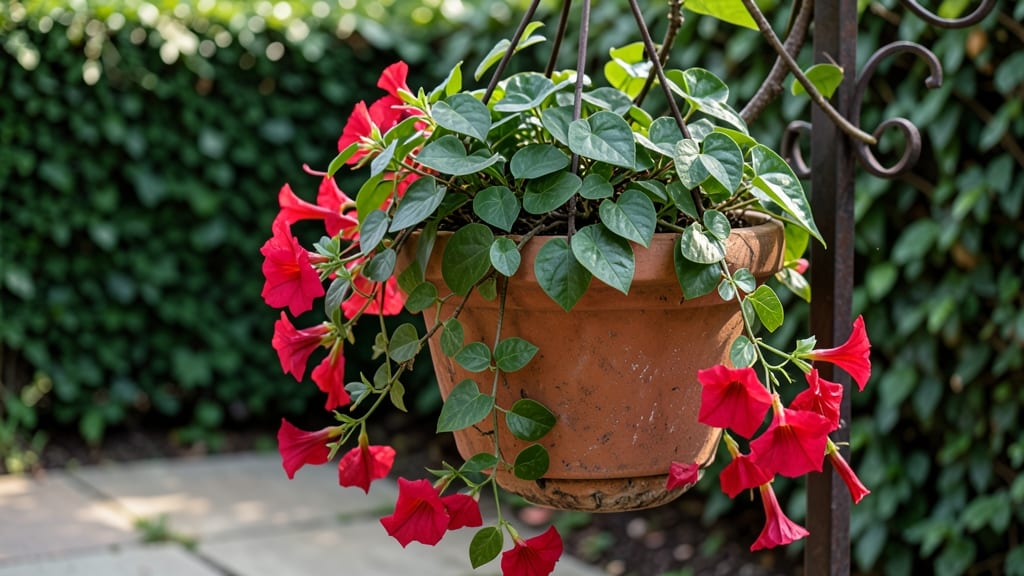
Whether red Mandevilla is annual or perennial depends on your climate: it thrives as a hardy perennial in USDA zones 10-11 but acts like an annual in colder regions, where frost kills the top growth each winter. Even in freezing zones, roots often survive underground for spring regrowth, though replanting is typically needed annually.
This tropical beauty's lifespan hinges entirely on temperature. 🌡️ In frost-free zones, red Mandevilla grows continuously, producing vibrant blooms year-round. But when temperatures drop below 30°F, the above-ground stems blacken and die back completely—even if the roots remain alive.
The key difference between zones lies in how much cold the plant can tolerate: while zone 10-11 plants handle brief dips, anything colder triggers full dormancy or death.
Interestingly, even in harsh winters, some gardeners report finding live roots at 6-12 inches deep, proving the plant's surprising resilience beneath the surface.
What this means for gardeners is simple: if you live north of zone 10, treat it as an annual unless you're willing to take special overwintering measures. The good news? With proper care, you can extend its life beyond one season—more on that in the next section.
The plant's ability to regrow from roots makes it a favorite among gardeners who love its dramatic red blooms but face cold winters.
💡 In This Article
- Why Red Mandevilla Dies Back in Cold Climates
- How to Overwinter Red Mandevilla in Freezing Zones
Why red Mandevilla dies back in cold climates
Red Mandevilla's dramatic winter dieback stems from its tropical heritage. Native to South America, this plant evolved in climates where temperatures rarely dip below 50°F—any frost triggers irreversible cellular damage.
The stems contain high moisture content (about 70-80% water), which freezes and ruptures plant tissues at 32°F or below. 🌡️ Unlike hardy perennials that enter true dormancy, Mandevilla's growth simply shuts down completely when stressed by cold, leading to blackened stems that resemble death.
The key difference between zones 10-11 and colder areas lies in root survival rates. In frost-free zones, roots continue growing year-round, sustaining the plant's continuous blooming. But in zones 7-9, roots may survive 3-6 inches deep if insulated by mulch, while above-ground growth dies back entirely.
Gardeners in zone 6 or colder often find only the crown (where stems meet roots) remains alive after winter—this explains why replanting is typically needed annually. The plant's inability to produce new growth from damaged roots is what makes it behave like an annual in freezing climates.
What makes this particularly interesting is how the plant's biology responds to temperature shifts. When nighttime temps drop below 45°F for more than 3-4 days, the plant's stomata (pores) close to prevent water loss, but this also halts photosynthesis.
Without energy production, the stems become brittle and susceptible to wind damage—even before frost occurs. This physiological response explains why Mandevilla often looks healthy until a sudden cold snap arrives. 🌬️ The plant's tropical nature means it lacks the cold-hardening mechanisms found in temperate perennials like lavender or rosemary.
Comparing Mandevilla's behavior to other tropical plants reveals important distinctions. While some, like hibiscus, can survive brief freezes with leaf loss but stem regrowth, Mandevilla's stems contain delicate vascular bundles that freeze and rupture permanently.
Even a 24-hour exposure to 28°F will kill the above-ground portions completely. This extreme sensitivity is why professional growers in cold climates treat it strictly as an annual unless implementing specialized overwintering techniques.
Understanding this dieback process helps explain why Mandevilla's blooming cycle appears so dramatic. In frost-free zones, the plant produces continuous flowers because it never experiences the stress that triggers dormancy.
In colder climates, the annual replanting creates a "reset" that actually stimulates more vigorous growth in spring—similar to how annual flowers often bloom more prolifically than perennials. The trade-off is that gardeners in freezing zones must accept the plant's temporary absence each winter as part of its natural cycle. 🌸
What most gardeners don't realize is that the plant's roots contain growth hormones that remain active even during winter dormancy. This is why you'll often see new shoots emerging from the soil within 2-3 weeks of spring planting—even when using store-bought plants that appear completely dead.
The root system's resilience explains why many gardeners successfully overwinter Mandevilla by protecting just the roots, rather than the entire plant.