
Vegetables
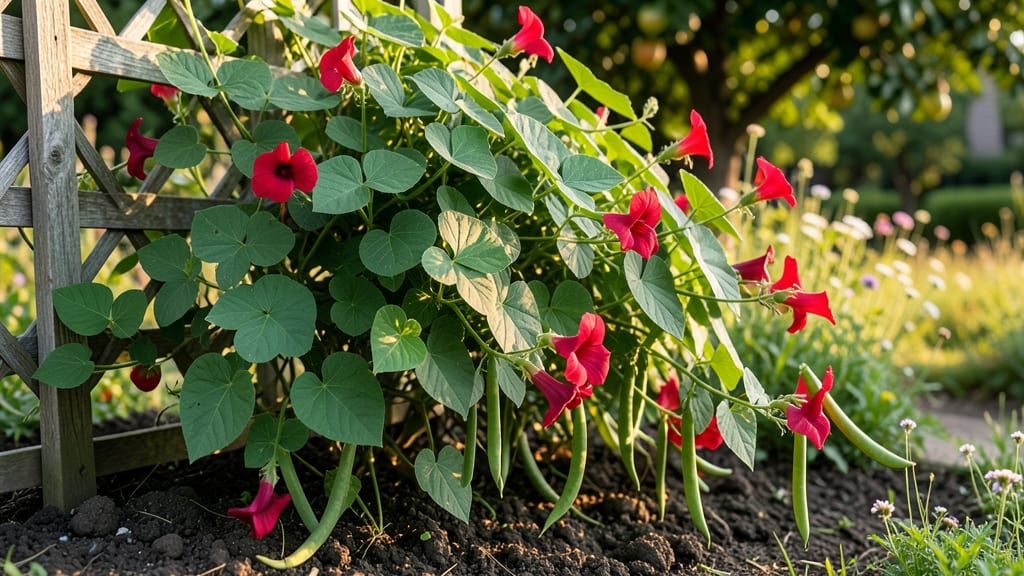
Scarlet runner beans act as perennial plants in mild climates by self-seeding or returning with winter protection, though they're technically tender annuals. In zones 8-11, cut back vines after frost, apply thick mulch, and provide shelter to encourage their annual regrowth.
These vibrant climbers thrive as self-sowers in frost-free zones, where their roots and seeds often survive winter to sprout fresh vines each spring. 🌱 The key to multi-year growth lies in protecting both the soil and emerging shoots—heavy mulch prevents freeze-thaw damage, while row covers shield tender new growth from late frosts.
I’ve seen them reliably return for 3-4 seasons with this care, though true perennial varieties like Phaseolus coccineus exist in specialized cultivars.
For colder regions, overwintering in containers works well—simply move potted plants to a garage or cold frame before temperatures drop below 30°F. Another trick is saving seeds from your best-performing plants, which often produce even hardier offspring.
The trade-off? These beans need 60-90 days of warm weather to mature, so early spring planting is critical for a full harvest.
💡 In This Article
- Why Scarlet Runner Beans Die Back in Cold Climates
- Tips to Extend Scarlet Runner Bean Growth Beyond One Season
Why scarlet runner beans die back in cold climates
Scarlet runner beans (Phaseolus coccineus) are classified as tender annuals because their above-ground growth freezes at temperatures below 28°F. The plant's tropical origins mean it lacks the cold-hardy adaptations of true perennials like asparagus or rhubarb.
When frost hits, the vines turn black and crispy within hours—a process called "freeze-thaw damage"—while the roots may survive if protected by 4-6 inches of mulch.
The science behind this dieback involves cellular dehydration. Ice crystals form in plant tissues, rupturing cell walls and disrupting water transport. In zones 8-11, where winters rarely drop below 20°F, the roots often survive to regrow from seed or underground nodes.
However, in colder zones, even the roots may perish without insulation. The plant's natural survival strategy shifts to self-seeding—dropping 8-12 seeds per pod that germinate the following spring.
What most gardeners don't realize is that scarlet runner beans have a two-year life cycle in ideal conditions. First-year plants focus on vine growth, while second-year plants produce more seeds.
This explains why they often return reliably in frost-free microclimates, like coastal gardens or greenhouses. The trade-off? Their 90-day maturation requires long growing seasons—any frost before harvest means lost pods.
Cold tolerance varies by variety. Some, like 'Scarlet Emperor,' handle 30°F better than others, but none survive winter outdoors in zones 7 or colder.
The key difference between annuals and perennials lies in their root systems: true perennials have deep, insulated root crowns, while scarlet runners rely on rapid regrowth from seeds or protected roots.
This is why mulching with straw or leaves (6+ inches) makes such a difference—it mimics the soil insulation found in their native tropical forests.
Here's what happens when you mulch properly: The organic layer breaks down slowly, releasing heat as it decomposes (a process called "composting insulation"). This keeps soil temperatures 5-10°F warmer than unmulched beds, protecting emerging shoots in early spring.
Without this protection, new growth often freezes back, forcing the plant to start over from seed. 🌱
For visual learners, imagine scarlet runner beans as tropical vines that throw a "temper tantrum" when shocked by cold. Their leaves curl, stems blacken, and pods shrivel—all signs of irreversible damage to the above-ground parts. But the roots?
They're like hibernating bears, waiting for spring to wake up and send out fresh shoots. This is why gardeners in mild climates swear by them—they're not perennials, but they act like it with the right care.