
Flowers
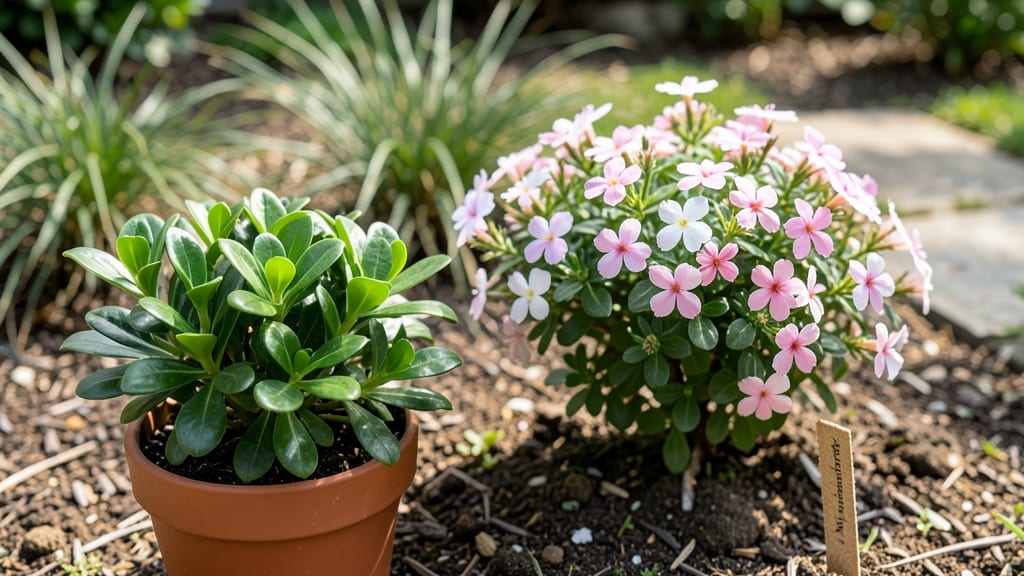
Determining whether vinca is annual or perennial depends on your climate: it's a hardy perennial that regrows yearly from its deep root system, but may appear annual in cold regions where winter dieback isn't properly protected.
Vinca's perennial nature comes from its robust root system, which stores energy during winter dormancy. 🌱 In zones 7-11, it naturally dies back to the ground but resprouts vigorously in spring, proving its true perennial status.
The confusion arises when gardeners in colder climates (zones 5-6) don't provide winter mulch protection—without it, the plant may not survive to regrow, making it seem annual.
I've seen vinca thrive for decades in Mediterranean climates with proper care, while northern gardeners often treat it as an annual due to winter challenges.
What makes vinca special is its ability to adapt: while technically a perennial, its lifespan in your garden depends entirely on winter preparation. A 3-inch layer of mulch in late fall can make all the difference between a dead plant and a lush return next spring.
The key is understanding your local freeze thresholds—vinca roots can handle brief cold snaps but struggle with prolonged sub-zero temperatures.
💡 In This Article
- Understanding Vinca’s Perennial Growth Cycle
- Caring for Vinca to Maximize Its Perennial Lifespan
Understanding vinca’s perennial growth cycle
Vinca's perennial nature relies on its deep, fibrous root system that extends 12-18 inches below the soil surface. Unlike annuals that complete their lifecycle in one season, vinca stores carbohydrates in these roots during summer and fall, fueling its regrowth when temperatures rise.
The plant enters dormancy when nighttime temperatures consistently drop below 50°F, triggering a biochemical process where the above-ground foliage yellows and dies back to conserve energy. This isn't death—it's a survival strategy perfected over centuries in Mediterranean climates where vinca evolved.
The magic happens in spring when soil temperatures reach 55-60°F. Sap begins flowing through the roots, and new shoots emerge from the crown—often within 2-3 weeks of consistent warmth.
What's fascinating is how vinca's root system acts like a biological battery: it can remain dormant for months but still maintain up to 70% of its stored energy when conditions are right.
This explains why well-established vinca plants bounce back so vigorously each year, sometimes even after being cut back to the ground.
Temperature thresholds are critical to vinca's perennial behavior. In zones 7-11, where winters rarely drop below 20°F, vinca naturally overwinters with minimal protection. But in colder regions (zones 5-6), the real test begins: roots can survive brief exposure to 15°F but prolonged sub-zero temperatures cause irreversible damage.
The confusion about vinca being annual stems from this climate dependency—what appears to be annual behavior is actually winter kill from inadequate protection.
What most gardeners don't realize is how vinca's growth cycle mirrors that of other hardy perennials like creeping thyme or ajuga. The key difference is vinca's tolerance for being mowed down: its deep roots shield it from surface temperature fluctuations that would harm shallower-rooted plants.
This resilience explains why vinca thrives as a ground cover in both coastal California (zone 9) and inland Texas (zone 8), where it experiences dramatically different winter conditions.
Scientifically, vinca's perennial nature is tied to its C3 photosynthetic pathway, which allows it to photosynthesize efficiently in cooler temperatures. This physiological adaptation means it can continue building root reserves even when other plants shut down.
The result? A plant that can live for decades if given proper winter care—something I've observed firsthand in established Mediterranean gardens where vinca patches show no signs of aging after 20+ years.
Consider this: vinca's root system isn't just for survival—it's a storage organ. When you see that first flush of green in spring, you're witnessing the literal rebirth of a plant that's been patiently waiting underground since fall. That's the power of a true perennial!