
Planting
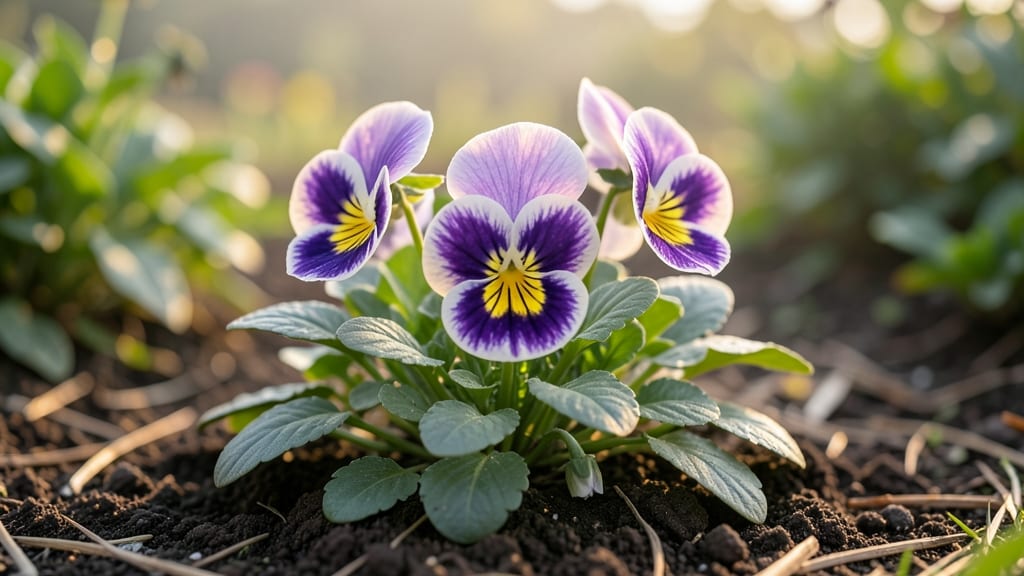
Deciding whether violas are annuals or perennials depends on your climate—these plants thrive as perennials in mild regions but are typically grown as annuals in colder areas where frost kills them back. Some varieties regrow from roots each spring, while others disappear completely after flowering.
Violas are clever survivors, adapting their growth patterns to temperature shifts.
In frost-free zones like USDA hardiness zones 7-10, their roots often persist through winter, sending up fresh foliage and blooms each spring. 🌱 However, in colder climates, gardeners usually treat them as annuals because the plants either die completely or struggle to rebound.
The key difference lies in their root systems—some varieties like Viola cornuta (horned violet) are more resilient, while others like Viola odorata (sweet violet) may not recover as well after harsh winters.
What makes this interesting is how violas handle their lifecycle. Even when they appear to die back, their roots can remain dormant underground for months, waiting for warmer temperatures to trigger regrowth.
This natural adaptation explains why some gardeners in marginal climates get lucky with spontaneous returns, while others need to replant every year for consistent color.
💡 In This Article
- Viola Plant Lifespan: Why Climate Determines Annual vs Perennial Growth
- Extending Viola Blooms: Annual Care Tips for Year-Round Color
Viola plant lifespan: why climate determines annual vs perennial growth
Violas exhibit this fascinating duality because their survival strategy hinges on temperature-sensitive dormancy mechanisms. When nighttime temperatures drop below 32°F, the plants trigger a physiological response called cold acclimation, where sugars accumulate in their roots to prevent frost damage.
In milder climates (USDA zones 7-10), these hardened roots can survive winter dormancy, emerging as perennials when spring temperatures reach 50°F consistently for 2-3 weeks. The key difference lies in their root crowns—perennial varieties develop thicker, more insulated root systems that store enough energy to fuel regrowth.
Frost sensitivity varies dramatically between species. Viola cornuta (horned violet) typically thrives as a perennial even in zone 6 with proper winter protection, thanks to its 1.5-inch deep root system that insulates against shallow frost penetration.
In contrast, Viola odorata (sweet violet) often dies back completely because its roots are shallower (0.5-1 inch deep) and more susceptible to freeze-thaw cycles. 🌡️ The critical threshold occurs when soil temperatures remain below 35°F for more than 72 hours—this duration determines whether roots will survive or succumb to cellular damage.
Geographic adaptability explains why violas behave differently across regions. In coastal California (zone 9), violas naturally persist year-round with minimal care, while in Chicago (zone 5), they're treated as annuals because winter soil temperatures routinely drop to 20°F.
The USDA hardiness map reveals this pattern clearly—perennial growth becomes increasingly reliable south of the 35°F average annual minimum temperature line. Even within the same zone, microclimates matter: violas planted near south-facing walls may survive winters that would kill those in open garden beds.
What most gardeners miss is how violas' flowering cycle interacts with these temperature triggers. Many varieties flower prolifically in spring, then enter summer dormancy when temperatures exceed 85°F, only to potentially rebloom in fall if nights stay above 50°F.
This biennial-like pattern (flowering, dormancy, potential regrowth) explains why some plants appear to "disappear" only to reappear later—even in colder climates where roots might survive.
Consider the science of vernalization, where cold exposure actually triggers flowering in some viola species. This means plants that survive winter may bloom earlier and more vigorously than those planted in spring.
The tradeoff? These same plants often produce smaller, less vibrant flowers than their annual counterparts, which benefit from consistent summer growing conditions without winter stress.
For practical purposes, think of violas as conditional perennials—their true nature depends on whether your climate provides the right combination of winter protection and spring warmth. In zone 7, you might get 3-5 years of perennial growth; in zone 5, you're lucky to get one full season before replanting.
The secret to extending their lifespan lies in mimicking their natural conditions: mulching heavily in fall and choosing varieties with proven cold tolerance.