
Flowers
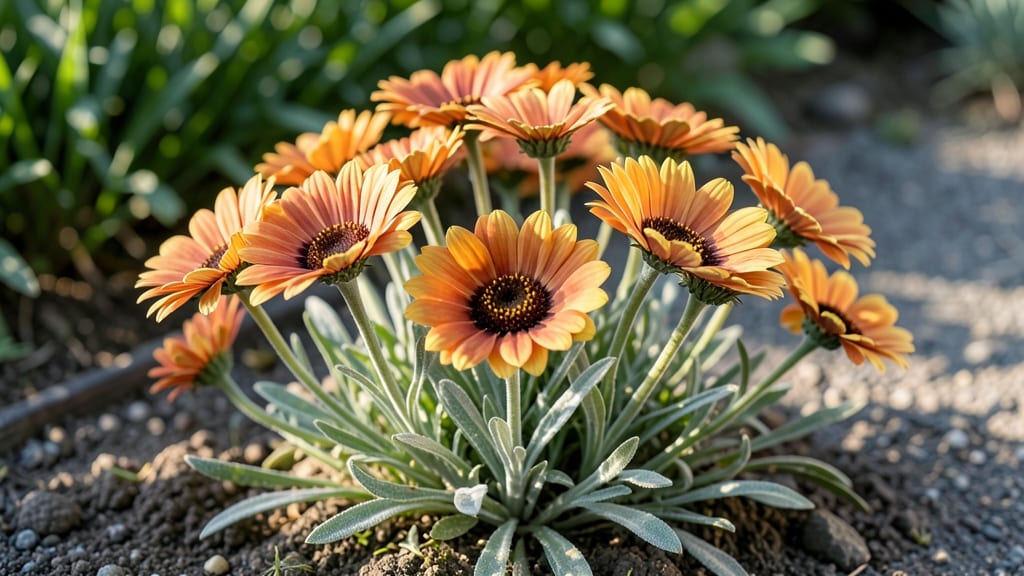
Whether gazania plants act as annuals or perennials depends entirely on your climate. In most regions, they die back when temperatures drop below 40°F, forcing gardeners to replant each spring. However, in frost-free zones (USDA 10-11), they can thrive year-round with proper winter care and mulching.
Gazania's cold sensitivity makes them behave like annuals in most gardens, but their true resilience shines in warmer climates. 🌿 The key difference lies in their root systems—while the foliage freezes in cooler areas, the roots in protected zones can regenerate when conditions improve.
I've seen gardeners in California and Florida successfully overwinter gazania by covering them with thick mulch or moving potted plants to sheltered spots. This strategy transforms what would otherwise be a seasonal plant into a long-lived perennial.
What's fascinating is how gazania adapt: their bright blooms actually close in direct sunlight to conserve moisture, a trait that helps them survive heat stress. This same mechanism makes them vulnerable to cold, as they lack the protective adaptations of hardier perennials.
For those in transitional zones, container gardening offers the best compromise—you can bring plants indoors during cold snaps and return them to the garden when temperatures rise.
💡 In This Article
- Cold Tolerance Limits of Gazania Flowers
- Extending Gazania Lifespan in Cooler Climates
Cold tolerance limits of gazania flowers
Gazania's cold sensitivity stems from their native habitat in South Africa, where they evolved to thrive in hot, dry climates with temperatures rarely dropping below 50°F.
Their biological response to chilling begins when cell membranes start freezing at 32°F, causing ice crystals to form that rupture delicate plant tissues. This process, called cold acclimation failure, occurs because gazania lack the antifreeze proteins found in hardy perennials like lavender or Russian sage.
The most critical threshold is 40°F, where foliage begins showing frost damage—leaves turn brown and crispy, while stems become mushy. What's surprising is that gazania roots can survive brief cold snaps down to 28°F if protected by mulch, but prolonged exposure triggers root rot.
In USDA zones 8-9, gardeners often see partial regrowth in spring, but the plants rarely survive intact through winter without intervention.
Comparing gazania to other tender perennials like geraniums reveals their vulnerability: geraniums can tolerate 20°F with proper mulching, while gazania's roots struggle above 30°F. This explains why they're classified as annuals in most regions—their energy goes into producing vibrant blooms rather than cold-resistant structures.
The bright side? Their shallow root systems make them perfect candidates for container gardening in cooler areas.
Here's what happens physiologically when gazania experience frost: chlorophyll breaks down first, causing the characteristic yellowing. Then, cell walls rupture from ice expansion, and the plant's vascular system clogs with damaged cells. This explains why gazania often look healthy one day and completely wilted the next after a light freeze.
The good news is that in frost-free zones, these same plants can live for 3-5 years with consistent care.
For those in marginal climates, understanding these thresholds helps plan strategically. Planting gazania in late spring after the last frost date (after May 15 in many northern regions) gives them a 3-4 month growing season before cold sets in.
This timing maximizes their blooming potential while minimizing frost exposure. In containers, you can extend this window by moving plants to sheltered spots when nighttime temperatures dip below 50°F.