
Container Gardens
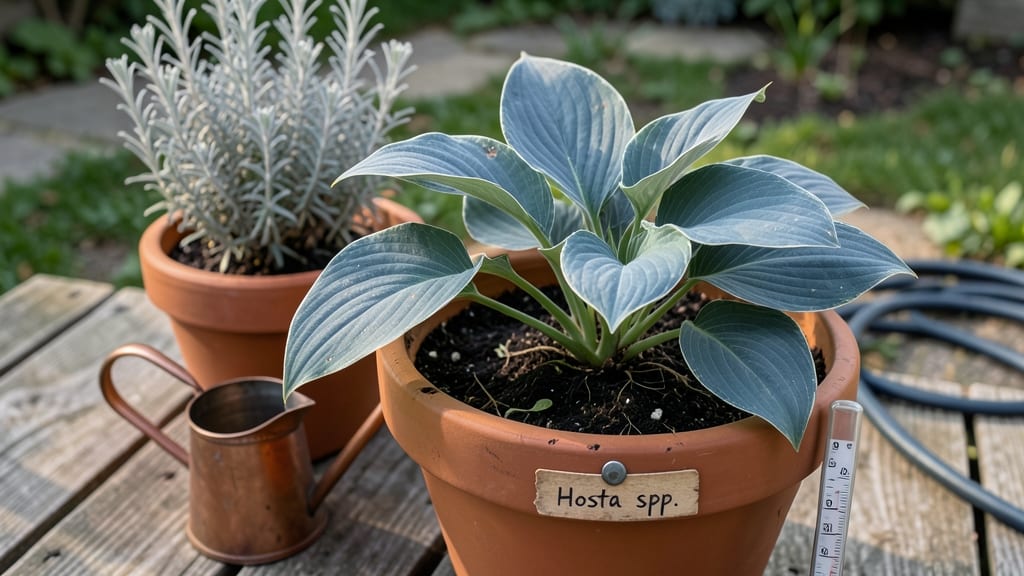
Perennials will come back in a pot when you provide enough growing space, excellent drainage, and attentive seasonal care—but success varies by plant type and container dimensions. Most need containers at least 12 inches deep with fast-draining mixes.
Perennial plants can absolutely regrow in containers, but their long-term health hinges on how well you mimic their natural root environment. 🌱 Unlike annuals that complete their life cycle in one season, perennials rely on stored energy in their roots to return each year—which means container-grown plants need extra TLC.
I’ve found that woody perennials like lavender adapt better to small pots than spreading varieties like hostas, which demand more horizontal space. The key isn’t just container size, but also how you manage moisture, nutrients, and seasonal transitions.
For example, a 12-inch pot might work for a single lavender bush, but you’d need a 18-inch container for a hosta with its aggressive root system. Always choose pots with drainage holes and use a mix that combines potting soil with perlite or sand to prevent compaction.
During winter, move tender perennials to sheltered spots or insulate their containers to protect against freezing.
💡 In This Article
- How Container Size Affects Perennial Root Growth
- 5 Essential Rules for Growing Perennials in Pots
How container size affects perennial root growth
Root growth in containers follows a simple but critical principle: space equals survival. Perennials develop extensive root systems to store nutrients and energy for regrowth each season, and when confined to small pots, their roots become root-bound.
This happens when roots circle the container’s interior, creating a dense mat that chokes off water and nutrient flow. For example, a 12-inch pot might work for a single lavender plant, but its fibrous roots will spread 2-3 feet wide in the ground—meaning the container restricts growth by 90%.
The science behind this involves oxygen deprivation. Compacted roots in small containers deplete soil oxygen faster, leading to anaerobic conditions that weaken the plant.
Woody perennials like rosemary or Russian sage tolerate this better than clumping types like hostas or peonies, which need 18-inch+ pots to prevent root crowding.
Think of it like a crowded subway car: everyone’s fine at first, but after a few years, the lack of space causes stress and decline. 🌿
Depth matters just as much as diameter. Most perennials need 12-18 inches of soil depth to establish strong taproots or fibrous networks. Shallow containers (6 inches) force roots to grow horizontally, making plants more vulnerable to drought and temperature swings.
For instance, a daylily in a 10-inch pot might survive one season but struggle to regrow robustly because its roots can’t penetrate deeply enough to access moisture during dry spells.
Seasonal transitions amplify these challenges. In winter, shallow containers freeze faster, while deep pots provide insulation. During summer, larger pots retain moisture longer, reducing the risk of root desiccation.
The rule of thumb is to match container size to the plant’s mature root zone: a 3-gallon pot for small perennials, 5+ gallons for medium-sized varieties, and 7+ gallons for sprawling types like coral bells or asters.
Visualizing root systems helps. Imagine a lavender bush: its roots spread outward in a wide but shallow pattern, while a black-eyed Susan develops a deep, vertical network.
Choosing the right container shape—round for shallow roots, square for deep roots—can make all the difference in how well your perennial thrives. 🌱
One common misconception is that bigger pots always mean better growth. While oversized containers can prevent root-bound issues, they also hold excess moisture, which risks root rot.
The sweet spot is a pot that’s 2-3 inches larger in diameter than the plant’s root ball at planting time, with room for 1-2 inches of growth per year. This balance ensures roots have space to expand without drowning in soggy soil.