
Flowers
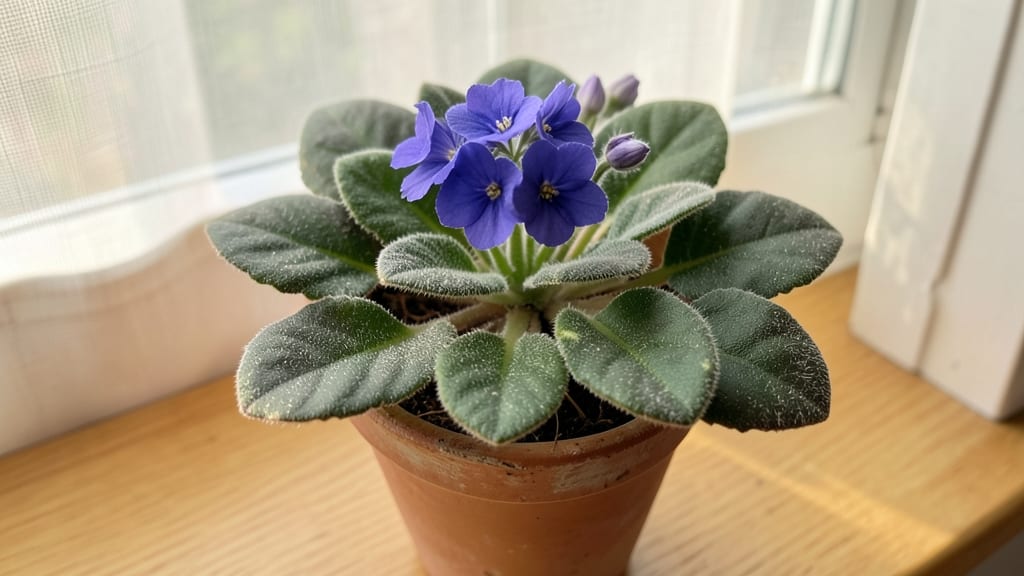
African violets are perennial plants but treated as annuals in colder climates because their tropical nature makes them frost-sensitive. They thrive outdoors year-round only in USDA zones 10-12, while indoor care can extend their lifespan for multiple blooming seasons.
Botanically speaking, African violets are perennials since they can regrow from their roots if given the right conditions. 🌱 The key difference comes down to climate—their native tropical habitat means they can't survive freezing temperatures, so gardeners in cooler zones typically grow them as houseplants or replace them each season.
With proper care, though, these plants can live for years and produce continuous blooms, making them far more durable than true annuals.
What sets African violets apart is their ability to reset their growth cycle with consistent care. Unlike true annuals that complete their lifecycle in one season, African violets can rebound from pruning or even temporary neglect if you maintain their ideal environment—bright, indirect light and well-draining soil.
This resilience lets them function like perennials even when treated as annuals in colder regions.
💡 In This Article
- Why African Violets Act Like Perennials in Warm Climates
- Extending African Violet Lifespan as a Houseplant Annual
Why African violets act like perennials in warm climates
African violets (Saintpaulia) are classified as perennials because their natural growth cycle isn't tied to a single season—they can regenerate from their root systems when conditions are favorable. 🌿 Their native habitat in East Africa's tropical highlands (elevations of 3,000-9,000 feet) provides consistent warmth and humidity, allowing them to grow continuously without dormancy.
In USDA zones 10-12, where winter temperatures rarely drop below 40°F, these plants thrive outdoors year-round, producing flowers in cycles rather than just one burst.
Their perennial nature stems from their ability to store energy in fibrous roots and basal leaves. Unlike true annuals that die after flowering, African violets can redirect nutrients to sustain growth.
In frost-free zones, they develop a more robust root system that lets them recover from seasonal stress—like heatwaves or drought—by entering a temporary rest phase rather than dying back completely.
This adaptability is why they can rebloom every 6-8 weeks under ideal conditions, a trait more typical of perennials than annuals.
Light exposure plays a crucial role in their perennial behavior. African violets need 12-14 hours of bright, indirect light daily to maintain their growth cycle. In their native habitat, they grow under the dappled shade of trees, which mimics the filtered light conditions they thrive in.
This consistent light triggers continuous photosynthesis, allowing them to produce flowers without the seasonal dormancy that many temperate perennials experience. Without adequate light, their growth slows dramatically, and they may revert to a more annual-like behavior.
Temperature regulation is equally important. African violets prefer daytime temperatures between 65-75°F and nighttime temps no lower than 60°F. When exposed to temperatures below 50°F for extended periods, their metabolic processes slow, and they may drop leaves or stop flowering—similar to how cold-sensitive perennials behave in winter.
However, unlike true perennials that enter true dormancy, African violets can recover quickly when returned to optimal conditions, demonstrating their resilient perennial nature.
What makes them unique is their ability to "reset" their growth cycle through pruning. When you remove spent flowers or leggy stems, the plant redirects energy to new growth points, effectively restarting its blooming cycle.
This regenerative capacity is a hallmark of perennials, allowing African violets to maintain productivity for 3-5 years or longer with proper care—far exceeding the typical lifespan of annuals.
Consider this comparison: A true annual like marigold completes its lifecycle in one season, while an African violet in ideal conditions can produce 12-15 flower cycles in that same timeframe.
This persistence is why they're often treated as perennials in warm climates, even though their frost sensitivity forces gardeners in cooler zones to bring them indoors or replace them seasonally.