
Orchid Care
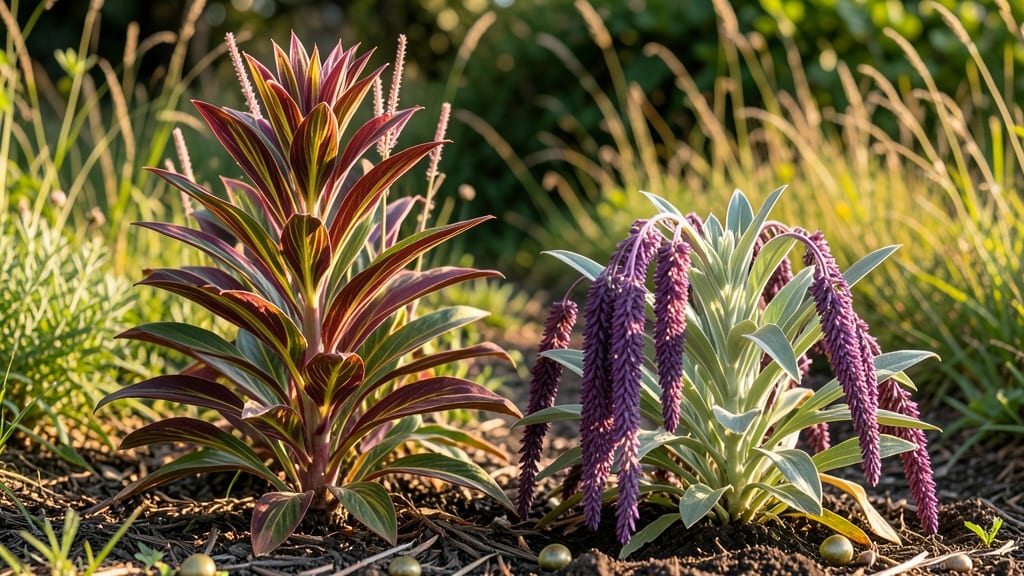
Amaranth is an annual or perennial plant, completing its life cycle in one growing season, though some varieties may self-seed prolifically for multiple years. Most types thrive in warm climates but cannot survive freezing temperatures, though a few hardy species tolerate light frost briefly.
Amaranth's annual nature stems from its rapid growth cycle—most varieties mature in just 60-90 days, focusing energy on seed production rather than perennial survival. 🌱 Unlike hardy perennials like Swiss chard, amaranth prioritizes quick reproduction over winter persistence, which explains why it dies back with frost.
However, its prolific self-seeding habit means you often get "volunteer" plants the following year without replanting.
This growth pattern makes amaranth ideal for short-season gardens or tropical climates where winter kills most plants. The trade-off? While perennials like kale regrow yearly, amaranth delivers a single, abundant harvest before requiring complete replanting.
For gardeners in marginal climates, selecting early-maturing varieties (like 'Early Splendor') can extend your harvest window by weeks.
💡 In This Article
- Amaranth’s Life Cycle and Cold Hardiness Limits
- Extending Amaranth’s Growing Season with Smart Planting
Amaranth’s life cycle and cold hardiness limits
Amaranth’s annual nature is hardwired into its biology—it follows a monocarpic life cycle, meaning it allocates all its energy to rapid growth and seed production in a single season rather than investing in perennial survival structures like woody stems or deep root systems.
This strategy allows it to dominate disturbed soils in tropical and subtropical regions, where competition is fierce. 🌱 Most varieties complete their lifecycle in 60-90 days, with some heat-tolerant types maturing in as few as 45 days under ideal conditions (like the 'Red Garnet' variety).
The key temperature threshold for amaranth is 50°F (10°C), below which growth slows dramatically and metabolic processes shut down. Unlike Swiss chard (a perennial that tolerates 20°F/-7°C) or kale (which survives 15°F/-9°C), amaranth’s cells lack the antifreeze proteins that protect perennial greens.
When temperatures drop to 32°F (0°C), the plant’s leaves turn black within 24-48 hours due to ice crystal formation in its thin, tender stems. Even brief exposure to frost triggers irreversible cellular damage.
However, amaranth’s self-seeding habit creates a workaround for gardeners. When mature plants die back, they release thousands of seeds per stalk that lie dormant until spring temperatures rise above 60°F (15°C).
This natural propagation explains why amaranth often reappears year after year in warm climates—it’s not truly perennial, but its prolific seeding mimics perennial behavior. For example, 'Green Magic' amaranth can produce 50,000+ seeds per plant, ensuring next year’s crop without human intervention.
Comparing amaranth to hardy perennials reveals why its annual strategy succeeds in its native habitat. Swiss chard stores nutrients in its thick, taproot system, allowing regrowth after frost. Kale develops woody basal stems that insulate meristem tissue.
Amaranth, however, prioritizes above-ground biomass—its leaves and stems grow so quickly that they outcompete weeds before frost can kill them. This trade-off makes it a powerhouse in short-season gardens but limits its viability in cold climates where perennials thrive.
For gardeners in USDA Zones 8-11, amaranth’s annual cycle is an advantage—it delivers a single, explosive harvest before summer heat arrives. In cooler regions (Zones 5-7), growers must treat it as a true annual, replanting each spring.
The exception? 'Love Lies Bleeding' (Amaranthus caudatus) tolerates light frost (down to 28°F/-2°C) due to its thicker stems, but even this variety won’t survive prolonged winter conditions.
Understanding these biological limits helps explain why amaranth never evolved as a perennial—its C4 photosynthetic pathway (like corn or sugarcane) makes it supremely efficient in hot, sunny conditions but metabolically expensive to maintain through winter. 💡 This is why it’s often called a "poor man’s wheat": its annual cycle ensures maximum yield in one season, but requires annual replanting in temperate climates.