
Plants
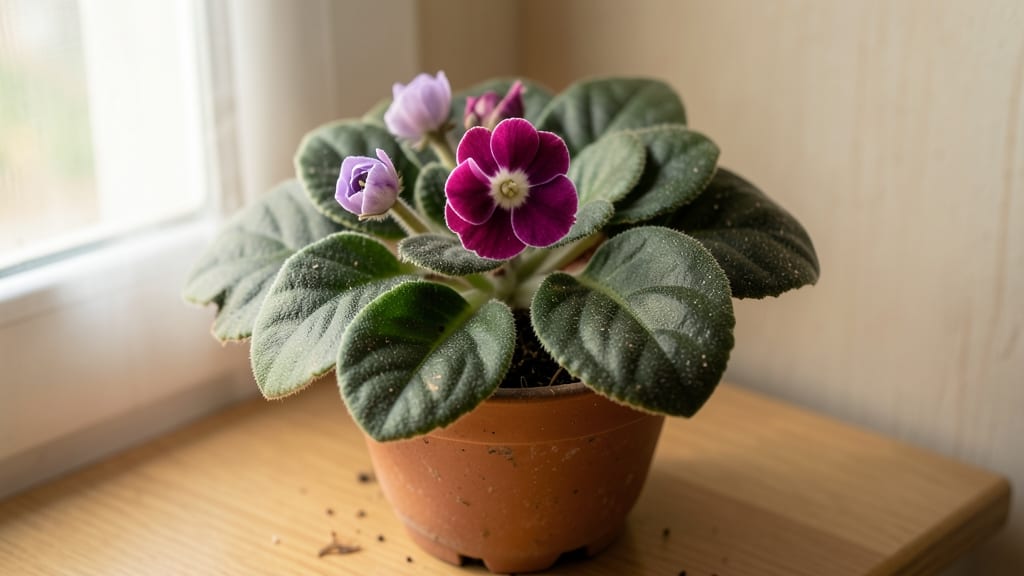
African violets are perennials in their native tropical environments but rarely survive outdoor winters in colder climates. As houseplants, they thrive year-round indoors, though they may die back without proper care during seasonal changes.
African violets naturally grow as perennials in their warm, humid tropical habitats where temperatures never dip below 50°F. 🌿 Outside those conditions, their delicate leaves and stems can't withstand frost or prolonged cold snaps, which is why they're rarely classified as outdoor perennials in temperate climates.
The key to keeping them alive year-round lies in replicating their native environment indoors—consistent warmth, bright indirect light, and stable humidity levels prevent the die-back many growers experience during seasonal shifts.
What makes them unique as indoor perennials is their ability to flower continuously with proper care. Unlike seasonal outdoor perennials that go dormant, African violets can bloom almost year-round when given the right conditions. This makes them perfect for indoor gardening enthusiasts who want perennial-like behavior without the cold-hardiness requirements.
💡 In This Article
- African Violet Hardiness and Climate Limits
- Indoor African Violet Care for Year-Round Growth
African violet hardiness and climate limits
African violets originate from the warm, humid highlands of East Africa where temperatures rarely drop below 50°F and humidity stays consistently high. Their tropical adaptation means they lack the cold tolerance of true outdoor perennials like hostas or daylilies, which can survive -10°F to -20°F winters.
The moment temperatures hit 45°F for extended periods, their growth slows dramatically, and leaves develop brown edges from cellular damage. Frost is instantly fatal, as ice crystals rupture their tender foliage within minutes.
The USDA hardiness zone comparison highlights this limitation: African violets thrive in zones 10-12 (year-round outdoor growth), while even zone 9 (mild winters) requires winter protection. In colder zones (8 and below), they must be treated as annuals outdoors or brought inside before 50°F temperatures arrive.
Their survival threshold indoors is 60-75°F—any lower triggers stress responses like leaf drop or flower bud abortion.
What's fascinating is how their growth patterns mimic perennial behavior indoors. When given stable conditions, they'll produce new leaves continuously, just like a true perennial.
The difference lies in their temperature sensitivity: while outdoor perennials develop hardy root systems to survive winter, African violets rely entirely on human intervention to maintain their perennial-like lifecycle. This makes them more like "managed perennials" than true cold-hardy ones.
Seasonal shifts create their biggest challenge. As autumn temperatures drop below 65°F, many growers notice stunted growth and fewer blooms—a direct response to their tropical DNA. The plant's metabolic processes slow down, similar to how outdoor perennials prepare for dormancy, but without the protective mechanisms.
This is why indoor growers must adjust care routines before winter, increasing light intensity and maintaining higher humidity to compensate for drier indoor air.
Consider this comparison: A zone 9 outdoor garden might support African violets as summer annuals, while zone 11 could see them as true perennials with winter protection.
The key difference is their inability to develop cold resistance—unlike true perennials that build up protective compounds like antifreeze proteins in their cells, African violets remain physiologically tropical regardless of where they're grown.
What most people overlook is how their root systems behave. Unlike outdoor perennials that develop deep, insulating root masses, African violet roots stay shallow and sensitive.
This makes them vulnerable to temperature fluctuations at soil level, which is why maintaining consistent bottom heat (around 65°F) is crucial for preventing root shock during seasonal transitions.