
Flowers
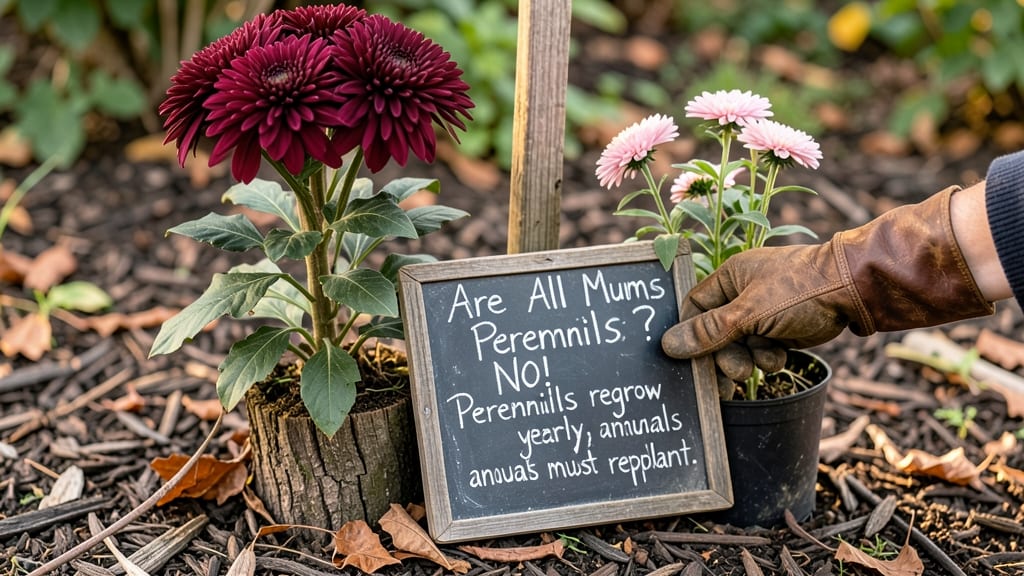
Are all mums perennials? No—most garden mums (Chrysanthemum × grandiflorum) die back in winter but regrow from roots if hardy, while tender varieties (like Chrysanthemum morifolium) act as annuals or perish in cold climates without protection. Their perennial nature depends entirely on your USDA zone and winter care.
Mums come in two distinct categories: hardy perennials and tender annuals. The hardy types, like the classic garden mum, survive winter by entering dormancy—cutting back to the ground but keeping their roots alive. 🌱 These roots store energy to fuel new growth when temperatures rise.
In contrast, tender mums lack this resilience, often treated as annuals because they can't withstand freezing temperatures. Your local climate plays a huge role—mums in Zone 5+ often return year after year with proper care, while those in colder regions may need winter protection or replanting annually.
What sets perennial mums apart is their ability to regenerate from the crown, provided they're not killed by extreme cold or poor soil conditions. I've seen gardeners in Zone 6 successfully grow the same mum plants for decades by mulching heavily in fall and avoiding early pruning.
The key difference lies in their botanical hardiness—some varieties simply evolved to handle frost better than others.
💡 In This Article
- Why Some Mums Die Back and Others Return
- How to Grow Perennial Mums Year After Year
Why some mums die back and others return
The difference between hardy and tender mums comes down to their biological adaptation to cold. Hardy mums (Chrysanthemum × grandiflorum) have evolved to survive winter dormancy by storing energy in their thick, fibrous roots—these roots can withstand temperatures down to -20°F (-29°C) in ideal conditions.
When spring arrives, these roots send up new shoots from the crown, which is why gardeners often see their mums "come back" year after year. 🌱 The process relies on stored carbohydrates in the roots, similar to how peonies or daylilies regenerate.
Tender mums, like Chrysanthemum morifolium (often used in floristry), lack this cold tolerance. Their root systems are more delicate and can't survive freezing temperatures, which is why they're typically grown as annuals in colder climates.
The key distinction lies in their USDA hardiness zones: hardy mums thrive in Zones 5-9, while tender varieties struggle below Zone 8. Even within hardy types, some cultivars (like 'Mammoth' or 'Coca-Cola') have better cold resistance than others, making variety selection critical for perennial growth.
What happens during dormancy? When temperatures drop below 40°F (4°C), hardy mums enter a state of reduced metabolic activity. Their leaves yellow and die back, but the roots remain alive, protected by a layer of insulating soil and mulch.
This dormancy phase can last 4-6 months in colder regions, with the plant essentially "sleeping" until soil temperatures rise to 50°F (10°C)—the threshold that triggers regrowth. Without proper winter care, even hardy mums may fail to return, as extreme cold or poor insulation can kill the crown.
Cold sensitivity varies dramatically between species. For example, Chrysanthemum × rubellum (rubellum mums) are among the hardiest, surviving to Zone 4 with 10-12 inches of mulch, while Chrysanthemum indicum (oriental mums) typically die back in Zone 6 without protection.
The difference comes from their native habitats: hardy mums originated in East Asia's temperate climates, while tender varieties come from warmer regions like China and Japan. This geographical adaptation explains why some mums thrive where others perish.
Here's what most gardeners miss: even hardy mums need consistent moisture during their first growing season to establish strong root systems. If planted in dry soil, their roots won't store enough energy for winter survival.
I've seen mums planted in well-draining, slightly acidic soil (pH 6.0-6.5) return reliably for years, while those in heavy clay or alkaline soil often fail to regrow. The root system's ability to store energy is directly tied to the plant's overall health before winter sets in.
Consider this comparison: a hardy mum's root system can weigh 2-3 times more than its above-ground foliage by fall, acting like a natural battery for regrowth. Tender mums, however, allocate more resources to flower production than root development, making them vulnerable to cold.
This biological trade-off explains why tender mums are prized for their longer bloom seasons but struggle with perennialism in cold climates.