
Vegetables
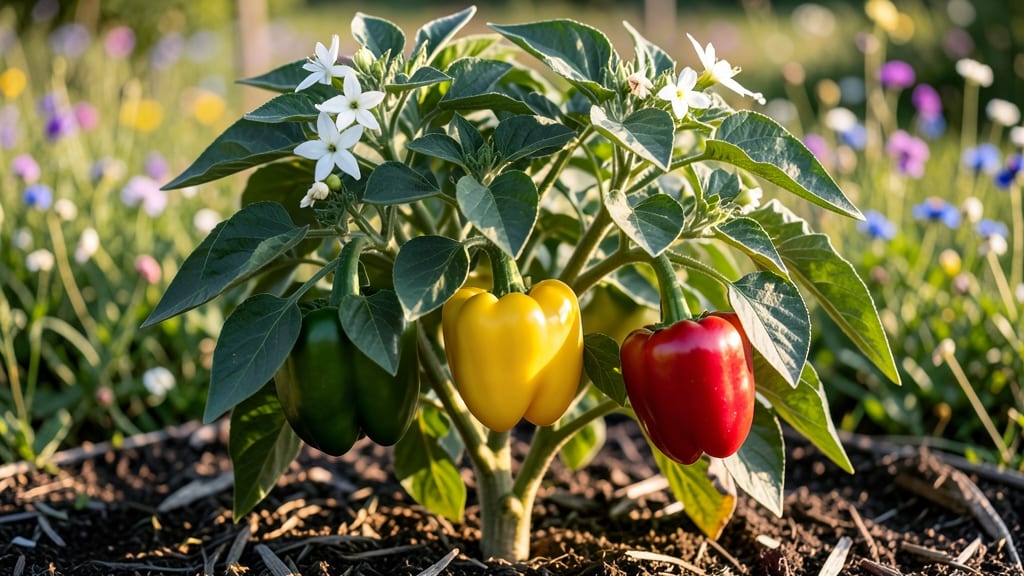
Bell peppers aren't true perennials in most climates, but they often regrow from the base if their roots survive winter. While cold kills the above-ground plant, the crown can return in warmer regions with proper winter care.
This behavior happens because bell peppers develop a sturdy root system that can survive dormant through mild winters, especially in zones 9-11. 🌱 Unlike true perennials like asparagus, which regrow from underground rhizomes, bell peppers rely on their crown (the base where stems meet roots) to push new growth when temperatures warm.
The key difference is that while true perennials thrive year-round, bell peppers act more like semi-perennials—they die back annually but can regenerate if protected from freezing temperatures.
Their ability to return depends heavily on winter conditions. In colder regions (zones 7 and below), the roots often fail to survive, requiring gardeners to treat them as annuals. However, with proper mulching or container protection, you can coax them to regrow even in transitional zones.
This makes them a rewarding plant for patient gardeners willing to invest in winter care!
💡 In This Article
- Why Bell Peppers Act Like Perennials in Some Climates
- How to Overwinter Bell Pepper Plants for Next Year’s Harvest
Why bell peppers act like perennials in some climates
Bell peppers exhibit perennial-like behavior because of their robust root systems and crown structure. Unlike true perennials—such as asparagus or rhubarb—which rely on underground rhizomes to regenerate, bell peppers store energy in their crown (the thickened base where stems meet roots).
This crown contains dormant buds that can push new growth when temperatures rise above 50°F in spring. The roots themselves remain active year-round in mild climates, maintaining a network of fine feeder roots that absorb moisture and nutrients.
In warmer regions (USDA zones 9-11), bell peppers thrive as semi-perennials because winter temperatures rarely drop below 25°F for extended periods. The plant's above-ground foliage dies back due to cold stress, but the crown and roots remain viable.
For example, in Southern California or Florida, gardeners often see their bell pepper plants return year after year with minimal intervention. The key difference is that true perennials, like strawberries, regrow from specialized underground structures, while bell peppers rely on their crown's hardiness.
Temperature is the critical factor determining whether bell peppers will regrow. In zones 8 and below, the roots often struggle to survive prolonged exposure to 20°F or colder. The crown can tolerate brief dips to 28°F, but extended freezing causes irreversible damage.
This is why gardeners in colder climates must take active steps to protect plants—such as mulching or container overwintering—to mimic the conditions of warmer zones. Without protection, the roots deplete their energy reserves, and the plant fails to regenerate.
Another factor is the plant's growth cycle. Bell peppers are short-day plants, meaning they flower and fruit in response to daylight changes. When temperatures drop, the plant shifts into a dormant state, conserving energy in the crown.
This dormancy is similar to true perennials but lacks the same level of resilience. For instance, a rhubarb plant can survive -30°F winters, while a bell pepper's crown will succumb to 15°F exposure without protection. 🌱
Soil health also plays a role in perennial-like behavior. Well-draining, fertile soil with organic matter helps the roots store more energy, improving survival rates. In contrast, compacted or nutrient-poor soil weakens the root system, reducing the plant's ability to regenerate.
For example, adding 2-3 inches of compost in fall can boost the crown's resilience, while sandy soil may not provide enough moisture retention for winter survival.
Understanding these botanical quirks explains why bell peppers act like perennials in some climates but not others. Their semi-perennial nature makes them a rewarding challenge for gardeners willing to adapt techniques based on their local conditions.
With the right care, you can enjoy multiple harvests from the same plant—just like a true perennial, but with a little extra effort! ✨