
Vegetables
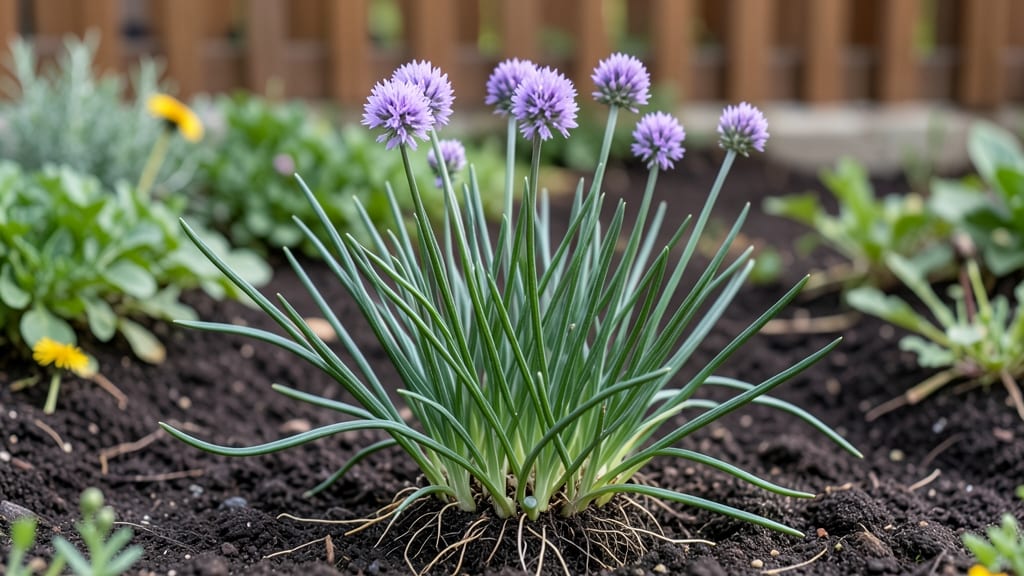
Yes, chives are perennial herbs that regrow each spring from their underground rhizomes, even after dying back completely in winter. Their hardy nature makes them a low-maintenance staple in gardens and kitchens alike.
Chives prove their perennial status through a clever survival strategy: their underground rhizomes act like natural storage units, preserving energy through winter's dormancy. 🌱 Unlike annuals that die completely, chives simply "sleep" above ground while their roots remain active beneath the soil.
This means you can harvest fresh chives year after year with minimal effort—just give them proper winter protection in colder climates.
What makes this especially practical is their ability to regenerate quickly in spring. I've seen chive plants bounce back within weeks after their first cutting, making them one of the most resilient herbs for home gardeners.
The key is understanding their growth cycle—cutting too aggressively in late summer can weaken their winter survival, but proper timing ensures you'll have fresh chives for years to come.
💡 In This Article
- How Chives Survive Winter Through Rhizome Biology
- Year-Round Chive Care: Pruning and Harvesting Tips
How chives survive winter through rhizome biology
Chives rely on their rhizomes—thick, horizontal underground stems—to store nutrients and survive winter dormancy. These specialized roots act like natural batteries, storing carbohydrates (up to 20-30% of the plant's energy reserves) produced through photosynthesis during growing season.
When temperatures drop below 20°F (-7°C), the above-ground foliage yellows and dies back, but the rhizomes remain alive, protected by a layer of insulating soil and their own protective cell walls.
The regeneration process begins in spring when soil temperatures reach 40-50°F (4-10°C). The rhizomes detect warmth and begin producing new shoots upward while simultaneously replenishing their energy stores.
This dual process explains why chives often emerge 2-3 weeks earlier than many other perennials—once the soil warms, their growth is rapid. Unlike bulb-based perennials (like garlic), chives don't require a cold period to trigger regrowth; they simply respond to temperature changes, making them adaptable to various climates.
What sets chive rhizomes apart is their decentralized growth pattern. Each rhizome node can produce multiple shoots, creating dense clusters. This differs from herbs like asparagus (which grows from thick roots) or mint (which spreads via runners).
The chive's system allows it to recover quickly even if some rhizome sections are damaged, which is why you can harvest aggressively without killing the plant—so long as you leave 2-3 inches of growth each time.
The dieback cycle serves a critical purpose: it conserves energy. By shedding leaves in winter, chives prevent moisture loss through transpiration while maintaining just enough metabolic activity to stay alive.
Studies show that perennial herbs like chives can survive up to 6 months of dormancy with minimal energy expenditure, thanks to these specialized underground structures. This biological efficiency is why chives thrive even in USDA Zone 3 (-40°F/-40°C) with proper winter protection.
For comparison, consider oregano—a close perennial cousin. While oregano also uses rhizomes, its growth is more woody and slower to regenerate after cutting. Chives, however, prioritize rapid leaf production, which is why they're often recommended for continuous harvest systems.
Their ability to regrow from just 1-inch rhizome segments makes them uniquely resilient among culinary herbs.
One fascinating detail is how chives manage water uptake during dormancy. Even when above-ground growth is inactive, their rhizomes maintain a slow but steady absorption of moisture from deep soil layers.
This hydration strategy prevents desiccation—a common issue for plants with shallow root systems—giving chives an edge in dry climates or sandy soils where other perennials might struggle.