
Plants
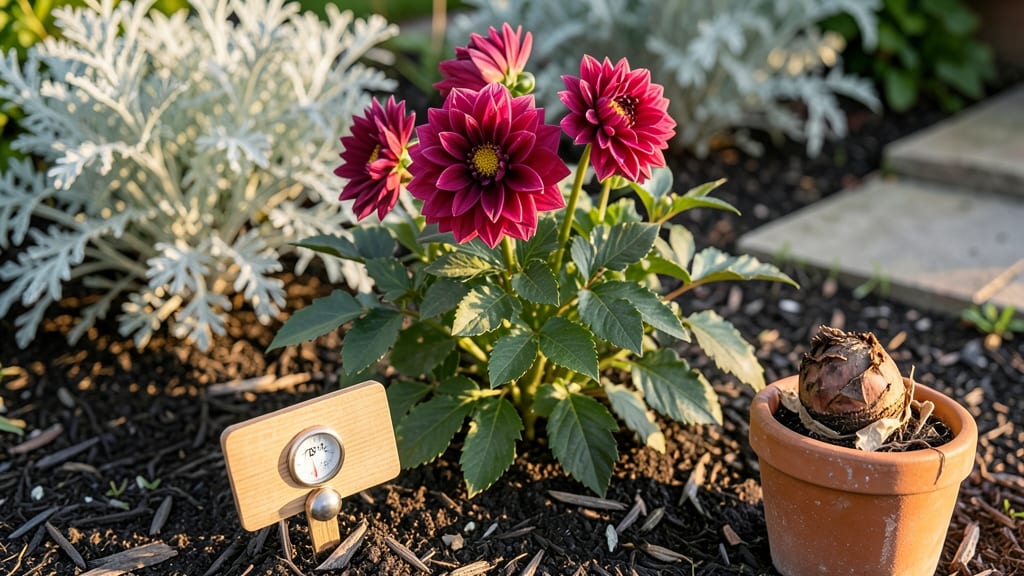
In Zone 8, dahlias are not true perennials—they die back to the ground each winter but can regrow from tubers if properly insulated. Cold-hardy varieties may survive with mulch or frost blankets, but most require winter storage for full revival.
Zone 8's winter temperatures—typically dropping below 30°F—trigger dahlias' natural dormancy cycle. 🌱 Unlike true perennials that survive above-ground, dahlia tubers are frost-sensitive and need protection to prevent rot or death.
Some cold-tolerant varieties (like 'Happy Single' or 'Café au Lait') can handle light freezes with thick mulch, but most gardeners in Zone 8 dig up tubers after first frost, store them in dry peat moss or vermiculite, and replant in spring. The key difference?
True perennials regrow from roots underground, while dahlias rely on stored energy in their tubers.
Even with protection, consistent moisture control is critical—too much dampness causes rot, while too little leads to desiccation. I've seen gardeners in Zone 8 successfully overwinter dahlias by burying tubers 12-18 inches deep in well-drained soil, then covering with straw.
For those who prefer storage, a cool (40-50°F) dark basement works best. The revival process in spring is what makes this worth the effort—those tubers can produce 6-foot stems again if cared for properly.
💡 In This Article
- Why Dahlias Die Back in Zone 8 Winters
- Protecting Dahlia Tubers for Zone 8 Survival
Why dahlias die back in Zone 8 winters
Dahlias aren't true perennials in Zone 8 because their tubers—thickened underground stems—lack the cold tolerance of plants like peonies or hostas. When temperatures drop below 30°F, the tuber cells begin to break down, entering a survival mode called dormancy.
This process is triggered by photoperiod changes and frost exposure, causing the plant to shut down above-ground growth while conserving energy in the tuber. Unlike true perennials that regrow from protected root systems, dahlias rely entirely on these tubers for revival.
The science behind this involves cold-induced cellular damage. Dahlias originate from high-altitude Mexican regions where they evolved to handle cool nights but not prolonged freezes.
Zone 8's winter cycles—where temperatures oscillate between 25°F and 50°F—create the perfect storm: enough cold to trigger dormancy but not enough to kill the plant outright.
However, repeated freeze-thaw cycles can cause tuber rot or desiccation, which is why protection is critical. 🌱 Cold-hardy varieties like 'Happy Single' have thicker, waxier tubers that resist moisture loss better than delicate dinner dahlias.
What most gardeners don't realize is that the timing of dieback matters just as much as the temperature. Dahlias typically senesce (die back) in late fall when daylight shortens, but the tuber's survival depends on how quickly the ground freezes.
In Zone 8, where first frosts can arrive as early as November, tubers need at least 4-6 weeks of dormancy preparation before winter sets in. This is why gardeners in colder parts of Zone 8 (like 8a) often dig up tubers earlier than those in 8b.
Visual cues can help predict survival. Healthy tubers feel firm and plump, with a papery skin that protects against moisture loss. Damaged tubers—those with soft spots or cracks—are more vulnerable to winterkill.
I've seen tubers stored in 40-50°F conditions sprout green shoots within 8-10 weeks in spring, while those exposed to fluctuating temperatures often fail to revive. The key is mimicking the tuber's natural dormancy cycle: cool, dark, and consistently moist-but-not-wet conditions.
Here's what's actually happening at the cellular level: Dahlias store starches in their tubers, which convert to sugars during dormancy. These sugars act as antifreeze agents, lowering the freezing point of water inside the cells.
However, if the tuber dries out or rots, this protective mechanism fails. That's why overwintering methods—whether in-ground or stored—focus on maintaining 90-95% humidity around the tubers. 💫
Consider these cold-hardiness rankings for common dahlia types:
- Most cold-tolerant: Single varieties (e.g., 'Happy Single') with 30-32°F tolerance
- Moderate tolerance: Semi-double types (e.g., 'Café au Lait') handling 28-30°F with protection
- Least tolerant: Dinner dahlias (e.g., 'Galaxy') needing 32°F+ consistently
The bottom line? Zone 8's climate creates a delicate balance—enough cold to require protection but not enough to make dahlias true perennials. With the right techniques, you can coax these stunning flowers back year after year, turning a "temporary" plant into a long-term garden star. ✨