
Plants
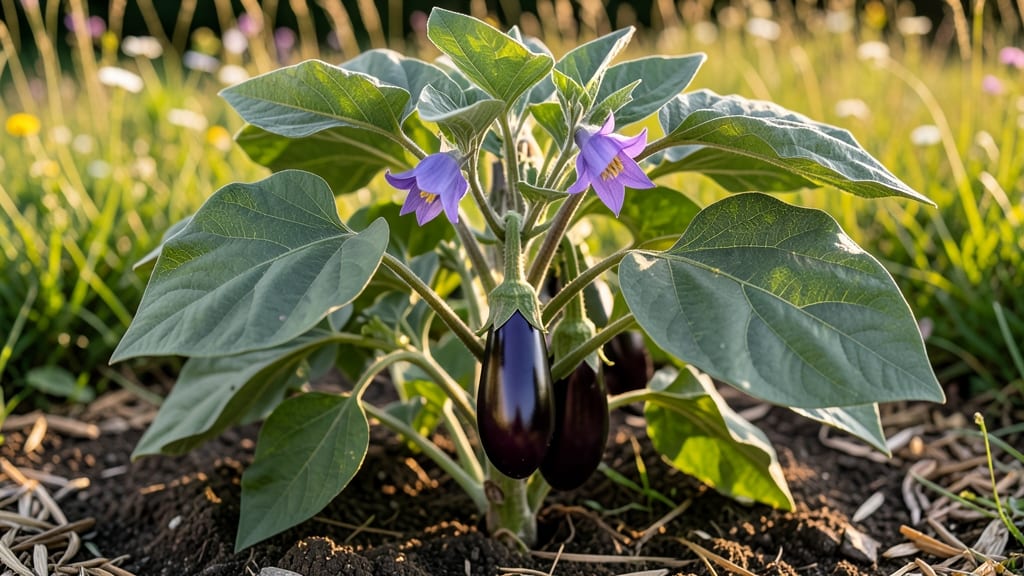
Eggplant plants act as perennials only in frost-free zones, since freezing temperatures destroy their woody stems and foliage. In colder regions, gardeners must replant each spring because the plants won't regrow after winter damage. However, some varieties can persist through mild winters with proper protection.
Eggplants originated in tropical Asia, where they naturally thrive year-round without seasonal dieback. 🌱 The key issue in cooler climates is their sensitivity to frost—temperatures below 40°F trigger irreversible damage to their stems and leaves, forcing gardeners to treat them as annuals.
That said, certain varieties like 'Rosa Bianca' show surprising resilience when grown in containers or under protective coverings, allowing some gardeners to coax multiple harvests from the same plant over several years.
What sets eggplants apart from true perennials like asparagus is their growth habit: while they may survive winter in mild zones, they rarely produce fruit after cold exposure. The energy goes into regrowing foliage rather than setting new blooms.
This makes overwintering strategies—like using thick mulch or row covers—more about preserving the plant's structure than guaranteeing next year's crop.
💡 In This Article
- Why Eggplants Die in Cold Climates
- How to Extend Eggplant Growth in Cold Regions
Why eggplants die in cold climates
Eggplants belong to the nightshade family (Solanaceae), which includes tomatoes and peppers—plants that evolved in tropical regions where temperatures rarely drop below 50°F. Their woody stems and broad leaves contain high moisture levels that freeze and rupture cell walls when exposed to 32°F or colder, causing irreversible damage.
Unlike true perennials such as asparagus or rhubarb, eggplants lack the hardy root systems or dormant buds that allow regrowth after winter. Instead, their entire above-ground structure collapses under frost, leaving only the roots vulnerable to decay.
The damage starts at the cellular level: ice crystals form within the plant's vascular system, disrupting water flow and nutrient transport.
You'll notice the stems turn black and mushy within 24 hours of a hard freeze, while leaves develop brown, papery edges. 🌡️ In regions with 100+ frost-free days per year, like Florida or California, eggplants can grow continuously as perennials, producing fruit year-round.
But in zones with 150+ frost days (like Minnesota), they behave like annuals because they simply can't survive the cold.
Comparing eggplants to tomatoes highlights this difference: while both are nightshades, tomatoes can sometimes recover from light freezes (28°F) if the damage isn't severe, whereas eggplants show no tolerance.
The key factor is their tropical heritage—eggplants prioritize rapid growth and fruit production in warm conditions, sacrificing cold resistance for speed. This is why gardeners in cooler climates often treat them as annuals, replanting each spring from seeds or transplants.
Even in mild-winter zones, the challenge isn't just survival but productivity. Plants that overwinter may regrow foliage but rarely produce fruit because their energy shifts to rebuilding damaged structures.
For example, a Rosa Bianca eggplant in Zone 9 might survive a 25°F dip but won't set fruit until 75°F soil temperatures return—delaying harvests by weeks. This biological trade-off explains why most gardeners accept eggplants as annuals unless they're willing to invest in protection.
One exception is container-growing: potted eggplants can be moved indoors during cold snaps, preserving the entire plant structure. However, this requires 10+ gallons of soil per plant to maintain root health and bright artificial light (12+ hours daily) to prevent legginess.
Without these conditions, even "perennial" eggplants revert to annual behavior when exposed to frost.
Understanding this botanical limitation helps gardeners set realistic expectations. While eggplants won't thrive as true perennials in cold climates, their adaptability in containers or greenhouses proves they can stretch their growth cycle—with the right conditions.
The trade-off between survival and productivity is what makes eggplant cultivation such an interesting challenge for gardeners in marginal zones. 🌱