
Plants
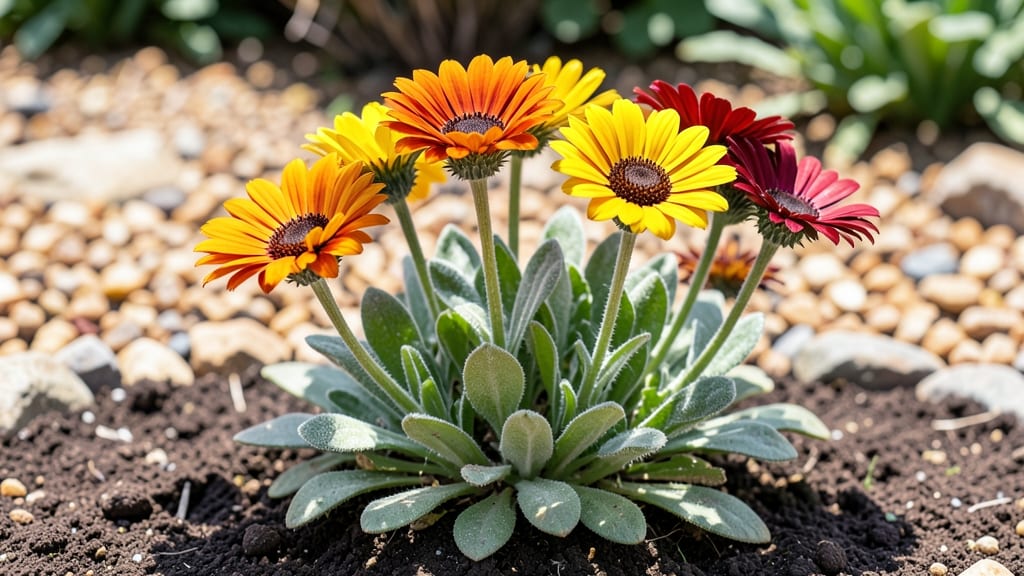
Gazania plants are perennials in warm climates like USDA Zones 10-11, where they thrive year-round, but they die back to the ground in colder zones and regrow from roots when conditions warm again. Their frost sensitivity makes them act as annuals in most temperate regions.
Gazania plants are technically perennials because they survive through unfavorable conditions using their root systems.
In colder climates, they enter a dormant state when temperatures drop below 32°F, only to re-emerge when spring arrives. 🌱 This unique survival strategy is why gardeners in cooler regions often treat them like annuals—they won't come back reliably without protection.
The key difference lies in their ability to regenerate from crowns rather than seeds, which sets them apart from true annuals that complete their entire lifecycle in one season.
What many gardeners don't realize is that with proper care, you can coax gazanias to return year after year even in marginal climates. The secret lies in protecting their root systems during winter, whether through mulching, container cultivation, or bringing them indoors before the first frost.
This approach transforms what appears to be a seasonal plant into a long-term garden staple that rewards patience with vibrant blooms season after season.
For those in transitional zones, selecting cold-tolerant varieties can make all the difference. Some gazania cultivars have shown better resilience to early frosts, allowing them to persist through milder winters. The trade-off? These varieties might produce slightly smaller blooms or have shorter peak bloom periods compared to their tropical cousins.
Understanding this balance helps you choose plants that align with your climate's specific challenges while still delivering that signature gazania charm.
💡 In This Article
- Gazania Plant Lifecycle in Cold Climates
- Extending Gazania Growth in Cooler Regions
Gazania plant lifecycle in cold climates
Gazania plants employ a clever survival strategy in cold climates by entering dormancy when temperatures drop below 32°F. Unlike true annuals that complete their entire lifecycle in one season, gazanias retreat underground, preserving their root systems and crowns.
This dormant phase allows them to conserve energy while waiting for warmer conditions. The roots remain alive but inactive, storing nutrients until spring's return. 🌱 This process is similar to how daylilies (Hemerocallis) survive winter, though gazanias are far more frost-sensitive.
The regrowth process begins when soil temperatures reach 55-60°F consistently for several days. New shoots emerge from the crown, which is the thickened base of the stem located just above the roots. This crown contains meristematic tissue—undifferentiated cells capable of producing new growth.
In contrast, true annuals like marigolds (Tagetes) must rely entirely on seed germination each spring, which takes longer and isn't as reliable.
What makes gazanias unique is their ability to produce both seeds and vegetative regrowth. Even in their dormant state, the roots can generate new shoots from multiple points along the crown, creating a bushier plant once temperatures rise.
This polycarpic growth pattern (multiple growth cycles) is why they're classified as perennials in their native South African habitat, where winters are mild. The challenge comes when gardeners in colder regions don't provide protection during winter months.
Consider this temperature timeline: gazanias begin showing frost damage when nighttime temperatures drop below 40°F for more than 24 hours. By 32°F, the foliage will blacken and collapse completely, but the roots remain viable if protected.
Without protection, these roots can suffer from winter desiccation or freeze damage, preventing spring regrowth. This is why many gardeners in USDA Zones 7-9 treat them as annuals—they won't reliably return without intervention.
The key difference between gazanias and true annuals lies in their reproductive strategy. Annuals complete their entire lifecycle—seed germination, growth, flowering, seed production—in one season. Gazanias, however, can produce seeds while also maintaining their root systems for future growth.
This dual capability is what earns them perennial status in warmer climates, where they can complete multiple growth cycles over several years. 💫
For gardeners in transitional zones (Zones 8-9), understanding this lifecycle is crucial. The plants may survive winter but produce fewer blooms the following season if their energy was diverted to root maintenance rather than flowering.
This is why selecting cold-tolerant varieties like 'Gazania rigens' or 'Gazania krebsii' can make a significant difference—they've developed thicker crowns and deeper root systems that better withstand winter stress.